


Jeffrey Epstein's spider web of power, money and secrets
Jeffrey Epstein's network included politicians, billionair...


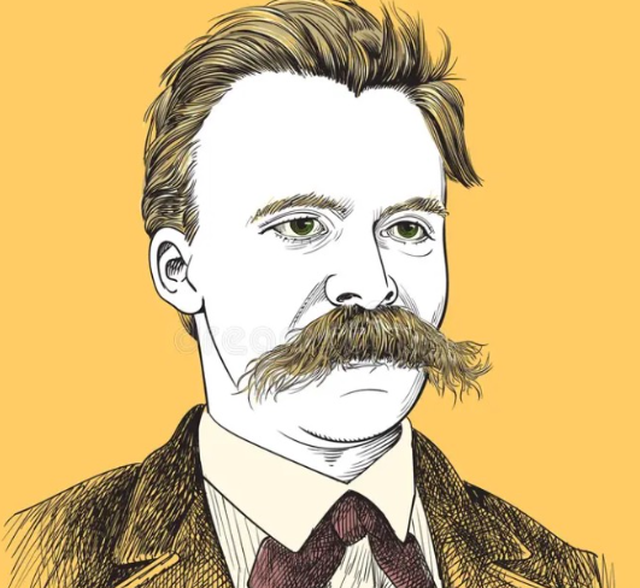
How did Friedrich Nietzsche analyze the origins of morality in "The Genealogy of Morality"? An in-depth analysis of good, evil, and power.
When Friedrich Nietzsche published his most provocative work in 1887, he did not set out to improve morality, but to dismantle it from its foundations. In The Genealogy of Morality, Nietzsche challenges the idea that good and evil are universal categories. They are, he argues, historical products of power, psychology, and human conflict.
We build our lives on the basis of morality, but we rarely ask: where does it come from? Is “good” truly good, or a means of control?
From “What is justice?” to “Where does morality come from?”
Philosophers before Nietzsche had tried to define what morality should be, whether that of reason (as in Kant) or of utility (as in Bentham and Mill). Nietzsche inverted the question. He no longer asked “What is right?” but “Where does morality come from?”
According to him, values ??are not absolute. They are products of power relations, history, and collective psychology. This is his “genealogical” method: analyzing the origins of an idea to understand its real function.
Just as biological evolution explains the survival of the species, Nietzsche believed that values ??also evolve within social contexts. They do not descend from the sky; they arise from conflict.
The morality of masters and the morality of slaves
One of Nietzsche's most famous concepts is the division between two moralities:
The Morality of Gentlemen
This morality arises from the strong, the aristocrats, the warriors, the rulers. For them, “good” was strength, pride, health, courage. “Evil” was weakness and failure. Greek heroes like Achilles represent this life-affirming ethic.
Slave Morality
This morality arises from the weak and the oppressed. They overthrow the system. Weakness becomes virtue. Suffering becomes holiness. Humility becomes goodness.
According to Nietzsche, this morality was born from a deep sense of resentment, a secret hatred of power that is transformed into a system of values.
Christianity and the triumph of slave morality
Nietzsche saw Christianity as the ultimate triumph of slave morality. Pride became sin, power became cruelty, suffering became salvation. Instead of honoring heroes, morality began to honor martyrs. And he raises a powerful question: Are our values ??truly our own, or have we blindly inherited them?
“Ressentiment” is not just anger. It is an accumulated resentment that cannot be expressed directly. Instead of challenging the powerful, the weak create a moral system where power is declared a sin. Thus arises a radical inversion of values.
Nietzsche argues that the feeling of guilt is not natural, but historical. In early societies, mistakes were compensated for by reparations. Over time, punishment shifted from outside to inside the person. According to him, religion and social norms created the “bad conscience.”
Later, Sigmund Freud would also describe a mechanism similar to the concept of the super-ego, while Carl Jung would see internal conflict as an opportunity for the individual.
But Nietzsche remains critical: Is guilt moral, or an instrument of control?
The will to power versus ascetic values
Nietzsche criticized “ascetic values,” the glorification of suffering, the denial of desires, and the subjugation of life. He proposed something else: the will to power, the creative energy to transcend oneself, to affirm life, to create new values.
According to him, a free man is not one who obeys, but one who creates.
Nietzsche's legacy
The "Genealogy of Morality" profoundly influenced modern thought. Philosophers such as Foucault used the genealogical approach to analyze power and institutions. Modern psychology found parallels in the analysis of guilt and conscience.
However, Nietzsche's ideas remain controversial. Some see them as moral relativism. Others as a call for emancipation. But his question remains relevant: Why do we trust values ??just because they are old? / bota.al

Jeffrey Epstein's network included politicians, billionair...
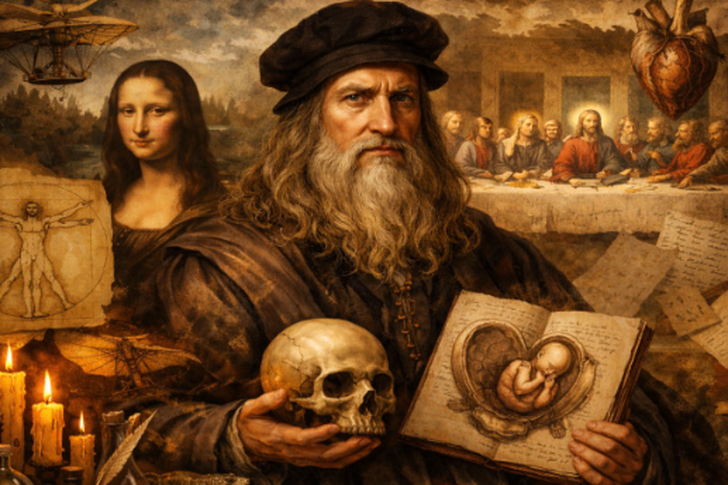
Leonardo da Vinci was not just a Renaissance genius. He wa...

Few people in history have left such a profound mark as Na...

US attack on Iran? The situation seems to be moving toward...
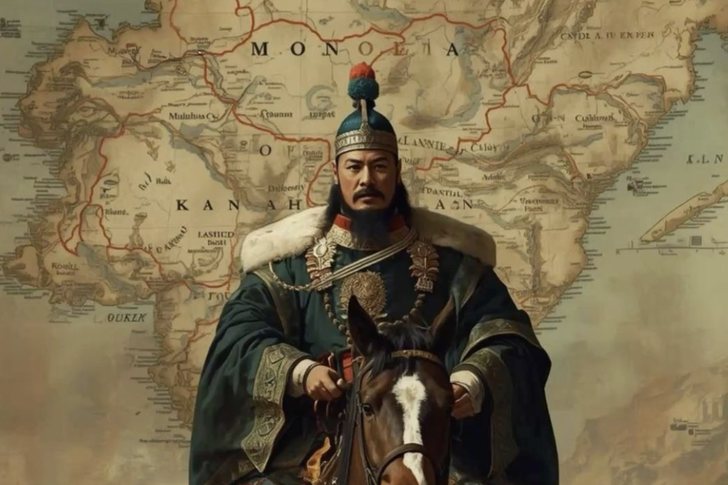
There are figures in human history who are not simply conf...

Many of us live our lives assuming that what we see is the...

Jonathan, a giant tortoise from the Seychelles, is conside...

From Ottoman cat "keepers" to modern street watchmen, Ista...

"In the age of Artificial Intelligence, humanity is increa...

New beach rules in San Sebastian should come into effect b...

Tea originated in ancient China, with its earliest use as ...

Perfume is a powerful way to express personality, style, a...

Ginseng is a widely known medicinal plant that has been pa...

To call Turkish coffee "just a drink" certainly understate...

NASA has discovered that since 2020 there has been an asym...

This year's season has been extremely challenging for ...

An ordinary morning. A message comes to your phone from an...

The disappearance of the Mayan civilization is a question ...

György Schwartz was born in Hungary in 1930 to an Ashkenaz...

Burj Al Babas mund të jetë qyteti më i çuditshëm në botë. ...

A 39-year-old citizen has been arrested in Lezha, after se...

CNA has launched another investigation that could lead to ...

Irfan Hysenbelliu is a businessman that we call "Irfan the...

In March 2026, CNA launched another investigation centered...

The Special Board of Appeal (KPA) decided this Monday ...

The KPA vetting decided this Thursday to dismiss the p...

Suela Salavaçi, a prosecutor in the Prosecutor's Offic...

The Special Board of Appeal reinstated the prosecutor ...

A serious incident occurred in Lushnje, where citizen IY, ...

As a result of the investigative and procedural actions ca...

A conflict for weak motives was recorded today in the vill...

An accident involving three vehicles occurred a few minute...

Today, our country will be under the influence of stable a...

By noon, cloudiness is expected to prevail in almost all o...

Children without parental care, for whom alternative famil...
On Thursday, our country will be under the influence of st...

Marine Le Pen is entering the decisive phase of the presid...

Member states of the International Criminal Court voted to...

From the declining role of exports to new public investmen...

South Korea is becoming one of the most sought-after desti...

Two windows, a century of history and the metaphysics of p...
In my research at the Central State Archives, specifically...

At a time when industrial products are increasingly taking...

Trust among people is not just a three-syllable word. It c...

This Saturday, one US dollar is bought for 81.7 lek and so...

War, weather and supply disruptions could send gas prices ...
The number of active enterprises in Albania continued to g...

In Albania, the bar-cafe has long become an almost unique ...