

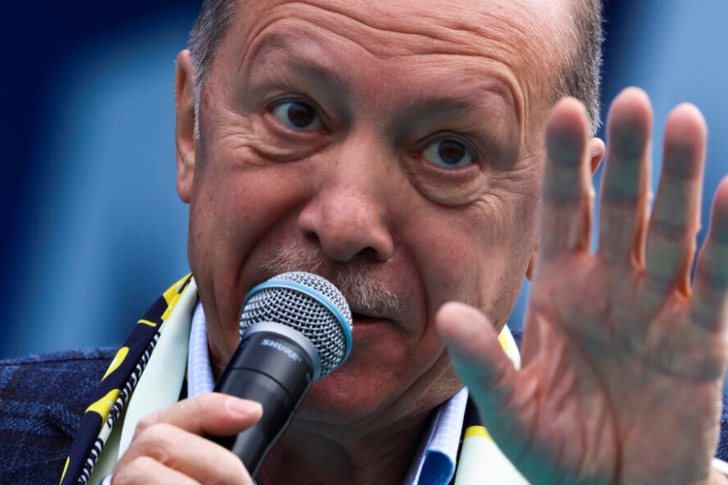
"The devil we know": Does the West want Erdogan to win?
Is there a Western preference for the winner as Turkey...


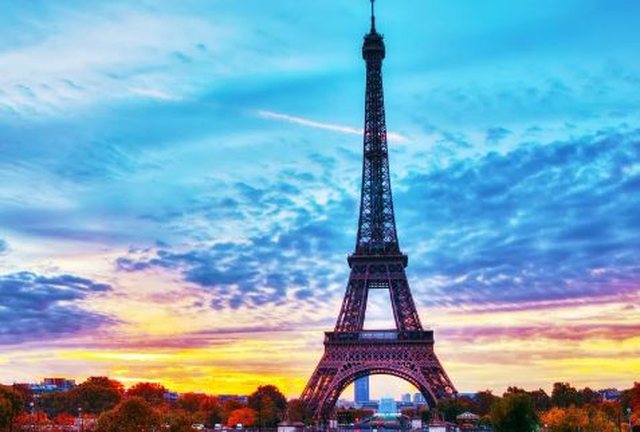
The Eiffel Tower was inaugurated in Paris on March 31, 1889, during the opening ceremony of the Universal Exhibition, for which it was designed. After becoming a symbol of France around the world, in 1925 a con artist known as Viktor Lustig managed to sell it to an ironmonger, leading him to believe that the great structure would be dismantled.
Viktor Lustig was born in 1890, a few weeks after the completion of work on what was then called the "300-meter tower" (it was actually 312 meters high; today, together with the antenna on top, it reaches 324 meters). Lustig was born into a wealthy family in Hostine - or so he said - a town that was part of the Kingdom of Bohemia and at the time the Austro-Hungarian Empire.
Cultured and with very refined manners, Lustig spoke 6 languages ??fluently. But very soon it ended up in the police archives for petty fraud. His main money-making activity was betting, gambling and cheating in gambling halls on transoceanic ships going from Europe to the United States of America.
He made that long journey several times before the start of the First World War. Lustig told wealthy passengers he met that he was a count. The police would later discover that the man who called himself "The Count" was not of noble birth at all. He was not born in Paris or New York, as he claimed, nor was his name Viktor Lustig, but more likely Robert Miller.
In his life he used about 50 different surnames and identities. In the 1920s, Lustig settled in the United States, where he began frequenting racetracks, boasting that he knew their outcome in advance. In this way, he collected various amounts of money and escaped before the end of the races.
There Lustig perfected one of his most famous scams, selling machines to make money. In the fashion salons he frequented, Lustig identified the victim he would deceive. He invited her for a drink in his hotel room, where he revealed the secret of his fortune: a wooden device that he said was a banknote duplicating machine.
He would put a $100 bill in there. He would turn off the device and offer his guest a drink, claiming it would take 6 hours to get a perfect copy of the note. When the time ran out, a new $100 bill would pop out of the machine. Lustig was able to sell the device for a substantial sum.
The new owner of the box would only realize after a few hours that the device was programmed to take out after a while the banknotes hidden inside. Lustig had left 2 cards inside and had time to escape before the fraud was discovered. With this and other scams, Lustig became very wealthy, spending everything he had on a very luxurious life and traveling the world.
In 1925 he went to Paris, and read in a newspaper how the Eiffel Tower caused great financial problems for its maintenance. The article ended with a question: "Should the Iron Lady be dismantled and sold?". Lustig took this matter very seriously. With his aristocratic appearance, elegant manners and refined language, Lustig carried himself as an important official of the Ministry of Posts and Telegraphs, the body responsible for the tower.
He sent letters to the 5 largest iron merchants in the city, inviting them to an urgent and confidential meeting at the Hôtel de Crillon in Paris, where diplomats and politicians usually met. After offering the guests a drink, he explained that he had been instructed by the president of the French Republic to sell the Eiffel Tower, which was to be dismantled.
And he offered 7,300 tons of tower iron to the highest bidder. Lustig specified that the project needed
to remain secret until the end of the contract, otherwise it would cause discussion and controversy in the newspapers. To be more reliable, he arranged a visit to the tower with the five merchants. Four of them had strong doubts, while the fifth decided to trust him and continue negotiations. His name was Andre Poiso. He hoped to make a name for himself in the business world of Paris thanks to this operation.
Lustig met him again and even encouraged him to pay bribes to favor him. The next day Poiso appeared with the promised sum, 70,000 francs, and Lustig made him believe that the deal was done and that the Eiffel Tower was his. After pocketing the money, Lustig immediately left Paris for Vienna.
No news of that fraud appeared in the newspapers. Embarrassed at the naivety shown, Andre Poison did not denounce him. Therefore, Lustig tried to repeat the fraud and sell the Eiffel Tower to a second iron dealer. But the latter realized that something was wrong, he alerted the police and Lustig escaped to the United States.
The Eiffel Tower scam was described in the 1961 book "The Man Who Sold the Eiffel Tower" written by James F. Johnson and Floyd Miller and inspired the 1964 film of the same title directed by Claude Chabrol. Lustig continued his scams in the United States, selling cash machines and printing counterfeit money until he was arrested in Oklahoma. But he managed to escape by bribing the policeman assigned to watch him. In 1934, concerned by the growing circulation of counterfeit banknotes, Franklin Roosevelt's government created a special commission to deal with the problem. Lustig was arrested again.
Imprisoned in New York awaiting trial, he managed to escape from prison again by climbing down from a window on a rope made of sheets, posing as a window cleaner to avoid attracting attention. After about 4 weeks he was arrested again, tried, and sentenced to 15 years in prison and sent to Alcatraz, the most famous prison in US history and one of the most notorious in the world. In 1947, he contracted pneumonia and died shortly after being transferred to a medical center for prisoners in Missouri./ Adapted from CNA.al

Is there a Western preference for the winner as Turkey...
Njerëzimi ka 2 probleme kryesore, të cilat janë bërë m...

Have you ever heard of a man who claims to be the rein...

The telephone conversation between Xi Jinping and Volo...
Që nga fillimi i këtij viti, më shumë se 600 emigrantë vlerë...

Imagine for a moment a typical British scenario. A pop...

Kiev - "After Ukraine, it's Chechnya's turn" - says the Ch...
Can America survive a second Joe Biden presidency and pote...
I've been very busy with writing books and I've been p...
President Joe Biden's brand is popular at best. And at...
Kishin kaluar vetëm pak ditë nga tërmetet e 6 shkurtit...

Thousands of Ukrainian soldiers are preparing to go in...

In December 1949, 2 months after the founding of the P...
President Vladimir Putin has boasted about the strengt...
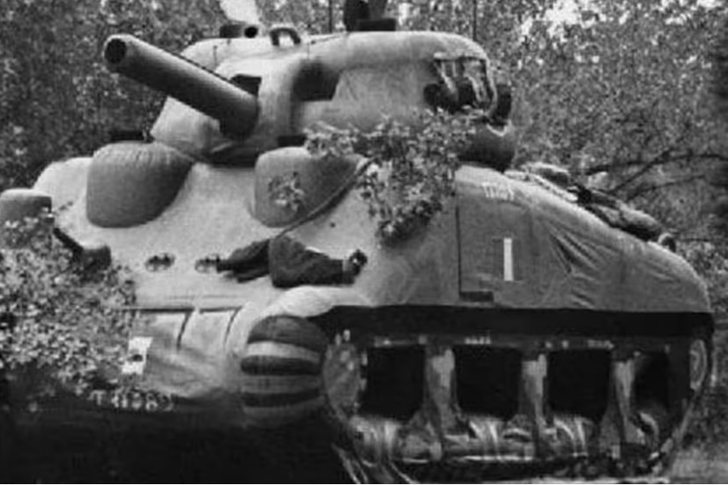
A fake army at war? Yes, there was and was the 23rd divisi...

“Askush nuk mund të kruhet me një pjesëtar të familjes Baj...

In July, NATO allies will gather in Vilnius for their seco...

The European Union's soft power approach to problem so...
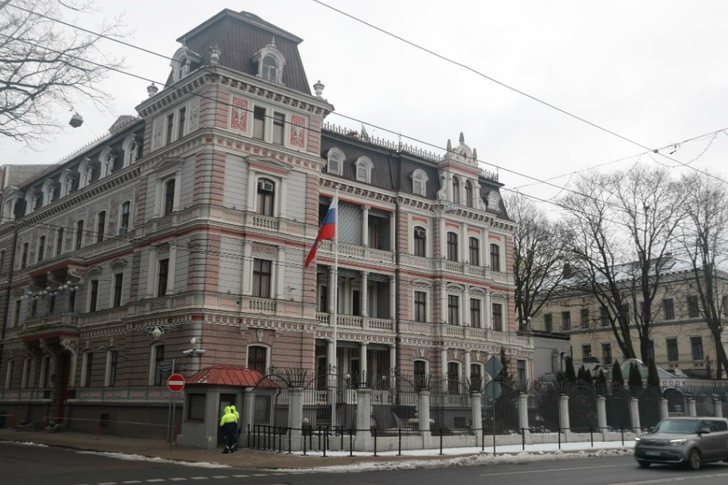
Ndërmjet formave të ndryshme të mbledhjes së informacionit...
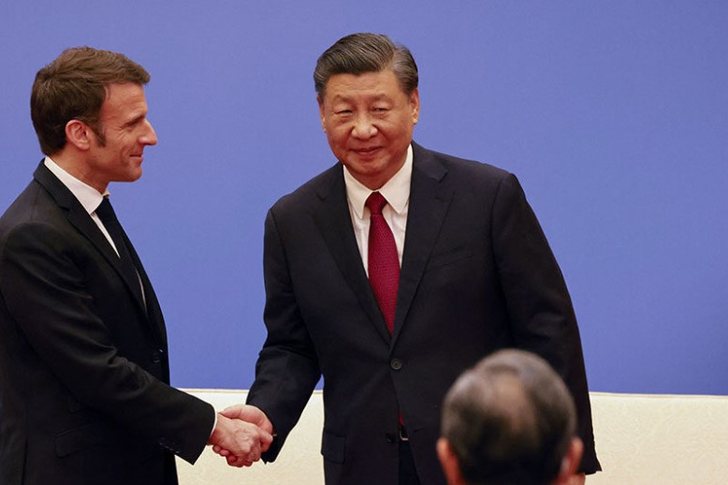
If the West is not united, it will not be able to comp...

CNA has launched another investigation that could lead to ...

Irfan Hysenbelliu is a businessman that we call "Irfan the...

In March 2026, CNA launched another investigation centered...
The arrested mayor of Tirana, Erion Veliaj, with 13 charge...

The Special Board of Appeal (KPA) decided this Monday ...

The KPA vetting decided this Thursday to dismiss the p...

Suela Salavaçi, a prosecutor in the Prosecutor's Offic...

The Special Board of Appeal reinstated the prosecutor ...

Footage emerges from the serious accident that occurred th...

A Shkodra traffic police officer was hit with hard objects...
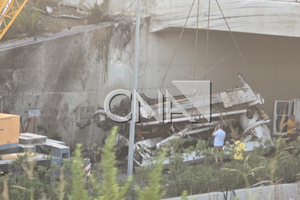
This Wednesday, around 4:00 PM, a serious accident occurre...

Tirana Police have shared details regarding the accident t...

A serious accident that occurred this Wednesday with the c...

The Institute of Geosciences has shared a forecast for wea...

Rising energy and fertilizer prices are expected to contin...

Over 18,000 foreign citizens from 140 countries have appli...

The trial of ousted Venezuelan President Nicolas Maduro on...

US President Donald Trump has issued another warning to Ir...

Prime Minister Andy Burnham has announced that most bus fa...

France's parliament has passed a law to ban social media f...

At a time when industrial products are increasingly taking...

Trust among people is not just a three-syllable word. It c...

Master of humor Todi Llupi has passed away at the age of 7...

The ninth edition of "MIK Festival" kicked off with one of...

The price of diesel reached 206 lek per liter from 198 lek...

Businesses will no longer be required to simply register t...

Despite economic growth and income in recent years, Albani...

This Wednesday, one US dollar is bought for 81.4 lek and s...