

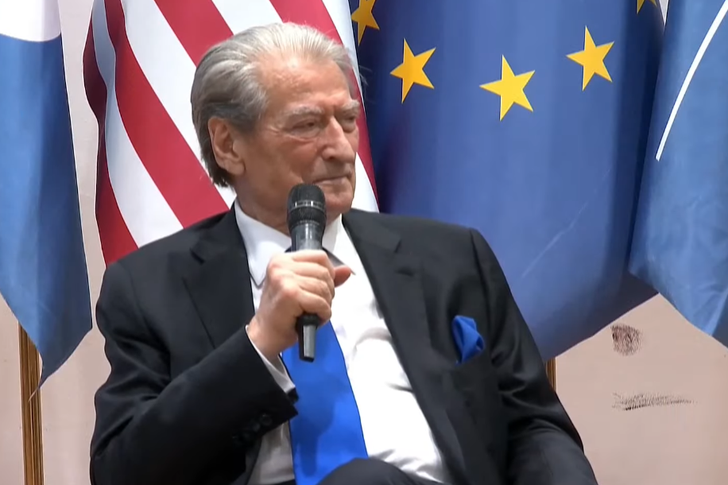
Berisha gathers 71 young people elected to the National Council: Vector for the renewal of the country and the DP
The Chairman of the Democratic Party, Sali Berisha, held a...


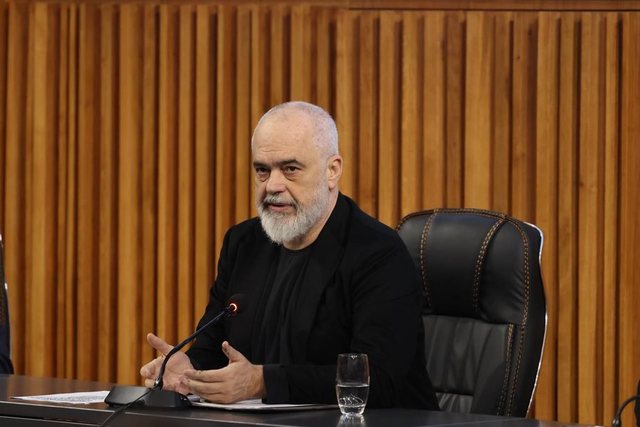
Prime Minister Edi Rama shared this Saturday evening a detailed explanation regarding the international media coverage of recent developments in Albania.
Through a post on the "X" platform, Rama describes the reports as digital hysteria, in which a gathering of citizens of a small country is transformed into a spectacle for foreigners through apocalyptic headlines, which according to him only share a fabricated anger.
The head of government, while sharing a stance on the issue, emphasizes that this distance between reality and virtual information is as dangerous as missiles and external threats.
Full reaction:
To CNN International and all the countless media outlets, large and small, as well as all those who produce and distribute with good intentions on Facebook, X, Instagram, TikTok and every other platform that shapes the global conversation today, I would very much like to convey this message:
As we speak, today's protest has gathered about 2,000 participants. This is the lowest turnout yet, but even at its peak, the turnout has never exceeded 8,000 people. So how is it possible that what much of the world has seen over the past few days has seemed so big, so dramatic, so overwhelming?
At some point, when the digital hysteria produced during these days has passed and the emotional climate has calmed down, the democratic world should take a closer look at how the gap between reality and the way it was presented became so wide.
Not simply as a matter of this particular case, but as a symptom of something much bigger.
How can a small country become global news for reasons so disconnected from reality on the ground? How can a local protest with a few thousand people turn into an international spectacle?
How can assumptions be turned into facts, narratives into definitive decisions, and speculations into accepted truths, before even the basic facts have been determined?
And perhaps most importantly: what does this say about our information ecosystem, when perception can travel around the world faster than reality itself?
Because the reality is that there is still no project.
There is no building permit yet. There is no construction yet. There is not even a final project.
There is only one vision and one plan: To transform Albania into the most attractive elite tourism destination in this part of the world, creating a positive environmental development, which, according to the current vision, would ultimately bring about 25% more trees and green spaces than exist today, in addition to measurable improvements in several biodiversity indicators.
The ambition is not simply to build. The ambition is to show that development and environmental improvement can go hand in hand.
For this very reason, some of the world's best experts in ecology, biodiversity, landscape architecture, environmental engineering, and sustainable tourism are working on these concepts and parameters.
Whether they will succeed or not is a matter of future assessment, science, public scrutiny, and transparent debate. But presenting as an environmental disaster something that does not yet exist, that has not yet been designed, that has not yet been permitted, and whose stated objective is precisely to produce positive environmental outcomes, is not a serious contribution to public discussion.
Yet, from this simple reality arose a hurricane of digital hysteria, apocalyptic headlines, fabricated outrage, and sweeping conclusions presented as proven facts.
Along the way, videos and images manipulated with artificial intelligence, fabricated claims, coordinated amplification, anonymous networks, and online behavior that bear many of the characteristics of hybrid information warfare, which is increasingly influencing public debate in democratic societies, also appeared.
Even more striking is that social platforms recorded an explosion of activity around the topic, with engagement in the Albanian language increasing several-fold in just a few days. A significant part of this sudden increase appears to have been driven not by an organic expansion of public participation, but by the rapid proliferation of newly created profiles, anonymous accounts, and pages with little or no identifiable history, raising legitimate questions about artificial amplification and the production of fabricated digital momentum.
But perhaps the most significant detail is also the simplest.
A significant number of reports fail to even distinguish between an island and private property on the mainland.
The protest itself is related to the latter.
Not with the first one.
In fact, there is currently no major public debate in Albania regarding the island itself.
However, countless articles, posts, and comments combine the two into a single narrative, creating confusion where there should be accuracy and emotion where facts should prevail.
Disagreement is legitimate.
Criticism is legitimate.
The questions are legitimate.
Environmental concerns are legitimate.
Public scrutiny is legitimate.
What is not legitimate is replacing facts with assumptions, assumptions with absolute certainty, and absolute certainty with collective anger. What is not legitimate is treating claims as facts, speculation as evidence, and fear as conclusions.
And when highly respected media outlets stop making the most basic distinctions, when they no longer manage to separate what exists from what does not exist, what is proposed from what has been approved, what is being debated from what is merely being imagined, they are not only not misinforming;
They are contributing to the erosion of reality itself.
And this should concern every democracy.
Because this is how trust in institutions is gradually destroyed.
This is how faith in traditional politics is eroded. This is how the ground is prepared for demagogues, charlatans, and professional anger-mongers. This is how calls for the destruction of political opponents are normalized. This is how calls for “traitors,” “enemies of the people,” and even demands for death and revenge are amplified and legitimized. This is how the old ghosts of fanaticism return, dressed in new digital guises. This is how fascism reinvents itself for the age of algorithms.
Albania will get through this too.
We will continue our journey.
We will continue to transform our country into a great elite tourism destination, a stronger democracy, and a proud member of the European family.
But this story should have significance far beyond Albania.
Because others may see in it a warning of what is coming.
We live in a time when democratic societies are investing billions to defend themselves from long-range missiles, drones, and external threats.
And this is wise.
But protecting our countries from missiles will be of little value if we fail to protect the souls of our countries and the minds of our young people from the industrial manipulation, hatred, and lies that arrive every day from a distance much shorter than any missile can travel:
The distance between a phone screen and the human mind.
Because if we lose this battle, we may one day discover that we have protected land borders while allowing the foundations of our democratic societies to collapse from within.
And then there may be very little left to protect. /CNA

The Chairman of the Democratic Party, Sali Berisha, held a...
The leader of the Democratic Party, Sali Berisha, welcomed...
Prime Minister Edi Rama reacted again this Saturday regard...
The head of the Socialist Party Parliamentary Group, Taula...
Prime Minister Edi Rama delivered his speech at the 35th a...
Prime Minister Edi Rama, during a meeting with residents o...
Prime Minister Edi Rama stressed in a meeting with the res...
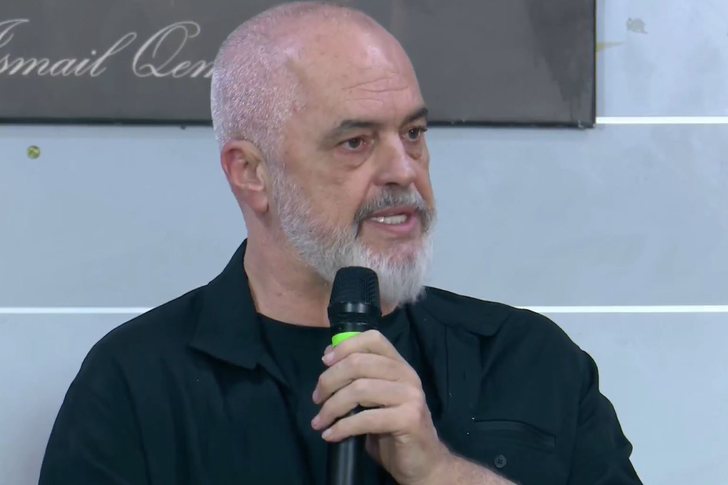
Prime Minister Edi Rama, in a meeting with the residents o...
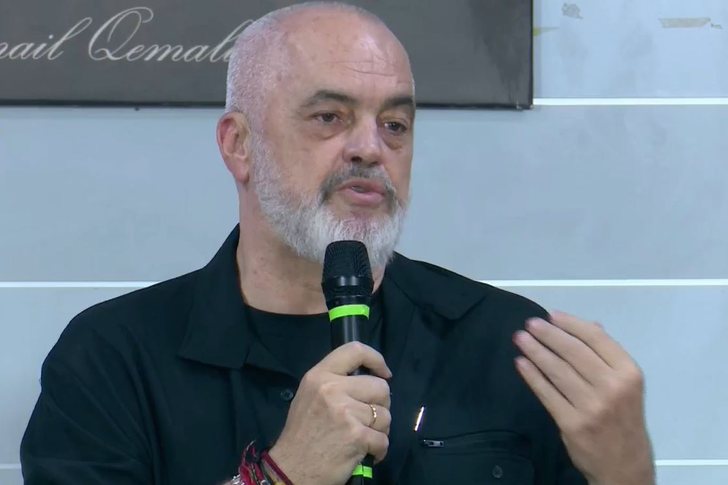
In the meeting with residents in Zvërnec, Prime Minister E...
Prime Minister Edi Rama is holding a meeting with the resi...
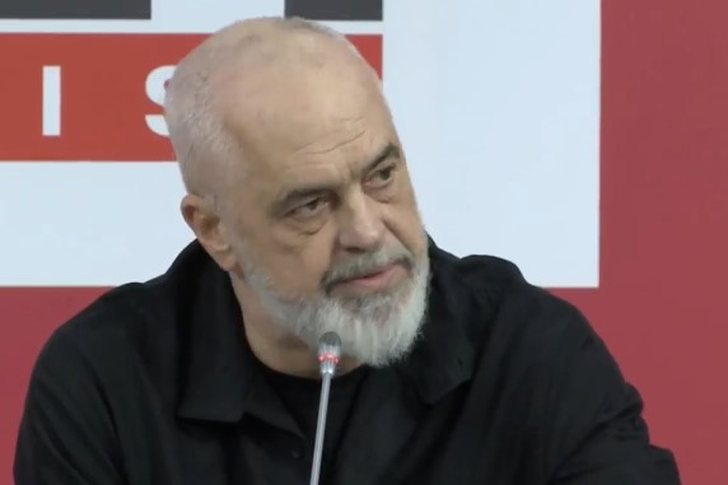
Prime Minister Edi Rama will hold a meeting with the resid...
The Democratic Party's Anti-Corruption Spokesperson, Genta...
Former Deputy Chairman and former DP MP Edmond Spaho has s...
A day earlier, protesters removed the leader of the "Mundë...
The Chairman of the Socialist Party Parliamentary Group an...
Former Deputy Chairman and former DP MP Edmond Spaho has c...
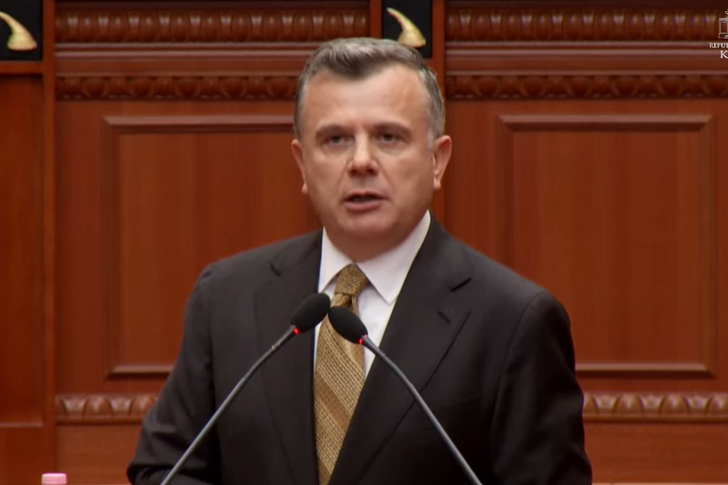
The leader of the Socialist Party group, Taulant Balla, re...
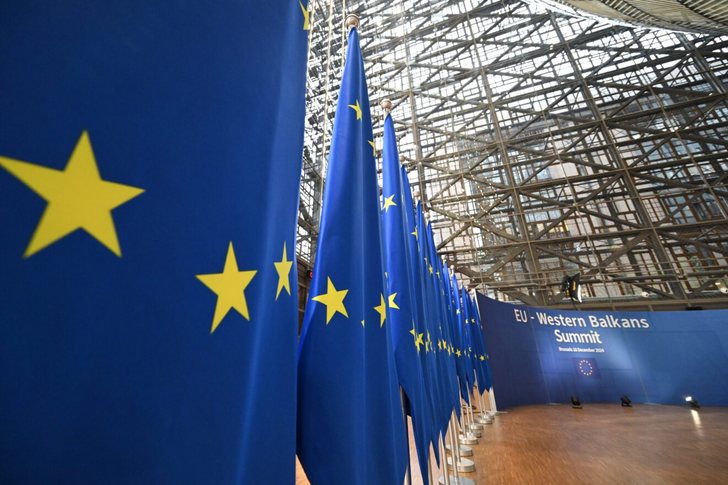
The EU-Western Balkans summit will take place tomorrow in ...
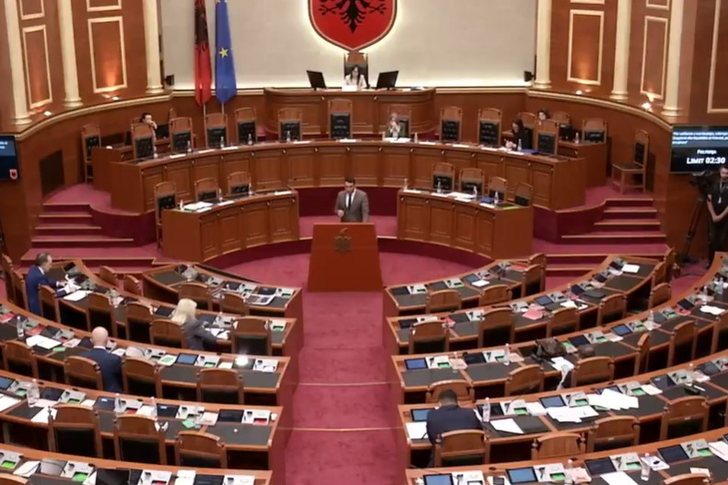
DP MP Belind Këlliçi has leveled accusations against Prime...
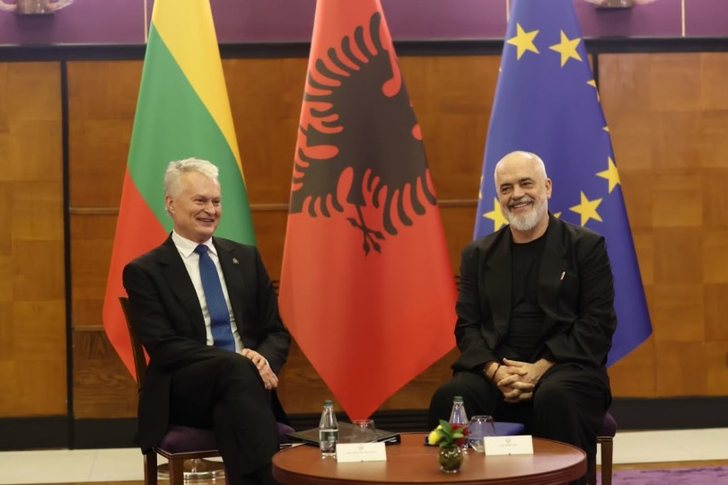
Prime Minister Edi Rama received today in a meeting at the...

Irfan Hysenbelliu claims to be a big businessman, an hones...
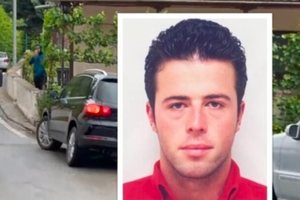
The murder of officer Enea Mekolli in the line of duty has...
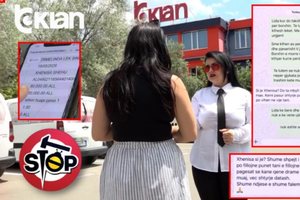
The next case broadcast on the show "Stop", this Thursday,...
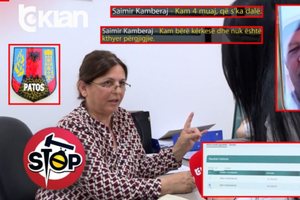
The case published this Thursday, June 4, on the show "Sto...

The Special Board of Appeal (KPA) decided this Monday ...

The KPA vetting decided this Thursday to dismiss the p...

Suela Salavaçi, a prosecutor in the Prosecutor's Offic...

The Special Board of Appeal reinstated the prosecutor ...
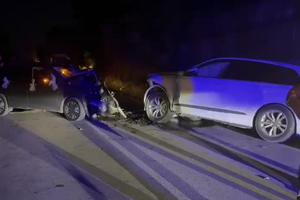
A road accident has been reported on the Fier-Levan axis, ...

An accident was recorded a few minutes ago on the Pogradec...
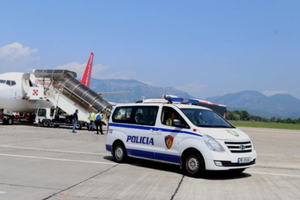
Following the cooperation of Interpol Tirana with Interpol...

An accident occurred this Saturday morning at Shkëmbi i Ka...
Albanians are officially the hardest working people in Eur...

This Saturday will be characterized by mostly clear weathe...
Today our country will be affected by stable weather condi...

For many children and teenagers, the long summer holidays ...

The military advisor to Iran's supreme leader, Mohsen Reza...

US Defense Secretary Pete Hegseth declared that Europe is ...

A federal judge in Rhode Island struck down a Trump admini...
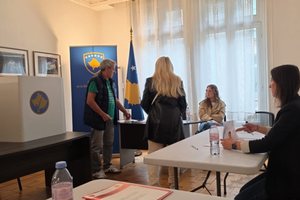
Thousands of Kosovo citizens living abroad are voting phys...

Korça is ready to open the summer season with one of the c...

Two years after his passing, the renowned Korçë poet Skënd...

The Ethnographic Museum of Berat has opened its doors to v...
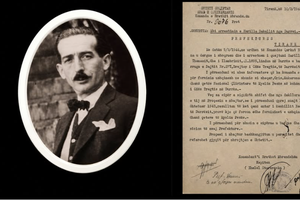
The story of Harilla Bakalli is one of the most chilling t...
The Transparency Board, in today's meeting, decided to red...

This Saturday, one US dollar is bought for 81.4 lek and so...
Despite years of efforts at regional cooperation and free ...

Albania is the country with the highest level of severe ma...