


Zvezda residents protest over water shortage: Millions were invested, but the taps are empty
Residents of the village of Zvezda, in the Maliq Municipal...

Residents of the village of Zvezda, in the Maliq Municipal...


In the contemporary debate on literature, one of the most frequent confusions is the equating of the book with the work. This equating, often implicit, shifts attention from the structure of the text to the act of publication. In this way, publication functions as proof of aesthetic existence, while the notion of the work fades as a distinctive category of value.
Literary theory has addressed this distinction in various ways. For Roman Jakobson (1896–1982), one of the central figures of structuralist linguistics, the aesthetic function of language guarantees the autonomy of the text as a formal object. For Pierre Bourdieu (1930–2002), a French sociologist of culture, the work is understood as the product of a social field, where value is not intrinsic, but is produced through selection, hierarchies, and legitimation.
In both approaches, the work does not coincide with the book as a published object, but with the way the text is organized and the place it occupies in a system of values.
From this perspective, the difference between book and work can be defined as the difference between the regime of production and the regime of value.
The book is a unit that is produced and circulated; the work is a structure that endures. It does not justify itself through material existence, but through internal coherence and formal necessity. This necessity is not an ornament, but a fundamental condition: each element of the text acquires meaning only in relation to the whole.
This becomes apparent through several indicators: structural coherence, semantic density, economy of form, and the ability to produce meaning beyond the moment of reading. A book may circulate and have widespread success, but it becomes a work only when it achieves a formal organization that withstands time.
The tradition of the European novel clearly illustrates this distinction.
In Miguel de Cervantes, the narrative turns into a reflection on the narrative itself. In L. Tolstoy, the novel is constructed as an organic whole where history and the individual are intertwined in a continuous movement between individual experience and historical context. In Fyodor Dostoevsky, it becomes an arena of conflicts of ideas and consciences. In all cases, the novel is not simply a narrative, but a complex organization of human experience.
This line is deepened in Honore de Balzac where the novel takes the form of a totalizing social system, and in Gustave Flaubert where the form reaches an extreme aesthetic discipline. In Marcel Proust the focus shifts towards time and memory, while in James Joyce towards radical experimentation with language and structure. In all these cases, the novel does not exhaust itself in fable, but produces mechanisms of meaning that survive time.
Megjithatë, ky përkufizim i veprës në terma të koherencës dhe domosdoshmërisë formale, sado i qëndrueshëm në traditën klasike të romanit, nuk arrin të shterojë të gjitha format e prodhimit letrar modern. Pikërisht aty ku ky standardi duket më i konsoliduar, ai vihet në provë nga praktika që e problematizon vetë idenë e tërësisë. Në këto raste, nuk kemi thjesht dobësim të strukturës, por rishpërndarje të parimeve që e organizojnë tekstin.
Te Samuel Beket, reduktimi ekstrem i gjuhës dhe i rrëfimit nuk funksionon si mungesë organizimi, por si zhvendosje e vetë parimit organizues të veprës. Teksti nuk mbështetet më në koherencë narrative të vazhdueshme, por në tensionin midis shprehjes minimale dhe heshtjes, ku forma shfaqet si kufi i vetvetes. Kjo tregon se kriteri i koherencës, i marrë si universal, nuk mjafton për të përfshirë të gjitha mënyrat e realizimit estetik.
Edhe në letërsinë shqipe, ky dallim merr forma të ndryshme sipas mënyrës së organizimit të narrativës dhe raportit që teksti vendos me strukturën e vet.
Te Ismail Kadare romani ndërtohet shpesh si sistem shumëplanësh simbolik, ku rrëfimi organizohet në disa shtresa kuptimore që ndërveprojnë mes historisë, mitit dhe politikës. Koherenca këtu nuk është lineare, por e shpërndarë në një rrjet strukturash që funksionojnë paralelisht.
Ndërsa te Dritëro Agolli dominon një strukturë më lineare dhe më e drejtpërdrejtë narrative, ku zhvillimi i ngjarjes dhe karakterit ruan një vazhdimësi më të qëndrueshme dhe më afër modelit realist tradicional.
Në dallim prej Dritëroit dhe Kadaresë, te Koço Kosta rrëfimi shndërrohet në një formë të vetëdijshme destabilizimi të narrativës, ku prishja e linearitetit, tensionimi i gjuhës dhe shpërbërja e personazhit e zhvendosin tekstin nga modeli i romanit tradicional drejt një hapësire më provokative, ku forma nuk konfirmohet, por vihet në provë. Gjuha nuk është vetëm mjet përfaqësimi, por material i ekspozuar ndaj eksperimentimit stilistik dhe semantik, ku provokimi formal shoqërohet me një vetëdije të fortë mbi aktin e shkrimit.
Në letërsinë shqipe bashkëkohore, kufijtë mes “librit” dhe “veprës” bëhen gjithnjë e më të paqëndrueshëm. Në disa raste, romani ndërtohet si reflektim mbi realitetin shoqëror dhe politik, duke ruajtur një strukturë narrative më të çlirët, si te disa romane të Ben Blushit ku ideja qendrore organizon rrëfimin dhe e kthen atë në formë më shumë argumentuese sesa thjesht estetike. Te Të lirë e Lea Ypit, kufiri midis krijimit dhe autobiografisë zhvendoset, duke prodhuar një narrativë reflektuese që fiton koherencë përmes strukturës së përvojës dhe mendimit. Ndërkohë, në romanin më eksperimental bashkëkohor vërehet prirja për fragmentim dhe montazh zërash, duke zhvendosur fokusin nga fabula te procesi i rrëfimit.
To understand this instability, Pierre Bourdieu's theory offers a broader framework. Literature is not produced in a neutral space, but within a cultural field where aesthetic value is the result of power relations, mechanisms of legitimation, and instances of symbolic recognition.
In this sense, the distinction between the book as a circulating product and the work as a consolidated aesthetic form becomes also a matter of structures of cognition and not only of the qualities of the text. In Albanian literature, the lack of a consistent critique makes this distinction even more unclear.
Here also arises a question that directly affects the mode of contemporary literary production: how can a novel be written in two months? A novel requires not only ideas, but also sedimentation of form, rewriting and distance from its material. When it is written under the pressure of time or with the direct aim of presenting it at a fair, the process shifts from the construction of a work to the production of a circulating object. Under these conditions, writing risks no longer being a form that consolidates, but a product that fulfills a predetermined commercial cycle.
Book and work are not synonymous. The book belongs to circulation; the work belongs to time. Literature is not measured by numbers, but by forms that survive time through the value they hold.
In this context, the lack of literary criticism becomes a fundamental problem. Without a specialized criticism, capable of distinguishing and evaluating, literature loses its internal mechanisms. Criticism no longer functions as judgment, but as description or promotion. When this happens, publication and exhibition replace evaluation, creating a reality where the increase in books does not necessarily imply the birth of works.
The problem lies not only in the lack of criticism, but also in the lack of courage to judge. When criticism fails to highlight the real shortcomings of a text; structural weakness, lack of depth or insufficient aesthetic level, it loses its fundamental function. In this case, silence would be more honest than a discourse filled with undeserved praise. Because, by attributing to a book a value that it does not have, criticism does not help the author, but stabilizes him in his limitations; at the same time, it misorients the reader. Thus, criticism no longer functions as a qualitative filter, but as a mechanism for inflation of values, where everything is artificially raised to the level of the “work”, and precisely for this reason, the very notion of value loses its meaning.
All that has been presented above is not intended to provide definitions or set firm boundaries, but only to modestly bring to attention an issue that, although it often circulates implicitly in our discussions, we rarely address openly in the public space of literary debate.
This article was published in the literary magazine "Landscapes of the Word".

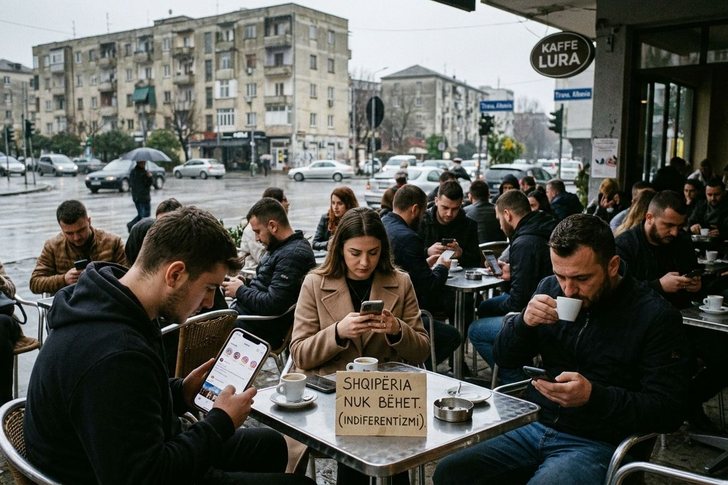
Albanians may not be able to build serious institutions. ...
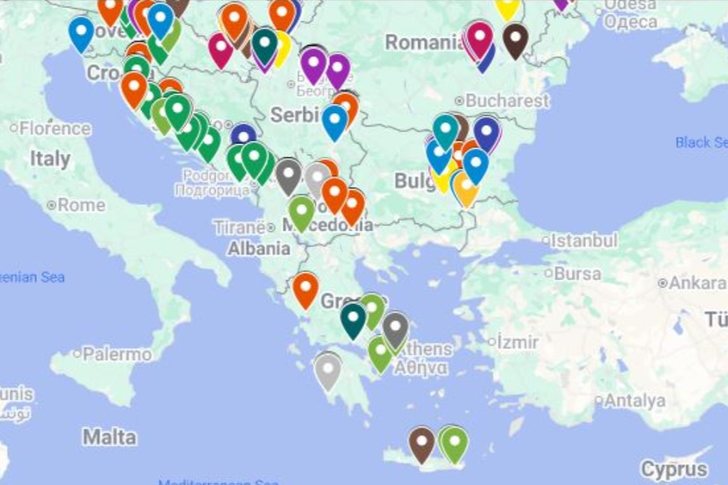
A new study launched in August 2025 and published in the w...

There is a special 24-hour sound in Tirana. It's the soun...
Hit the teachers! Yes, yes, don't stop. Don't stop... Denig...
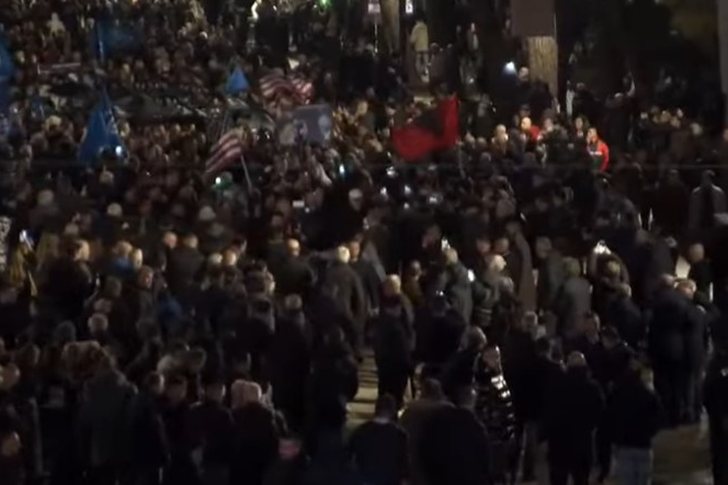
There comes a moment in every political story when metapho...

I chose not to speak out immediately after the event in Du...

The European Parliament approved the report on Albania, wi...

Sunday, May 3, 2026 will remain a sad day in the chronicle...

April 2026 brought news that seemed like a step towards de...

May 3 is World Press Freedom Day, the European Union's dec...

After 13 years in power, the government has also run out o...

In a month, the DP membership will vote to elect its chair...

Weekend status, 2.05.2026 The May 23, 2026 Democratic Par...

From 2025, Kosovo is heading to three elections, an excess...

In a race where there is only one candidate, coming in sec...

Last night, at 9:00 PM, I had a long conversation in t...

While the propaganda for the uncompromising fight against ...

There's no need to invent fake candidacies out of thin air...

Falenderuesi i atëhershëm i Ramiz Alisë është çimentuesi i...

"Shut up. Don't object! We invested in you, not you in the p...
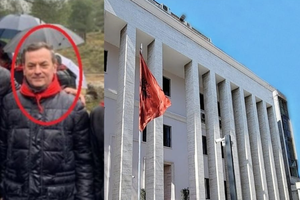
CNA has put under scanner the assets of Sokol Sadushi, the...

A 39-year-old citizen has been arrested in Lezha, after se...

CNA has launched another investigation that could lead to ...

Irfan Hysenbelliu is a businessman that we call "Irfan the...

The Special Board of Appeal (KPA) decided this Monday ...

The KPA vetting decided this Thursday to dismiss the p...

Suela Salavaçi, a prosecutor in the Prosecutor's Offic...

The Special Board of Appeal reinstated the prosecutor ...
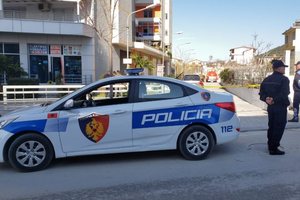
Police have revealed details of the incident that occurred...
According to preliminary information, a person in his 60s ...
A triple accident occurred on the Peqin-Elbasan axis n...

The police have provided details regarding the accident th...

The public sector took the lead in absorbing the workforce...
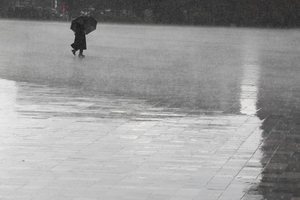
Today, our country will be under the influence of unstable...
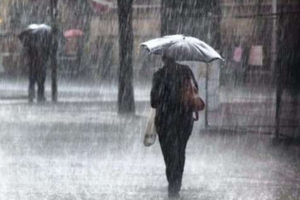
The Institute of Geosciences has today shared a forecast r...

Company leaders can improve productivity by investing in a...
Oil prices fell in early trading on Monday, falling furthe...
Although Albania does not have a developed industry on the...

North Korea is said to have achieved some impressive resul...

US Ambassador to the United Nations, Mike Waltz, said toda...
Two windows, a century of history and the metaphysics of p...
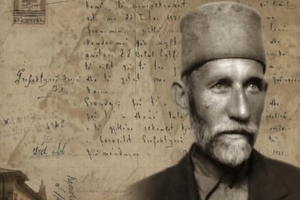
In my research at the Central State Archives, specifically...

At a time when industrial products are increasingly taking...

Trust among people is not just a three-syllable word. It c...

After strong savings growth in the years following the pan...

This Monday, one US dollar is bought for 81.5 lek and sold...

This Sunday, one US dollar is bought for 81.5 lek and sold...

This Saturday, one US dollar is bought for 81.7 lek and so...