


ICC votes to dismiss Chief Prosecutor Karim Khan
Member states of the International Criminal Court voted to...

Member states of the International Criminal Court voted to...

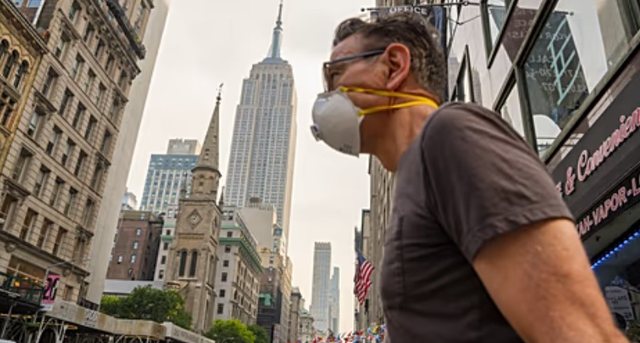
"Climate change, bushfires and air pollution are a vicious cycle," says Clean Air Fund executive director Jane Burston - and toxic particles can travel thousands of kilometres.
A national emergency declared in Spain, thousands forced to flee in France and thousands of hectares burned in Italy, fires are burning more frequently and more intensely as the climate changes.
And their danger doesn't end when the flames are out. Smoke carries black carbon, tiny particles of partially burned material that can travel hundreds, even thousands, of kilometers from the fire itself.
“Pollution can travel quite long distances,” Jane Burston, executive director of the Clean Air Fund, tells Euronews Earth. Some particles are small enough to pass through the lungs into the bloodstream, she says, causing asthma in the short term and, over the years, lung cancer, heart attacks, strokes and even dementia.
Burston cited Canada's record-breaking wildfire season in 2023 as a clear example, with an estimated 82,000 people dying from the resulting toxins and pollution across Canada, the US and Europe, long after the fires themselves had stopped burning.
Forest fire smoke is an underestimated risk
Recent research supports her concerns. A study in The Lancet Planetary Health, covering 32 European countries, found that mortality linked to forest fire smoke may be underestimated by 93 percent, because fine particles associated with fire appear to be more harmful than pollution from other sources.
Separately, US researchers reported that global emissions of health-damaging gases from forest fires could be about 21 percent higher than previous estimates.
Burston says drought combined with heatwaves, both intensified by climate change, are creating the conditions for fires to spread rapidly. "We will expect a longer and more intense fire season every year," she tells Euronews Earth. Breaking the 'vicious cycle' of climate change, fires and air pollution
Burston describes air pollution, climate change and fires as a self-reinforcing loop: pollutants released along with greenhouse gases when humans burn fossil fuels raise temperatures, fueling more fires, which in turn produce more pollution.
"We really need to address other causes of air pollution, as well as forest fires," she says, adding that reducing pollution also saves money for health systems and increases productivity.
She calls for stronger early warning systems, noting that some regions in Latin America already use air quality monitors to detect fires before they are visually noticeable.
Governments, she says, should combine forecasting with clear guidance on when people should stay indoors, use air purifiers or evacuate./ CNA

Saudi Arabia launched airstrikes on Houthi rebel targets i...
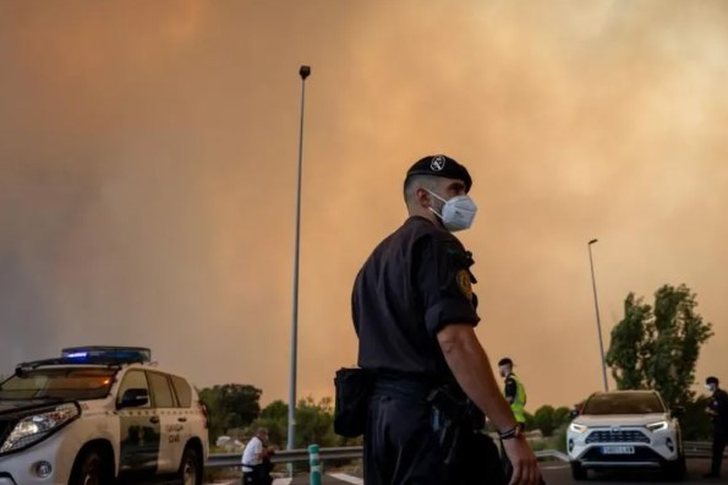
More than 220,000 people have been evacuated in France and...

Peru and Venezuela will restore diplomatic relations, the ...
United States President Donald Trump has left open the pos...

Israeli Prime Minister Benjamin Netanyahu will travel to t...
A bipartisan group of US lawmakers is calling for a Europe...

US President Donald Trump will host his Ukrainian counterp...
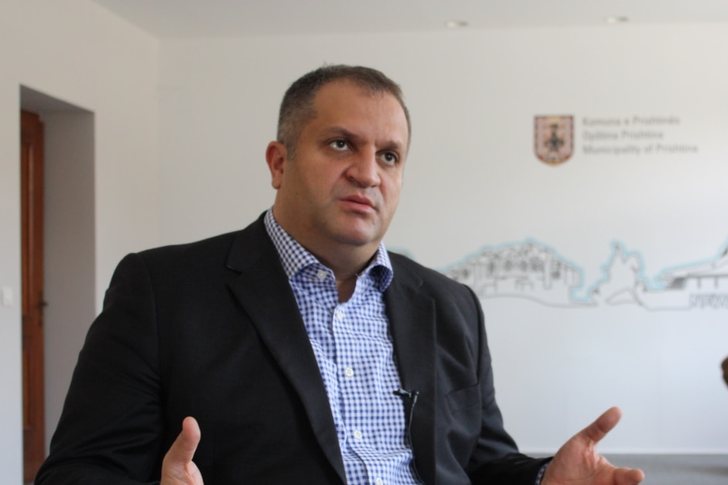
The Basic Court in Pristina found the former mayor of Pris...
The European Union Office in Kosovo has called on all poli...
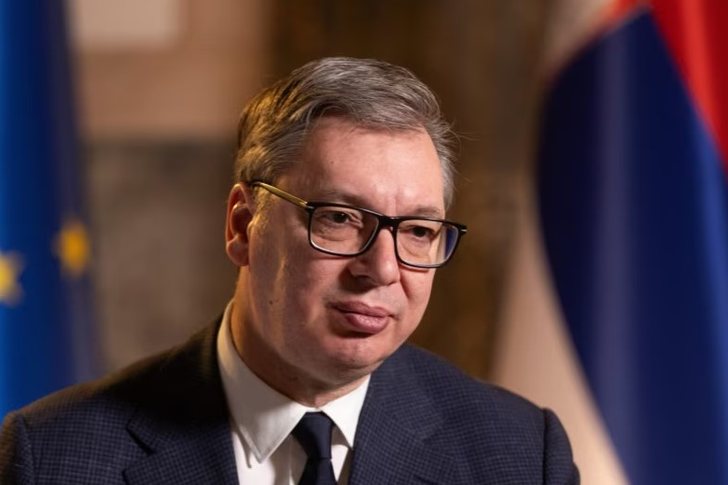
Serbian President Aleksandar Vučić, at a press conference ...

For the first time since the launch of the euro, European ...

Artificial intelligence (AI) models from the American comp...
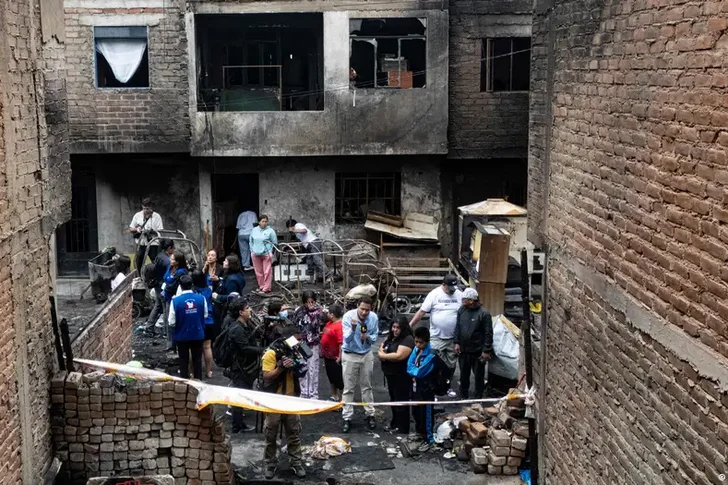
At least 10 people have died after a fire broke out in a h...
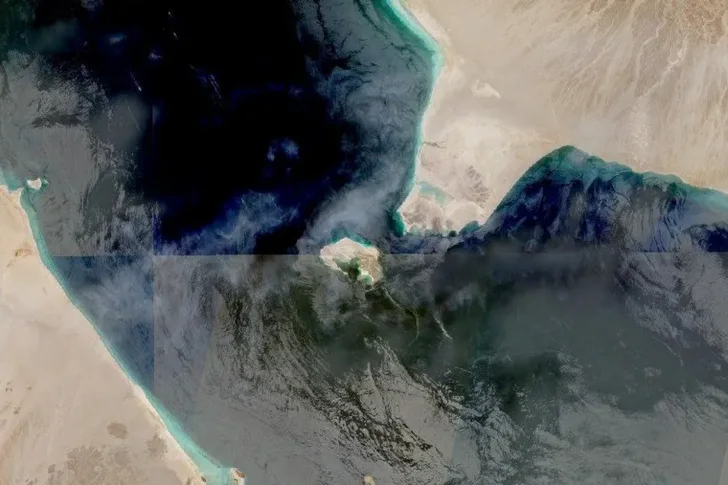
Yemen's Houthis have claimed to have attacked two Saudi oi...

The trial of ousted Venezuelan President Nicolas Maduro on...

US President Donald Trump has issued another warning to Ir...
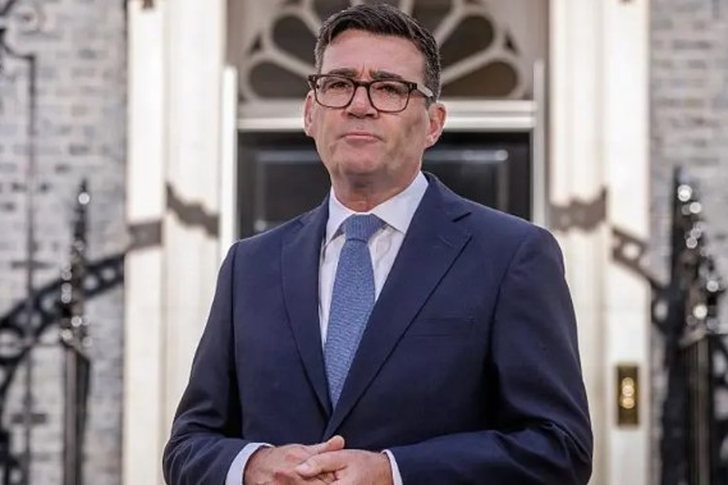
Prime Minister Andy Burnham has announced that most bus fa...
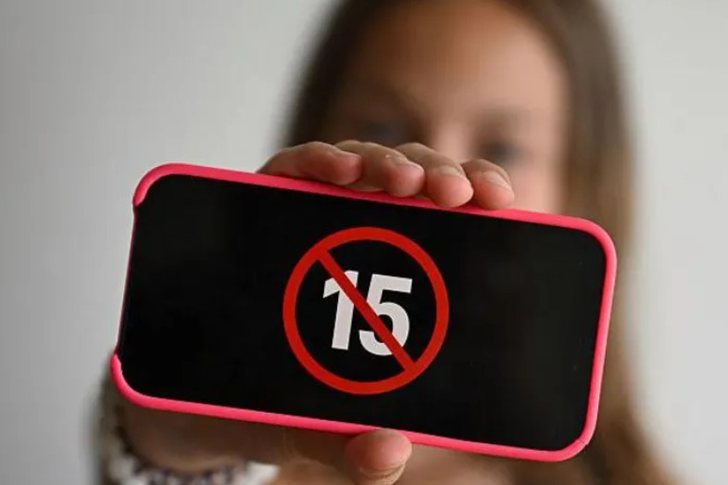
France's parliament has passed a law to ban social media f...

US Secretary of State Marco Rubio arrived in Manila on Jul...
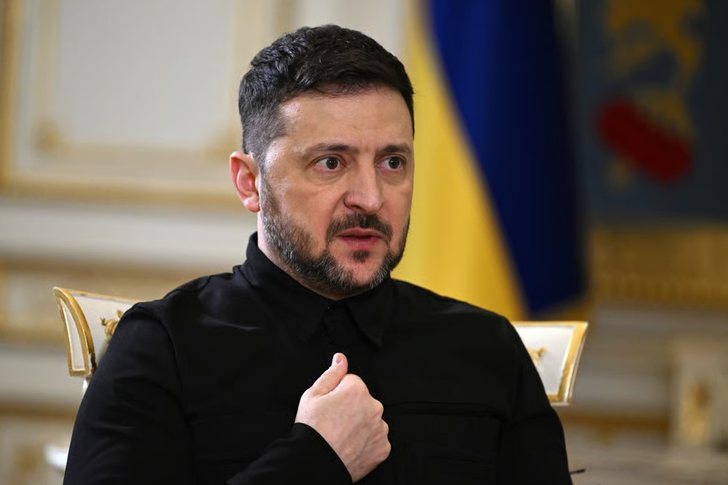
In the space of a few days, Ukrainian President Volodymyr ...

A 39-year-old citizen has been arrested in Lezha, after se...

CNA has launched another investigation that could lead to ...

Irfan Hysenbelliu is a businessman that we call "Irfan the...

In March 2026, CNA launched another investigation centered...

The Special Board of Appeal (KPA) decided this Monday ...

The KPA vetting decided this Thursday to dismiss the p...

Suela Salavaçi, a prosecutor in the Prosecutor's Offic...

The Special Board of Appeal reinstated the prosecutor ...
A conflict for weak motives was recorded today in the vill...

An accident involving three vehicles occurred a few minute...

55-year-old Belere Plaka, who was injured today with a sho...
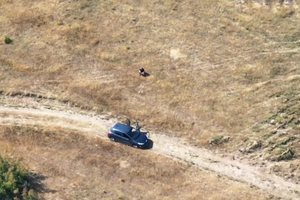
Police Announcement: Following preliminary information...
Today, our country will be under the influence of stable a...

By noon, cloudiness is expected to prevail in almost all o...

Children without parental care, for whom alternative famil...
On Thursday, our country will be under the influence of st...
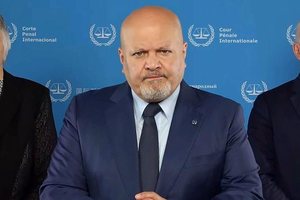
Member states of the International Criminal Court voted to...

From the declining role of exports to new public investmen...

South Korea is becoming one of the most sought-after desti...

The average wealth per adult in Western Europe is less tha...

In my research at the Central State Archives, specifically...

At a time when industrial products are increasingly taking...

Trust among people is not just a three-syllable word. It c...

Master of humor Todi Llupi has passed away at the age of 7...

This Saturday, one US dollar is bought for 81.7 lek and so...
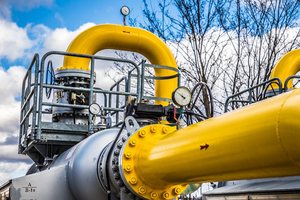
War, weather and supply disruptions could send gas prices ...
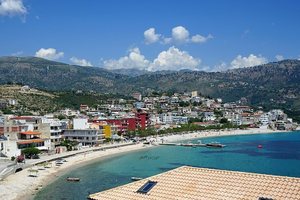
The number of active enterprises in Albania continued to g...
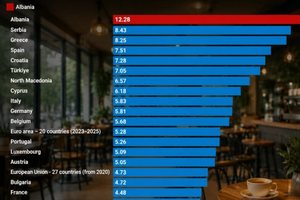
In Albania, the bar-cafe has long become an almost unique ...