


The mobile market, amidst competition challenges and the need to recover
The Competition Authority decided at the end of last year ...


Albania with two seasons: buzzing August, silent January
At the height of August, the Albanian coast buzzes like a temporary city. Durrës, Vlora, Saranda with busy streets, makeshift parking lots and beaches that lose the distinction between sand and crowds.
On those hot days, tourism becomes a stress test. A place that loves attention, but often lacks the capacity to manage it without losing its dignity. And then comes January.
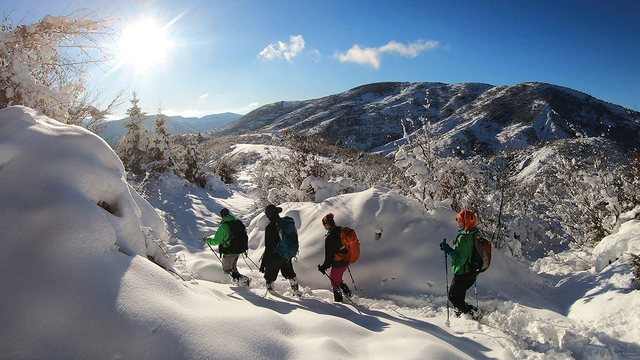
Mountain villages like Thethi or Voskopoja are covered in snow and tranquility, guesthouses open their doors mainly on weekends, while the rest of the week is spent in a kind of "if it snows well, if it doesn't, it's still good" kind of waiting.
This is our panorama: a crowded summer and a quiet, almost forgotten winter. Statistics confirm the contrast. About 60% of visitors enter the country during the three summer months (June–August), while in the winter (December–February) only 12% arrive.
In other words, our tourism operates in “peak mode” for a few weeks and then falls silent for months. And this silence translates into closed doors, young people leaving the villages, an economy that can’t find its rhythm, and a mountainous Albania that remains off-camera just when it would have more to show.
At a time when European tourism is increasingly seeking "slow" travel, nature experiences, mild winters, hiking, local gastronomy, and small adventures, Albania is also appearing on the radar as a "new destination" not only for summer, but also for winter.
But here the question arises: are we ready to keep up with this expectation? In the summer, we know well what happens when demand grows faster than capacity: infrastructure wears out, services become strained, and the environment pays the bill.
Winter, on the other hand, beyond a weak season, would be the opportunity to spread the tourism economy in time and territory and to give life to mountain areas when they usually shut down, and to move from “mass tourism” to “experience tourism”. But winter is a great challenge for our country.
It requires organization, security, standards, and a way of development that does not erode nature, especially now when climate change is making "safe snow" an increasingly unstable resource.
Why does Albanian tourism focus on wine?
Albania has historically built its tourist identity on the “sea-sun-sand” formula. Investments, marketing, and the very culture of vacations have been aligned around the coast for decades.
It's understandable logic. Albania has a Mediterranean climate and a long coastline, while the regional market seeks nearby, low-cost summer destinations.
Meanwhile, the mountains remain a beautiful "background", but not a tourist product. And when a country builds its tourist economy on a single season, it automatically turns into a peak place with "everything" concentrated in a few weeks and "emptiness" for the rest of the year.
For years, national promotion has reproduced this coastal model, while the mountain has remained largely a “background.” Loren Roço, founder of “Adventure & Fun Albania,” an inbound tour operator specializing in adventure tourism in all seasons, working with foreign travelers, as well as a hiking/trekking guide instructor, tells us that Albania still remains a “virgin” and “wild” winter tourism destination, almost completely undiscovered by domestic and foreign travelers.
The image of Albania in fairs, brochures and campaigns has been mainly coastal, urban and cultural; rarely mountainous and never as a winter tourism destination. When winter offer is scarce, businesses do not invest because there are no customers and customers do not come because there is no offer.
And so winter remains “nice for a weekend,” but not structured as a product that produces a sustainable economy. In this sense, the problem with winter is not that we “have nothing to show people,” but that we have not yet made winter work as a system.
What is missing from the Albanian winter?
The first shortcoming is what is not visible on social media: accessibility. Many mountain areas with winter potential remain fragile when snow falls. Segments that are blocked, ice that turns travel into an unnecessary risk, cleaning that comes late.
And when the destination is beautiful but uncertain to reach, it remains for the visitor a last-minute "lucky" choice and not a plannable season. For the foreign visitor, especially one who plans, books and has expectations, the lack of stable access is an immediate stop.
The second link is the reliability of basic services. In winter, power outages, unstable heating, and outdated and limited water and sanitation infrastructure turn destinations into a test for the guesthouse rather than an experience for the tourist. Albanian guesthouses have done wonders with the few opportunities they have.
This is part of the merit of mountain tourism, but in a wider market, the “miracle” cannot be sold as a standard. “The tourist, more than luxury, seeks security: to arrive without stress at the place of accommodation, to warm up, to dry clothes and shoes, to wash with warm water and to sleep well. In other words, to have a minimum predictable service,” says Loreni.
The third gap is the winter services ecosystem. Winter requires specific products such as adapted and informed trails, rental equipment, specialized guides, information points and a culture of risk management.
Today, many of these links exist as small initiatives: a few adventure agencies, a few motivated guides, a few communities that have understood that winter should be crowned with activity. But to turn it into a sector, a system with clear information, standards, and organization is needed.
There is a fourth deficiency, less technical and more cultural. We have normalized the idea that winter in the mountains is “hostel + dinner + photos,” and that’s it. This is valuable and beautiful because hospitality and cooking are part of our identity, but it is not enough to fill a season.
Winter should have reasons to stay even when the snow is not perfect, even when the day is short, even when the tourist is looking for more than a warm table.
Summer vs. winter: different tourists, different economy
The summer tourist in Albania comes for the sea and the fast pace. It requires frequent movements, short stays, and an orientation that often seeks "more for less."
This profile fills volumes, but increases pressure on space, water, energy and waste, precisely at a time when public services are working at capacity limits.
The winter tourist, even when few, usually seeks experiences such as nature, tranquility, activities, local culture and a service that provides security. He travels for a reason (or several reasons) and pays for them.
Here the inequality is clearly visible in the numbers: our tourism is concentrated in a few weeks of summer, while winter remains thin and unstable.
The above data suggest that Albania has a pronounced summer seasonality, with a low weight in winter. A similar trend is observed in Montenegro and especially Croatia, while Serbia and Bulgaria have a more balanced distribution, because winter contributes more through structured winter products.
This makes winter potentially more "quality" in an economic sense. So, not necessarily more people, but more value for the visit and less stress on the territory.
And precisely for this reason, winter does not "replace" summer, but makes tourism more distributed, more manageable, and less dependent on the peak.
Winter is not just a hostel
The lodge and the fireplace are the heart of the Albanian winter and should remain. But winter can also have muscles. Loreni tells us that in recent years, there has been a growing interest in ski touring and winter hiking, including snowshoeing (snowshoeing) in the valleys and forests where the winter landscape is spectacular, in addition to cultural tourism.
When this is done with guides, with equipment and at an adapted pace, winter in mountainous terrain is not seen as an "insurmountable danger", but as a product. And the product has a great advantage, it does not require massive construction; it requires organization, specialized knowledge and perfect service.
For the most prepared adventurers, Albania has a rare asset in the region: virgin terrain for ski touring and freeride, where the snow is sufficient and the topography allows it.
This is an experience for a specialized market, but with high value; small groups, professional services, relatively low environmental impact compared to massive infrastructures.
“In a climate reality where snow is no longer guaranteed by winter itself, flexible and diversified products become more sustainable.
This also includes an often underestimated dimension: “well-being” in nature. Thermal baths, winter walks, local gastronomy, small community events, all of these give winter a reason to be a season, not just a “cold month.”
Europe has also learned this lesson, many destinations that have lost reliable snow have survived by becoming 4-season rather than chasing snow at all costs.
Winter infrastructure: roads, trails, safety
Winter development should start with concrete things like road cleaning, salt, signage, power that doesn't drop every time the wind blows, and a simple information system that tells visitors what is open and what is not.
In winter, "asking in the village" is very normal in Albania. This improvisation is the enemy of sustainable tourism.
Safety is the unforgiving part. A wonderful summer trail can be dangerous in winter due to avalanches, ice, loss of orientation or hypothermia, like the internationally renowned “Valbonë-Theth”.
For a winter that must grow, a minimum of risk management is needed with clear warnings, recommended itineraries, information on conditions, and emergency protocols.
In a country where adventure tourism is growing, mountain search and rescue is a condition of credibility. Albania is starting to have some positive initiatives in this field, but the further challenge remains to strengthen and standardize these capacities with unified protocols, to have clear coordination and sustainable public information.
There is another dimension, equally important: the environment and parks. The winter in the mountains is a fragile season for habitats, for ecology and for the landscape. If in the summer we often have problems with waste management and pressure on nature, winter should not be the “second season” of the same mistakes.
Where are we in relation to our neighbors?
In the region, winter has long since become a product, somewhere with large resorts, somewhere with smaller models, but almost everywhere with one element that we still have that is fragile: the system.
The neighbors have tradition, they have standards, they have schools, they have winter marketing. Bulgaria, for example, has built its winter on the model of consolidated resorts.
Albania has nature and authenticity, but it is still in its infancy in building the "package" that makes winter reliable for the market.
This is why many people who want skiing, instructors, slopes and safety still look abroad: not because we don't have mountains, but because we don't have a complete product.
The data in the table above clearly shows us that winter becomes a season only when there is a system. In Bulgaria (Bansko, Borovets) winter functions as a consolidated industry, with predictable operations and a clear product.
In Serbia, Kopaonik shows that a national resort can hold its own in the seasonal economy when it has management and service standards. Montenegro has also invested in extending the season with smaller, but structured models.
While cases like Popova Shapka show another path: specialized product (freeride/off-piste) that attracts specific audiences even without mega-resorts, when the reputation and offer are clear.
Missing professions: winter guides and instructors
Good infrastructure alone is not enough for an organized winter, human resources are also needed. Today, “tourist guide with a special hiking/trekking specialty” is a very broad category, and not always specialized enough to take on the responsibility of winter.
Loreni, who is also an instructor for tourist guides in the hiking/trekking specialty (with programs accredited by the "Ministry of Tourism, Culture and Sports") tells us why a general "guide" is not enough:
Winter requires specific competencies: orientation and navigation in conditions with very limited visibility, group management in low temperatures and difficult conditions, excellent knowledge of snow conditions and avalanche risk, as well as response skills in case of avalanches or other emergencies.
If we want to sell winter to a foreign tourist, it's not enough to say "we have guides": we need to know what these guides know how to do and what standards they follow, and we need to build a culture focused on safety and that puts the life of the individual first.
In many countries in the EU and the world, these roles are covered by internationally recognized profiles such as “International Mountain Leader” (Mountain Guide/Tourist Guide for non-technical terrain), and “International Mountain Guide” (Alpine Tourist Guide for technical terrain).
It is not necessarily necessary to have a very high-level alpine guide, but at a minimum, a clear standard harmonized with international and EU best practices is needed, which allows professionals to safely lead groups in winter terrain.
At the same time, if on-piste skiing is to be developed, instructors cannot remain in the gray area of ??self-taughtness. Training schemes, licensing, and a culture of quality control are needed.
Massive resort or soft model?
Albania has not historically had a culture of winter ski resorts and, even today, does not have a true “ski resort” industry. This is precisely why, when faced with the investment dilemma of “massive resort” or “soft model,” the decision becomes even more sensitive.
A "heavy" resort with expensive winter infrastructure can be financially risky, especially in a reality where winters are getting shorter and snow is becoming more unstable.
Even in developed countries, entire resorts are being reprofiled towards 4-season tourism precisely because snow is no longer a "guarantee".
The soft model with 4-season villages, natural activities, diversified products is more resilient; with one condition that we cannot ignore: the preservation of parks and landscapes.
If winter is built only with concrete, then we create a solution that erodes its very source. In Albania, where national parks and landscapes are irreplaceable tourist capital, development must be measurable: the less intervention, the more organization. This is the logic of modern adventure tourism, with high value and low footprint.
Winter, a test of tourist maturity
Winter provides a rare opportunity for tourism development to be more thoughtful, with higher standards and more respect for nature. Winter tourism requires a different approach to the product.
Unlike cultural or beach tourism, winter tourism should be oriented towards safety and quality of service, approaching the best international standards at every level; from information and logistics, to leadership and risk management.
Mistakes that go unnoticed in the summer can turn into serious incidents, even tragedies, in the winter.
Therefore, a market that operates on an improvised basis risks quickly damaging Albania's reputation as a destination, a reputation that has been built with a lot of work by professionals in the sector and that supports an important part of the economy.
If winter becomes a sustainable product, it means we have moved from casual tourism to managed tourism.
It means that the mountains, in addition to being beautiful winter postcards, are also local economies that live even when the temperature drops below zero. And it means that we have understood one simple thing: there is no bad weather and no bad season for tourism./ Monitor Magazine

The Competition Authority decided at the end of last year ...
This Saturday, one US dollar will be bought for 81 lek and...

The US dollar has fallen to its lowest level in four years...

This Friday, one US dollar will be bought for 80.4 lek and...

Administrata Tatimore informon se problematika e konstatua...
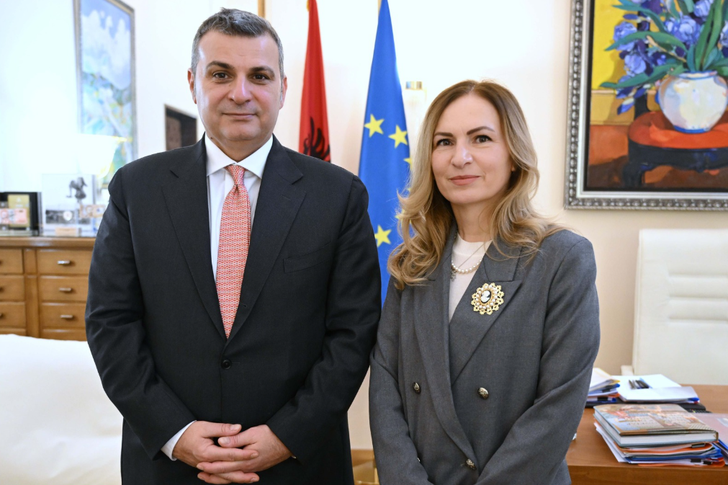
The Governor of the Bank of Albania, Gent Sejko, received ...
Këtë të enjte, një dollar amerikan do të blihet me 80.3 le...
Whether it's the famous cheese platters in France or the p...
This Wednesday, one US dollar will be bought for 80.1 lek ...
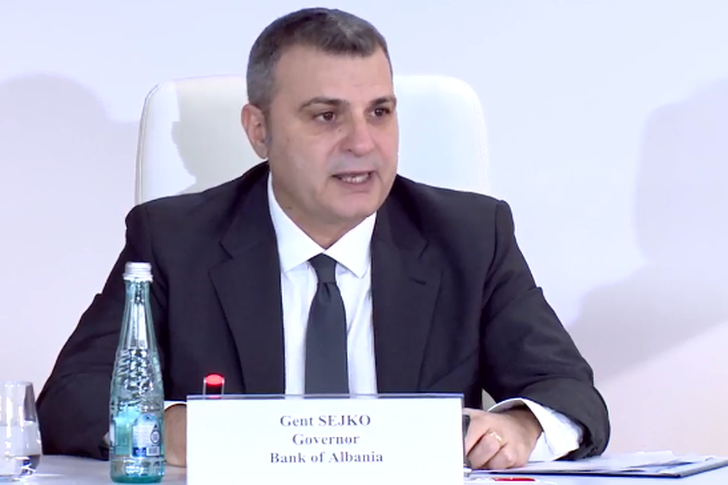
The Governor of the Bank of Albania, Gent Sekjo, was prese...
This Tuesday, one US dollar will be bought for 80.9 lek an...
The government aims for employment and energy to be the tw...
Ministri i Financave, Petrit Malaj ka zhvilluar një konfer...
This Monday, one US dollar will be bought for 81 lek and s...
Despite the decrease in recent years, Albania is positione...
In 2024, migrants sent 1.4 billion euros to Albania, accor...
Two hectares of destroyed greenhouses. Around 40 thousand ...
This Sunday, one US dollar will be bought for 81.2 lek and...
This Saturday, one US dollar will be bought for 81.2 lek a...
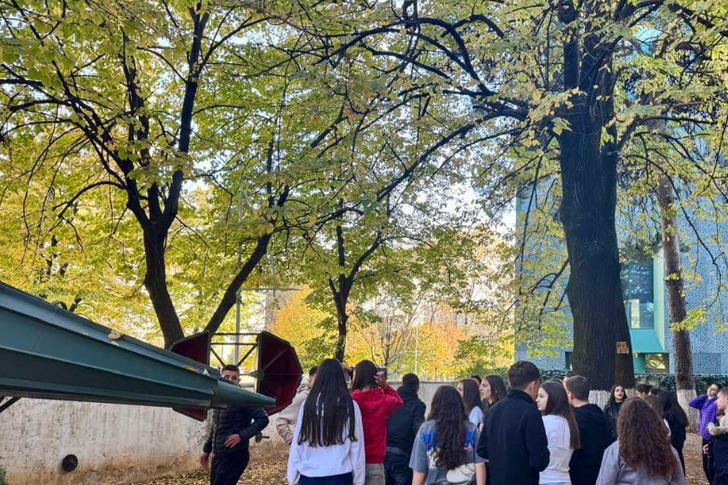
Kosovo Albanians remained the main group of tourists in th...

CNA has launched another investigation that could lead to ...

Irfan Hysenbelliu is a businessman that we call "Irfan the...

In March 2026, CNA launched another investigation centered...
The arrested mayor of Tirana, Erion Veliaj, with 13 charge...

The Special Board of Appeal (KPA) decided this Monday ...

The KPA vetting decided this Thursday to dismiss the p...

Suela Salavaçi, a prosecutor in the Prosecutor's Offic...

The Special Board of Appeal reinstated the prosecutor ...
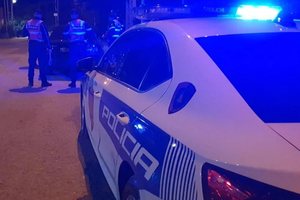
A conflict occurred this Thursday evening in the toy area ...
A person has died today on Orikum beach. According to repo...
Footage emerges from the serious accident that occurred th...
A Shkodra traffic police officer was hit with hard objects...

Children without parental care, for whom alternative famil...
On Thursday, our country will be under the influence of st...
A serious accident that occurred this Wednesday with the c...

The Institute of Geosciences has shared a forecast for wea...
The European Union Office in Kosovo has called on all poli...
Serbian President Aleksandar Vučić, at a press conference ...
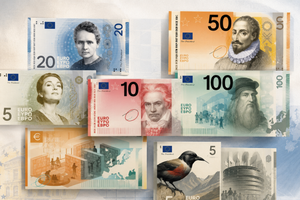
For the first time since the launch of the euro, European ...

Artificial intelligence (AI) models from the American comp...

At a time when industrial products are increasingly taking...

Trust among people is not just a three-syllable word. It c...

Master of humor Todi Llupi has passed away at the age of 7...

The ninth edition of "MIK Festival" kicked off with one of...
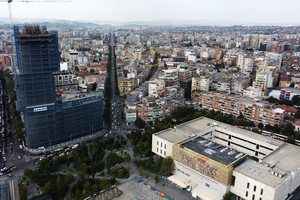
The average sale price of apartments in Tirana reaches rec...
This Thursday, one US dollar is bought for 81.5 lek and so...
The price of diesel reached 206 lek per liter from 198 lek...

Businesses will no longer be required to simply register t...