

1.4 billion euros per year, countries send more money from immigrants, surprise England, Germany, USA
In 2024, migrants sent 1.4 billion euros to Albania, accor...


Despite the decrease in recent years, Albania is positioned among the countries with the highest level of public debt in relation to Gross Domestic Product (GDP) in the Western Balkans region, according to the latest quarterly data from the European Commission.
In the third quarter of 2025 data, Albania's public debt reached 53.5% of GDP, ranking the country second in the Western Balkans, only behind Montenegro, where this indicator marks 58.6% of GDP.
The comparison with other countries in the region reflects significant changes in fiscal approaches and macroeconomic developments from the previous period. North Macedonia recorded a public debt of 50.3% of GDP, while Serbia, which has a larger economy, recorded a debt of 43% of GDP. Bosnia and Herzegovina and Kosovo resulted in lower levels, at 26.4% and 16% of GDP, respectively.
The EC report highlights that public debt remains one of the main indicators of macroeconomic sustainability, reflecting the fiscal performance of countries and their capacity to manage public spending in challenging periods.
In Albania, the level of public debt remains above the average of several economies in the region, although below the level of countries with a higher fiscal burden such as Montenegro.
In its analysis, the European Commission emphasizes that public debt levels have been influenced by a combination of factors, including fiscal measures taken during periods of economic recovery after crises and the need to support public services.
While consumption and domestic demand continued to be the main contributors to economic growth, maintaining debt at sustainable levels remains a challenge for candidate countries, requiring a careful balance between investment and fiscal discipline.
For the region's small economies, global external conditions, debt service costs, and expansion of capital spending are elements that directly affect public debt levels.
The report emphasizes that for countries aiming for closer integration with the European Union, debt management and strengthening the fiscal structure are essential for ensuring long-term macroeconomic stability./ Monitor.al

In 2024, migrants sent 1.4 billion euros to Albania, accor...

Two hectares of destroyed greenhouses. Around 40 thousand ...

This Sunday, one US dollar will be bought for 81.2 lek and...

This Saturday, one US dollar will be bought for 81.2 lek a...

Kosovo Albanians remained the main group of tourists in th...

The State Cadastral Agency informs all citizens that every...
Ministrja e Ekonomisë, Delina Ibrahimaj, ka zhvilluar ditë...

As of January 22, the e-Tax system has been opened for com...
Budget indicators for the medium-term period 2025–2029 cle...
This Friday, one US dollar will be bought for 82 lek and s...

In total, 64,572 workers are employed in the construction ...

This Thursday, one US dollar will be bought for 81.8 lek a...
In the new macroeconomic framework, 2027-2029, the governm...

The price of gold reached an all-time high, above $4,800 p...
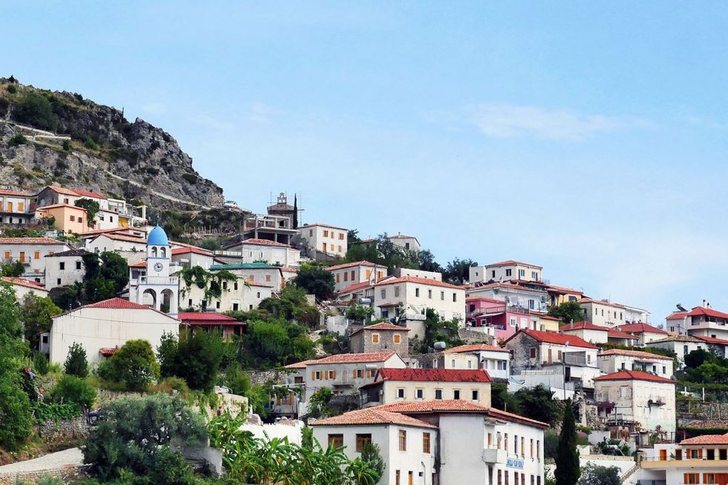
According to the new division proposed by the government f...

In December, while inflation was 2.2%, three groups direct...

This Wednesday, one US dollar will be bought for 81.8 lek ...
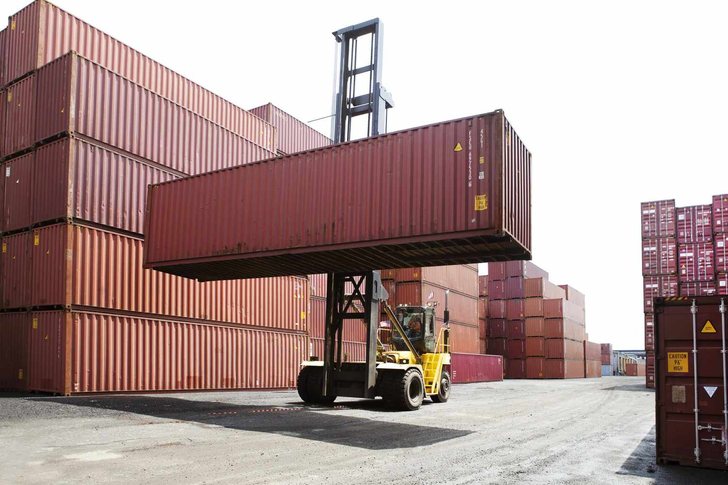
Albania is rapidly increasing its dependence on China for ...

There is no compensation of 480 or 1000 euros! There will ...
This Tuesday, one US dollar will be bought for 82.4 lek an...

CNA has launched another investigation that could lead to ...

Irfan Hysenbelliu is a businessman that we call "Irfan the...

In March 2026, CNA launched another investigation centered...
The arrested mayor of Tirana, Erion Veliaj, with 13 charge...

The Special Board of Appeal (KPA) decided this Monday ...

The KPA vetting decided this Thursday to dismiss the p...

Suela Salavaçi, a prosecutor in the Prosecutor's Offic...

The Special Board of Appeal reinstated the prosecutor ...

A conflict occurred this Thursday evening in the toy area ...
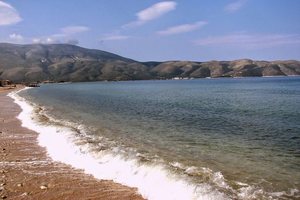
A person has died today on Orikum beach. According to repo...

Footage emerges from the serious accident that occurred th...

A Shkodra traffic police officer was hit with hard objects...

Children without parental care, for whom alternative famil...

On Thursday, our country will be under the influence of st...
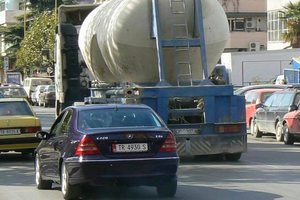
A serious accident that occurred this Wednesday with the c...

The Institute of Geosciences has shared a forecast for wea...
The European Union Office in Kosovo has called on all poli...
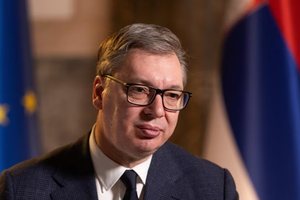
Serbian President Aleksandar Vučić, at a press conference ...
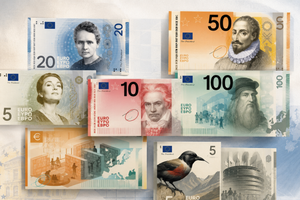
For the first time since the launch of the euro, European ...

Artificial intelligence (AI) models from the American comp...

At a time when industrial products are increasingly taking...

Trust among people is not just a three-syllable word. It c...

Master of humor Todi Llupi has passed away at the age of 7...
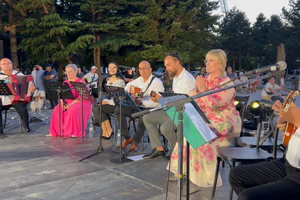
The ninth edition of "MIK Festival" kicked off with one of...
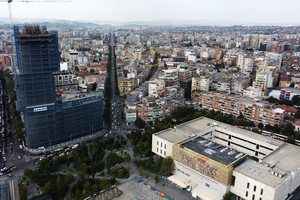
The average sale price of apartments in Tirana reaches rec...
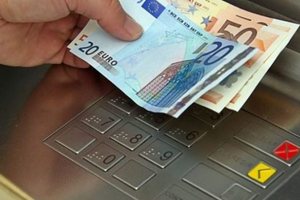
This Thursday, one US dollar is bought for 81.5 lek and so...
The price of diesel reached 206 lek per liter from 198 lek...

Businesses will no longer be required to simply register t...