


Exchange rate, January 25, 2026
This Sunday, one US dollar will be bought for 81.2 lek and...


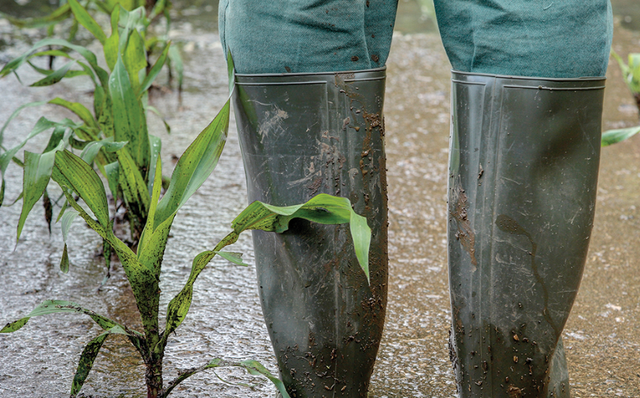
Two hectares of destroyed greenhouses. Around 40 thousand euros in lost investments and over 100 thousand euros in goods that will never be put on the market is the bill for Mirlind Saraçi's vegetable greenhouse farm in Kosova e Vogël, Lushnja.
The floods of recent days have caused damage worth around 150 thousand euros, the recovery of which will take years of work, as the water and silt have also damaged the quality of the soil and negatively affected future plantings.
His disappointment goes beyond the material damage. After 15 years of emigration in Italy, he returned to Albania about 12 years ago, convinced that his experience and savings would be enough to build a functional farm. Today, he calls returning “the mistake of his life,” not because farming doesn’t work, but because the risk remains uncovered and responsibility often remains unaddressed.
Mirlindi's concern is not only with the extreme weather, but also with the functioning of the state. "Nobody announces? Not about the expected rainfall, not about the opening of the HPP gates." Mirlindi says there was no warning about the opening of the dam gates.
The loss did not come from a lack of information and coordination, which in such areas often proves as devastating as the flood itself.
Mirlindi's story is the story of hundreds of farmers in the area. Gentian Ziu, a farmer from Samatica, Berat, says that the damage has spread to several villages and includes greenhouses, field crops and orchards, while an accurate financial balance remains impossible.
In Samatica, according to him, about 8 hectares of newly planted greenhouses have been damaged, while 3.5 hectares of cabbage, ready for the market, have been completely destroyed. In addition, significant damage has also been reported in orchards, where peaches, olives, tangerines and oranges have been affected to varying degrees, without being able to give a final figure yet. "There are many," he says, emphasizing that the situation on the ground changes from day to day.
Throughout Berat, the picture is equally dire. “The damage to greenhouses is incalculable,” says Mr. Ziu, adding that farmers have faced not only floods but also frost, with temperatures dropping to minus 5 degrees. “Problem with frost, problem with floods,” he sums up the situation, describing it as a double blow to agricultural production.
Ilir Pilku, an agricultural data analyst, said that the damage caused by the recent floods in agriculture is around 150 million euros for producers alone. He made this calculation based on the flooded area and the types of crops planted with their production prices.
Calculating the value in the retail and export markets, the losses double to 30 billion lek and are distributed throughout the agricultural chain from the farmer, the collection center, export and consumers, who will pay higher prices and lost investments in greenhouses.
Ruzhdi Koni, who exports fresh fruits and vegetables from greenhouses with his company "Agrokoni", said that the floods have severely damaged specialized export farms that are concentrated in the areas of Berat, Lushnja and Fier. Mr. Koni predicts that this damage will have wide-ranging effects on the economy and is expected to reduce exports by up to 30%.
In addition to crops, damage has also been caused to livestock, animal feed, poultry and fruit growing, housing, roads and other infrastructure.
The funds that the government has available through civil emergencies do not even cover 5% of the damages declared so far based on the flooded area.
Prime Minister Rama said that farmers will be compensated for the recent floods, but the Ministry of Agriculture still does not have a final bill regarding damages and costs, as the data is being updated.
In Albania, losses due to climate change are borne entirely by farmers as insurance schemes do not function, while our government offers very low support to producers, which is not enough even in normal times for the high costs faced by the sector.
Crops damaged on 12 thousand ha by region, 5791 farmers affected
There is currently no official national estimate of total monetary losses, but according to data from operatives from the Department of Agriculture, as of January 16, the January rainfall, floods and frosts have affected about 5,791 farmers and about 12,172 hectares of agricultural land, as well as 5,551 heads of livestock and 147 beehives. The data is provisional and is expected to be updated.
In Fier, 151 ha of vegetables, 1,250 ha of cereals and 1,700 ha of fodder were extensively damaged. Very large damage was also reported to fruit trees (around 300,000 roots), as well as areas with vineyards and olive trees. Fier is one of the regions with the strongest impact on agriculture.
The Berat region has damage spread across several crops – 247 ha of cereals, 368 ha of fodder, 270 ha of other crops and 192 ha of fruit trees.
Korça has one of the largest affected areas with 1,360 ha of cereals and 415 ha of forage, ranking among the most affected regions for these crops.
In Gjirokastra, the damage is more limited with about 85 ha of cereals, 9 ha of fodder, as well as damage to 5,700 fruit trees and 24,000 vineyards.
In Vlora, 80 ha of cereals, 25 ha of forages and a small area of ??vegetables (2 ha) were mainly affected, as well as 12,000 fruit trees.
In Elbasan, more limited damage was reported to 36 ha of cereals, 23 ha of fodder, as well as damage to 1,600 fruit trees and 280 vineyards.
In Shkodra and Lezha, the damage was mainly concentrated on cereals, fodder and winter vegetables due to flooding. Many areas were under water for several days, increasing the risk of loss of production.
In Tirana and Durrës, cereals, fodder and vegetables, as well as fruit trees and vineyards, have been damaged.
In some areas of Durrës, damage has reached up to 96% for some crops.
At a national level, cereals have been damaged on about 3,598 ha, forages on about 3,148 ha, other agricultural crops on about 4,151 ha, vegetables and strawberries on about 480 ha, mainly in greenhouses, while fruit trees, vineyards and olives on about 790 ha.
Livestock, 5551 heads affected
The floods and frosts of January 2026 have severely affected not only agricultural crops, but also livestock and beekeeping. Cereals, fodder and fruit are among the most affected sectors, while in livestock, the main problem remains the loss of food and damage to stables.
In beekeeping, the damages are more limited in number, but with a major economic impact for small farmers. The situation remains dynamic and it is expected that the figures will be revised with new reports from the field.
Operational data from the Ministry of Agriculture shows that livestock damage has also been reported, with around 5,551 heads affected nationwide. The damage includes partial loss of livestock due to flooding or the collapse of stables in some areas.
Damage to the food base for livestock, especially in regions where fodder and cereals have been flooded (such as Fier, Korçë, Berat, Lezhë and Shkodër) and risk to the health of livestock from humidity, cold and lack of food.
Also, nationwide, 147 damaged hives have been reported. The damage to beekeeping is mainly related to flooding of the areas where the hives were located, as well as cold and frost, which weaken bee colonies.
From production to the market, 14-30 billion lek damage in agriculture
Based on the areas and types of damaged products, the financial damages to producers, including lost turnover from products that failed to reach the market and potential export losses, range from 14 to 30 billion lek, according to preliminary estimates.
At specific levels, cereals, cultivated on 3,598 hectares, have lost values ??estimated at between 2.88 and 4.32 billion lek.
Forage crops, on 3,148 hectares of land, represent a loss of 1.57 to 3.15 billion lek. In the case of other agricultural crops, which occupy 4,151 hectares, the damages are estimated at 3.32 to 6.23 billion lek.
Losses for vegetables and strawberries, mainly in 480 hectares of intensive greenhouses, reach 4.8 to 12 billion lek, while fruit trees, vineyards and olive groves, which occupy 790 hectares, represent a loss of 1.58 to 3.95 billion lek.
Experts have categorized the damaged areas by crop and used average yields per hectare, data from Ministry of Agriculture statistics and from the concrete experiences of farmers.
Relatively low yields were used for cereals and forages, while intensive vegetables and greenhouses yield much higher returns. The loss for each category was calculated by multiplying the damaged area by the average gross turnover per hectare, considering a range of scenarios from pessimistic to optimistic.
Losses for producer farmers are estimated at up to 140-150 million euros, but the market value of these products is around 300 million euros, including products that failed to be sold and lost export revenues.
A hectare of greenhouses that has not been able to reach the market translates into tens of millions of lek lost, while losses in grains and fodder affect livestock supplies and the food chain.
In livestock and agriculture, damages range from 280-570 million lek. To estimate the economic loss, a method based on daily farm practice and data from the Ministry of Agriculture was used.
Each head costs an average of 50,000 to 100,000 lek per season for food and service. Based on this estimate, livestock losses total around 280–570 million lek, reflecting losses to farmers and investments spent on animal care. In beekeeping, the situation is more limited in number, but with a major economic impact for small farmers.
147 damaged hives were reported, mainly from floods and frosts that weakened bee colonies and destroyed honey production. The average value of a hive is estimated at around 50,000–100,000 lek, giving a total loss to beekeeping of around 7–15 million lek.
But according to experts, the losses go beyond farming families, as they hit the collection, processing and export markets, reducing the quantity of goods on the market and increasing pressure on domestic prices.
Every hectare damaged means thousands of kilograms of vegetables, grains, and fruits that do not reach the market, a cost that affects the national economy and the provision of food for citizens.
Millions more in damage, from roads to homes
The floods of January 2026 not only destroyed agricultural land and farms, but also affected urban communities and the country's infrastructure, highlighting the structural weaknesses of water management and urban planning in Albania.
According to reports from civil emergencies, at least 1,587 homes have been flooded across the country, while thousands more have been affected by water that has entered homes, damaging furniture, equipment and internal infrastructure.
In some areas, residents report damage exceeding tens of millions of lek per family, with household appliances, furniture, and interior structures rendered unusable as water has penetrated deep into living spaces.
These losses, spread across thousands of homes, pose a heavy financial burden on affected families and paint a clear picture of how vulnerable local housing is to extreme weather and the lack of effective flood prevention systems.
On the other hand, transport networks, the arteries connecting cities and villages, were significantly affected. Main roads were blocked by water and landslides, causing traffic disruptions and isolating some rural communities. Partial collapses of road segments and damage to overpasses were also reported.
Experts have estimated that the destruction and repair of major road segments alone could reach tens to hundreds of millions of euros in a normal year, due to the need to restore road layers, bridges, etc.
Fruit and vegetable exports expected to fall by 20-30%
Fruit and vegetable exports reached a value of 19 billion lek in the first 11 months of 2025, according to official INSTAT data, but for the entire year 2025, their value is expected to exceed 210 million euros.
Exporters warn that damage caused by floods and frosts to the country's greenhouses could reduce the volume of production going to international markets by up to 10–30%, leading to an expected loss of between 21 and 63 million euros in the value of agricultural exports, the most consistently growing group, in both volume and value, in 2025.
Ruzhdi Koni, a well-known exporter, underlines that "specialized greenhouses for export have been hit hard and a significant part of production cannot be exported. This will immediately affect our relationships with partners and planning for future seasons."
Beyond the direct loss of export volume, producers also face additional costs for repairing greenhouses and ensuring the quality of the remaining vegetables, increasing financial pressure on farmers.
The loss of a significant portion of exports is not only a challenge for businesses, but also has a knock-on effect on the national economy, affecting rural employment, price stability, and Albania's competitiveness in international markets.
Agricultural sector experts and farmer representatives insist that an integrated approach is needed, including investments in greenhouse infrastructure, warning systems and climate security, as well as financial support for exporters facing unexpected losses.
Without these interventions, export values ??that were supposed to record steady growth risk shrinking, turning the progress achieved in the agricultural sector into an uncertain profit vulnerable to the vagaries of nature./ Monitor Magazine

This Sunday, one US dollar will be bought for 81.2 lek and...

This Saturday, one US dollar will be bought for 81.2 lek a...
Kosovo Albanians remained the main group of tourists in th...

The State Cadastral Agency informs all citizens that every...
Ministrja e Ekonomisë, Delina Ibrahimaj, ka zhvilluar ditë...

As of January 22, the e-Tax system has been opened for com...

Budget indicators for the medium-term period 2025–2029 cle...

This Friday, one US dollar will be bought for 82 lek and s...

In total, 64,572 workers are employed in the construction ...

This Thursday, one US dollar will be bought for 81.8 lek a...

In the new macroeconomic framework, 2027-2029, the governm...

The price of gold reached an all-time high, above $4,800 p...
According to the new division proposed by the government f...

In December, while inflation was 2.2%, three groups direct...

This Wednesday, one US dollar will be bought for 81.8 lek ...
Albania is rapidly increasing its dependence on China for ...

There is no compensation of 480 or 1000 euros! There will ...
This Tuesday, one US dollar will be bought for 82.4 lek an...
The average annual increase in the Harmonized Index of Con...
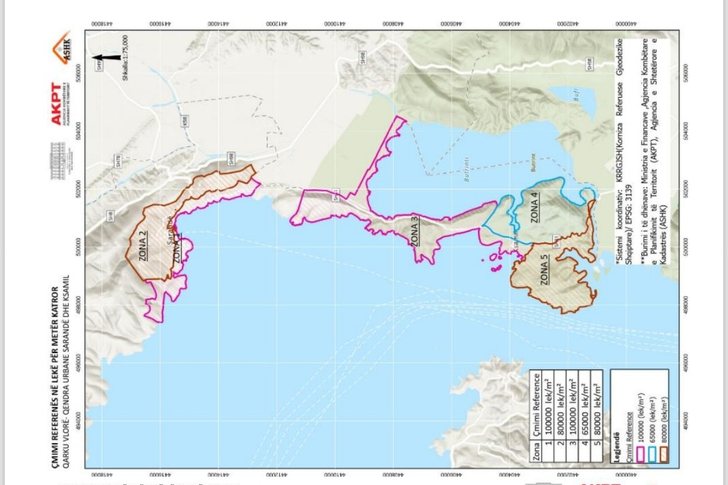
For the first time, fiscal prices will also be applied to ...

CNA has launched another investigation that could lead to ...

Irfan Hysenbelliu is a businessman that we call "Irfan the...

In March 2026, CNA launched another investigation centered...
The arrested mayor of Tirana, Erion Veliaj, with 13 charge...

The Special Board of Appeal (KPA) decided this Monday ...

The KPA vetting decided this Thursday to dismiss the p...

Suela Salavaçi, a prosecutor in the Prosecutor's Offic...

The Special Board of Appeal reinstated the prosecutor ...

A conflict occurred this Thursday evening in the toy area ...
A person has died today on Orikum beach. According to repo...

Footage emerges from the serious accident that occurred th...

A Shkodra traffic police officer was hit with hard objects...

Children without parental care, for whom alternative famil...

On Thursday, our country will be under the influence of st...
A serious accident that occurred this Wednesday with the c...

The Institute of Geosciences has shared a forecast for wea...

The European Union Office in Kosovo has called on all poli...

Serbian President Aleksandar Vučić, at a press conference ...

For the first time since the launch of the euro, European ...

Artificial intelligence (AI) models from the American comp...

At a time when industrial products are increasingly taking...

Trust among people is not just a three-syllable word. It c...

Master of humor Todi Llupi has passed away at the age of 7...

The ninth edition of "MIK Festival" kicked off with one of...
The average sale price of apartments in Tirana reaches rec...

This Thursday, one US dollar is bought for 81.5 lek and so...

The price of diesel reached 206 lek per liter from 198 lek...

Businesses will no longer be required to simply register t...