


Second victim of bad weather/ Fisherman drowns in Ksamil
Citizen MH, 61, a fisherman, was found dead near the islan...

Citizen MH, 61, a fisherman, was found dead near the islan...


Pressures in the labor market have increased significantly in recent years. The lack of manpower has forced businesses, but also the public sector, to apply wage increases as a way to keep jobs.
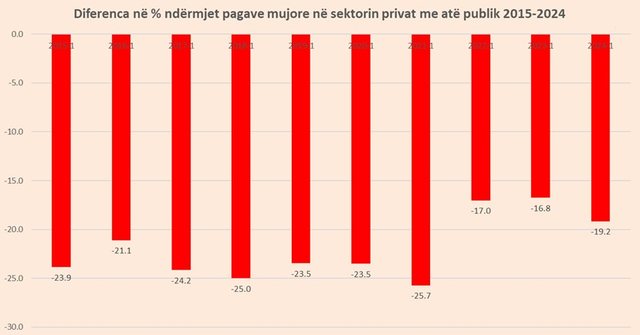
A government initiative to bring the average salary in the public sector to 900 euros next year was intended, among other things, to increase competition in the private sector. Despite the fact that salaries in the private sector have increased in recent years, they have not been able to follow the pace of growth in the public sector.
The difference between the average salary in the private and public sectors widened further in the first quarter of the year, reaching -19.1% from -16.7% in the first quarter of last year.
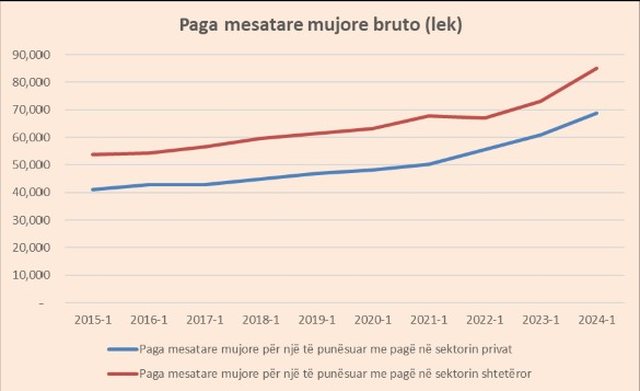
The average gross monthly salary in the public sector reached 84,979 ALL in the first quarter of 2024. Its level was 11,774 ALL higher than the same period last year, or 16% more.
While the average salary in the private sector reached ALL 68,686 in the first quarter, or ALL 7,743 more than January-March 2023 with an increase of 12.7%.
The government started applying a strategy for salary increases last year, where the beneficiaries were mainly public administration and senior officials, while for the education and health sectors, the increase will be applied this year.
Salaries in the vital sectors of public administration, education, health and police were indexed to inflation last year by only 7%, while the increase in the average salary in the public sector is justified by the doubling of salaries in the high levels of public administration.
The private sector, on the other hand, suffers from high levels of informality, as many businesses still do not declare the real number of employees and their salaries.
Informality in the Albanian labor market is widespread, but most of it is concentrated among low-wage workers, while 20% of the phenomenon is dominated by those who receive high wages, - notes an OECD research (Organization for Cooperation and Economic Development).
The OECD has defined low wages up to 50% of the average wage level, average wages are from 50% of the average to 150% of the average; and high salaries with over 150% of the average salary).
In Albania, informality in the labor market is concentrated 60% in low wages, 20% in average wages and 20% in high wages./ Monitor.al


The year 2024 has started with salary cuts in both the...

Today, on June 12, 2024, in the foreign exchange marke...
In the first quarter of 2024, the average exchange rat...
Today, on June 11, 2024, in the foreign exchange marke...

Foreign direct investments have started with growth this y...
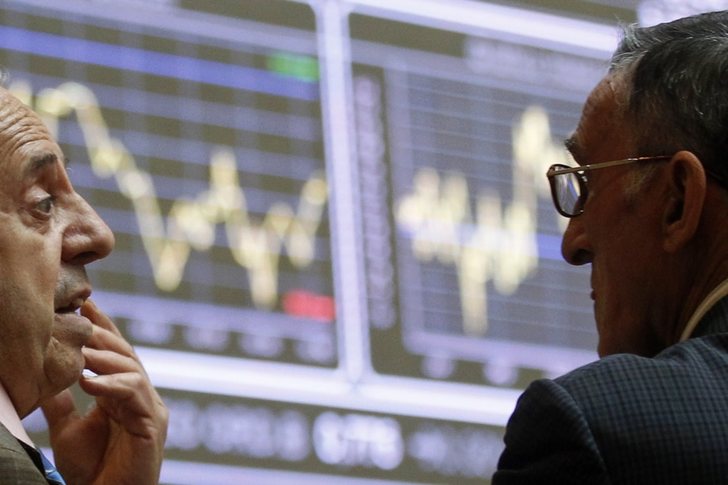
The European Parliament elections were followed by the wea...

Today, on June 10, 2024, in the foreign exchange marke...

The price of houses has become unaffordable for the ma...

Today, on June 9, 2024, in the foreign exchange market, th...

Today, on June 8, 2024, in the foreign exchange market...

Every year fewer and fewer new businesses are created....
Today, on June 7, 2024, in the foreign exchange market...
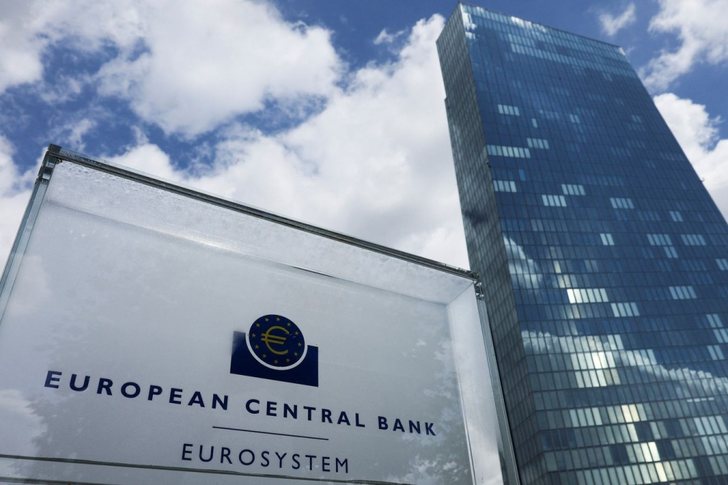
The European Central Bank (ECB) has cut interest rates for...

The Health System Improvement Project supported by the...
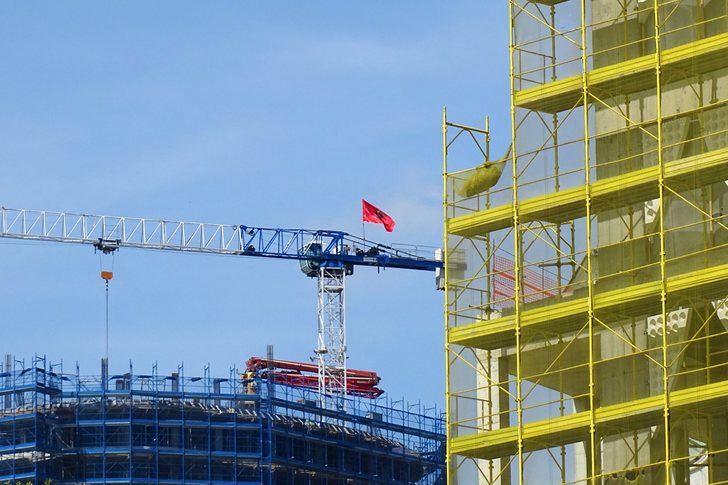
The economy of the country is increasing year after year t...

Today, June 6, 2024, in the foreign exchange market, t...
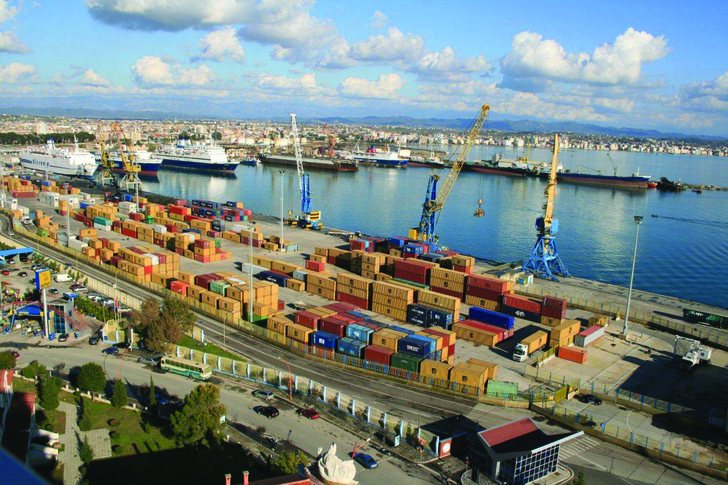
Compared to the first quarter of 2023, the import price in...
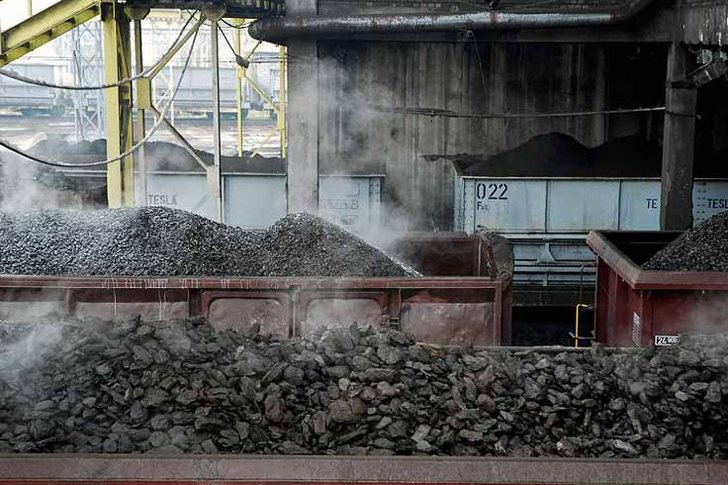
Chromium continues to be the mineral with the greatest...
The lack of labor, influenced by demographic movements and...

Today, on June 5, 2024, in the foreign exchange market...

CNA has launched another investigation that could lead to ...

Irfan Hysenbelliu is a businessman that we call "Irfan the...

In March 2026, CNA launched another investigation centered...
The arrested mayor of Tirana, Erion Veliaj, with 13 charge...

The Special Board of Appeal (KPA) decided this Monday ...

The KPA vetting decided this Thursday to dismiss the p...

Suela Salavaçi, a prosecutor in the Prosecutor's Offic...

The Special Board of Appeal reinstated the prosecutor ...
Citizen MH, 61, a fisherman, was found dead near the islan...
Another phase of the international operation, codenamed "T...

Police have arrested a 34-year-old woman at Rinas Airport ...

A serious accident has occurred on the Lezhë-Shëngjin axis...

This Wednesday, our country will be under the influence of...
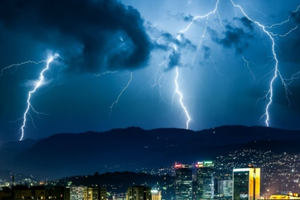
All of Southern Europe will face changing weather conditio...
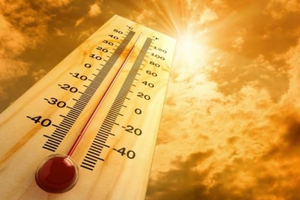
Albania was hit by temperatures significantly higher than ...

For the first time, Pogradec welcomed the Inter-Lake Chess...

Prime Minister Andy Burnham has announced that most bus fa...

France's parliament has passed a law to ban social media f...

US Secretary of State Marco Rubio arrived in Manila on Jul...

In the space of a few days, Ukrainian President Volodymyr ...

At a time when industrial products are increasingly taking...

Trust among people is not just a three-syllable word. It c...

Master of humor Todi Llupi has passed away at the age of 7...

The ninth edition of "MIK Festival" kicked off with one of...

Businesses will no longer be required to simply register t...

Despite economic growth and income in recent years, Albani...

This Wednesday, one US dollar is bought for 81.4 lek and s...

Construction company licenses will have a validity period ...