


Barometer 2025, 50% of businesses bribe the administration, strong growing trend
Bribes paid by businesses to public administration have in...


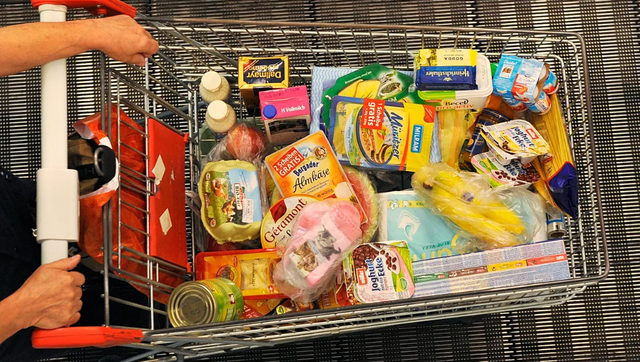
While food prices are lower in some countries than in the EU as a whole, households in those countries often spend a larger share of their budget on food.
Food is one of the largest household expenses in Europe, accounting for an average of around 11.9% of spending across the EU and rising to as much as 20% in countries such as Romania.
Food prices also vary widely across Europe. Eurostat's food price level index provides a useful basis for comparison. If the average EU food basket is set at €100, the index can be used to show how much the same basket would cost in each country.
A price level above 100 means that a country is more expensive than the European average, while a figure below 100 indicates that it is cheaper.
According to Eurostat, in 2024, North Macedonia was the cheapest country for food among 36 European countries. A standard food basket there cost 73 euros, making it 27% cheaper than the EU average.
Switzerland is the most expensive, with food prices 61.1% above the EU average. The same basket costs 161.1 euros.
North Macedonia is an EU candidate country — not yet a member, but has active trade agreements with the EU — while Switzerland is not in the EEA and instead relies on a network of bilateral agreements with the EU.
In the EU, Romania (€74.6) has the lowest food prices, while Luxembourg (€125.7) has the highest. Food is 25.4% cheaper in Romania and 25.7% more expensive in Luxembourg compared to the EU average.
After Switzerland at the top, two other European Free Trade Association (EFTA) countries complete the top three, Iceland (€146.3) and Norway (€130.6).
EFTA countries are non-EU members that cooperate with the bloc mainly on trade and market access, while maintaining greater national control over laws, borders and policies.
Food prices are also at least 10% higher than the EU average in Denmark (€119.3), Ireland (€111.9), France (€111.5), Austria (€110.9) and Malta (€110.9).
Southeastern Europe and the Western Balkans show the lowest food prices overall.
Apart from North Macedonia and Romania, Turkey (€75.7), Bosnia and Herzegovina (€82.5), Montenegro (€82.6) and Bulgaria (€87.1) are well below the EU average.
Serbia (€95.7) and Albania (€98.7) are also cheaper than the EU.
Among the EU's "Big Four", food prices are also higher than the EU average in Italy (€104) and Germany (€102.9). Spain (€94.6) is 5.4% cheaper than the EU.
Most Central European countries and some Eastern European countries remain below or close to the EU average, including Slovakia, Poland, the Czech Republic and Hungary.
Western Europe generally has higher food prices, and the Nordic countries are among the most expensive in Europe.
Price differences are important for families
Ilaria Benedetti, an associate professor from the University of Tuscany, noted that structural factors such as production costs, supply chain integration and exposure to global shocks play a key role in the changes.
"Smaller and more open economies — often with currencies subject to sharper fluctuations — experienced a stronger pass-through of rising energy and agricultural input costs during the pandemic and the Russia-Ukraine conflict," she told Euronews.
Benedetti emphasized that these price gaps matter because their impact depends on the amount that families have to allocate for food.
In some countries in Eastern and Southeastern Europe, food accounts for more than 20% of household spending, while in higher-income economies this percentage is typically below 12%.
"As a result, the same price increase carries much more severe consequences where incomes are lower," she added.
Labor costs and wages
"The most important reason is changes in income and wages," Alan Matthews, a professor at Trinity College Dublin, told Euronews Business.
Countries with higher average wages, such as Denmark and Switzerland, tend to have higher food prices because labour costs in agriculture, processing and retail are passed on to consumers. “Differences in taxation, particularly VAT on food products, also explain some of the differences,” he added. Some countries charge a lower or even zero VAT rate on food, such as Ireland, while in others, such as Denmark, food is subject to the standard VAT rate.
Matthews emphasized that food prices will also be affected by consumer preferences.
For example, consumers in Northern and Western European countries may purchase a higher percentage of organic or premium products, or there may be a preference for branded products instead of more expensive supermarket products.
Implications for food security
Jeremiás Máté Balogh, an associate professor at Corvinus University of Budapest, stated that these price changes have implications for food security, especially when considered in relation to disposable income.
"While high-income countries can afford high price levels, low-income households in Central and Eastern Europe face a disproportionate burden, even if nominal food prices are lower," he told Euronews.
Eurostat's price levels do not take into account household income, so these levels are not adjusted for affordability. For example, while food is expensive in Denmark, people have higher disposable income there, so they can buy more food. / CNA

Bribes paid by businesses to public administration have in...
Vendet vakante në Këshillin Mbikëqyrës të Bankës së Shqipëri...
This Monday, one US dollar will be bought for 81.7 lek and...
Drought, lack of mechanization and high costs are leading ...
This Saturday, one US dollar will be bought for 81.7 lek a...
The country's economy expanded by 3.5 percent in the secon...

This Friday, one US dollar will be bought for 81.7 lek and...

The Delphi Economic Forum held its 5th edition on December...

Our country's economy generates unskilled labor, while in ...
The money that emigrants bring to their families in Albani...

A new World Inequality Report warns that fewer than 60,000...
This Thursday, one US dollar will be bought for 82.4 lek a...
Both the spending of foreigners traveling to Albania and t...
Raporti i kredive me probleme pësoi një rënie të lehtë në ...
All mines and metallurgies opened or inherited after 2000,...
Imported food imports have been steadily declining in the ...
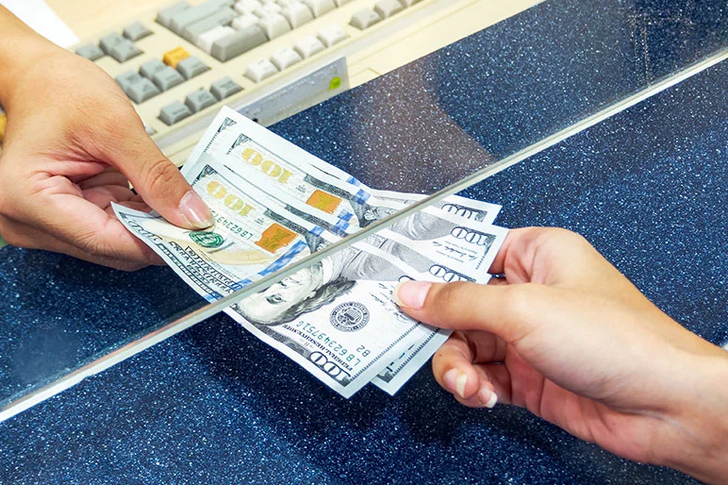
This Wednesday, one US dollar will be bought for 82.5 lek ...
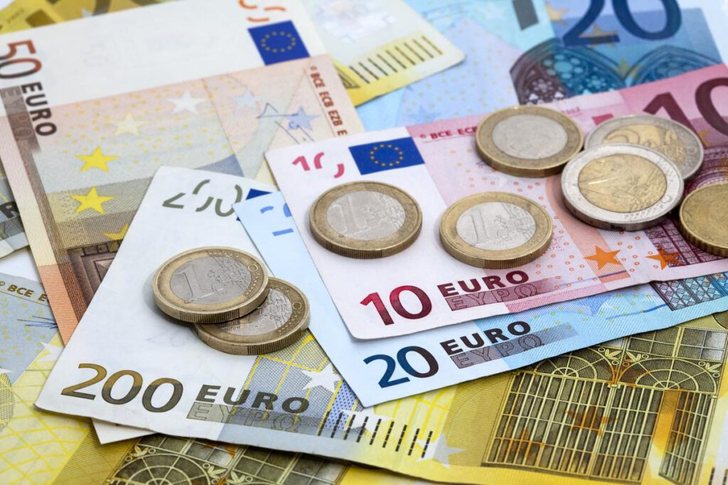
The euro-lek exchange rate has started this week on the de...
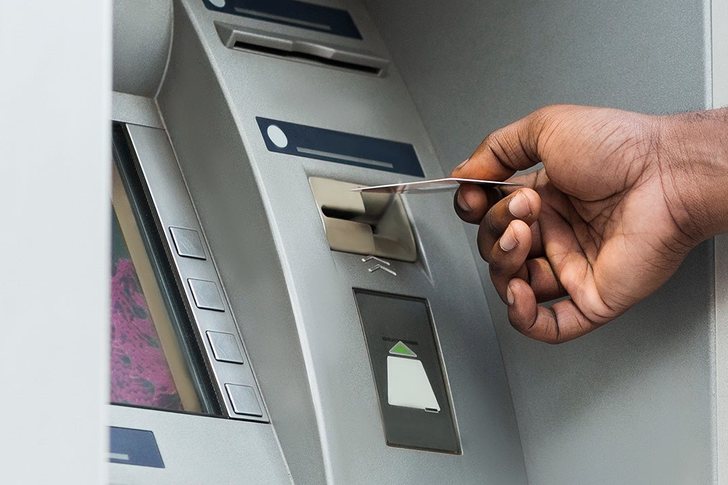
Cash deposits at ATMs increased again in the third quarter...
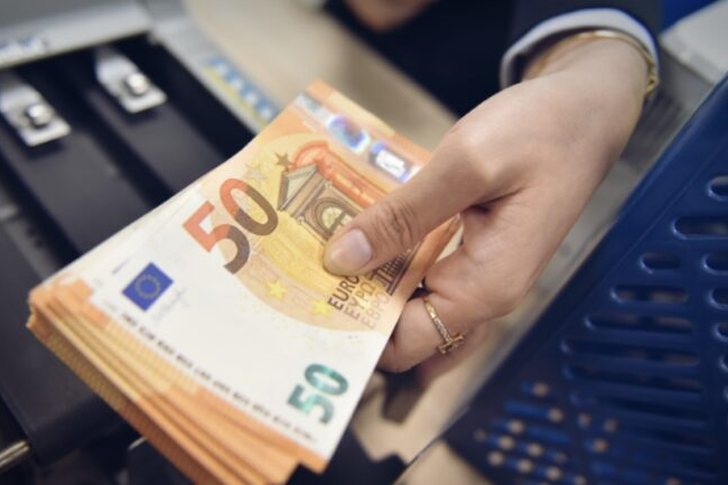
This Tuesday, one US dollar will be bought for 82.4 lek an...

CNA has launched another investigation that could lead to ...

Irfan Hysenbelliu is a businessman that we call "Irfan the...

In March 2026, CNA launched another investigation centered...
The arrested mayor of Tirana, Erion Veliaj, with 13 charge...

The Special Board of Appeal (KPA) decided this Monday ...

The KPA vetting decided this Thursday to dismiss the p...

Suela Salavaçi, a prosecutor in the Prosecutor's Offic...

The Special Board of Appeal reinstated the prosecutor ...

A conflict occurred this Thursday evening in the toy area ...
A person has died today on Orikum beach. According to repo...

Footage emerges from the serious accident that occurred th...

A Shkodra traffic police officer was hit with hard objects...

Children without parental care, for whom alternative famil...

On Thursday, our country will be under the influence of st...
A serious accident that occurred this Wednesday with the c...

The Institute of Geosciences has shared a forecast for wea...

The European Union Office in Kosovo has called on all poli...

Serbian President Aleksandar Vučić, at a press conference ...
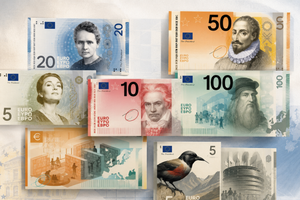
For the first time since the launch of the euro, European ...

Artificial intelligence (AI) models from the American comp...

At a time when industrial products are increasingly taking...

Trust among people is not just a three-syllable word. It c...

Master of humor Todi Llupi has passed away at the age of 7...

The ninth edition of "MIK Festival" kicked off with one of...

The average sale price of apartments in Tirana reaches rec...
This Thursday, one US dollar is bought for 81.5 lek and so...
The price of diesel reached 206 lek per liter from 198 lek...

Businesses will no longer be required to simply register t...