


Concrete mixer accident/ Road safety expert analyzes the dynamics of the event
Road safety expert, Gëzim Hoxha, commented on the dynamics...

Road safety expert, Gëzim Hoxha, commented on the dynamics...

Many screens and portals have been talking about the real estate "bubble" that is growing and will "burst" very soon. This week, we see columnists, "specialists", analysts, all-rounders, thinkers (and thinkers) who insist that the bubble is bursting because someone decides to pay up to 5 thousand euros per square meter.
Other times, the discrepancy between the number of lights on (or off) in the building and the number of residents consuming (or not) energy is mentioned as an original finding. There is also a statistic that connects the reported sales price with bank loans and then the alpha cosine is extracted that always finds a correlation between everything that happens with a very precise number of criminal activity. Everyone agrees that when this criminal activity ends, it will bring the real estate bubble.
Confidence in the existence of the bubble, the reasons for the bubble, the pre-emptive emergency, as well as the explanation of every financial improvement of the Albanians (mainly) with organized crime, reminds me of the belief of many people (many, many years ago), that they were eating three eggs ( boiled) per day, the end would be painful and immediate.
For all those Albanians (or diaspora) who have seen their income increase in recent years, or the value of their apartment double, regardless of their historical non-involvement in traffic, or other organized crimes (or solitary/ unorganized), and who want to invest in real estate, the good news is that there is ABSOLUTELY NO statistically significant sign of a real estate bubble in 2025.
Real estate bubbles are almost always accompanied by:
A) rapid growth of lending,
B) increase in loan interest
C) increase in the ratio of loans to total deposits
D) increase in the ratio of bad loans.
As reported below, NONE (or clearly ABSOLUTELY NONE) of these powerful bubble incentives exist today in Albania and are not expected to be created during 2025.
(Very) little history
Albania has only had one normal (meaning no social unrest) financial slowdown/"crisis" in its capitalist history that happened during the years 2010-2014. It is very easy to analyze this crisis and the most unusual feature of this crisis has been the maintenance of the level of real estate prices. So even this crisis did not bring a significant real estate bubble. While prices did not fall massively and significantly (which is the main feature of a bubble), the number of apartment sales slowed down a lot. The main reasons for this unusual behavior have been the low level of mass liquidations. These liquidations do not occur because there was a low level of lending (or high capital participation) and due to a historical cautious behavior of banks (and the Central Bank) towards clients with problems. So the Albanians and the Albanian banking system decided not to sell real estate at a loss, regardless of the negative returns of those years (there was no booking or airbnb at that time and the rent was very low).
But why don't we see any real estate bubble risk in 2025?
1- most of the noise about the imaginary bubble is related to the building permits given. Here it is "forgotten" to clarify that the permits given are not finished buildings. It does not make much sense to compare the impact on the real estate bubble of PDFs of projects, with that of unsold buildings (completed or under construction). The bubble does not come from approved permits but from unsold buildings (and mostly overburdened with debt).
2- even if all the permits granted in the last 10 years were counted as built (about 9 million square meters of permits are reported), they would be multiplied by about 600 euros per square meter, which is the cost of construction (an approximate average) , the total cost would be 5-6 billion euros. If this cost is compared with the annual income from tourism, the official increase in deposits in the banking sector, the official reported sales of real estate assets, and the historical preference of Albanians for real estate investments, this 5-6 billion euro investment would be very affordable. . For several years, the official deposits of the banking system have been increasing by more than 1 billion euros per year, while real estate sales reported by non-residents alone amount to hundreds of millions of euros. On the other hand, there is still no accurate report on what part of the permit has been built (it is still far from the figure of 9 million square meters of permit). The increase in deposits in the banking system and real estate sales to non-residents indicate the inclusiveness or inclusive potential of capital investment. An investment based on capital (that is, not on credit) has a very low probability of leading to massive sales that would lead to a bubble.
3- the increase in lending to the real estate sector is moderate in relation to the increase in deposits. Regardless of the credit growth, the growth of deposits has been even stronger. The ratio of loans to deposits for the banking system in Albania continues to be very low (under 50%). Real estate bubbles in America after 2008 had a ratio of bank loans over deposits at the level of 100%, Spain after 2012 120%, and China a few years ago 75%.
The growth of real estate lending in Albania has been moderate also because the banking system and the Central Bank are very sensitive to the growth of real estate loans. Furthermore, the financing of the diaspora or non-residents who invest significantly in real estate is almost non-existent. Also, Albania has not had and does not have long-term real estate loans with fixed rates. This situation has enabled significant inclusion of capital in financing. This feature (as explained above) has been one of the reasons for the non-decrease in prices during 2010-2014 and will continue to remain a stabilizing factor in real estate prices.
4- loan interests (in general) have decreased during the last year. Euribor is about 2.4 percent today compared to 4 percent two years ago. Although the premium over the Euribor has not had any significant reduction (and in certain cases it has increased due to the demand for new funds), the base of the Euribor has decreased. The period before the crises is accompanied by an increase in interest, which is not expected to happen in 2025.
5 – another big noise about prices for apartments of 4/5 thousand euros per square meter actually refers ONLY to a very small number of very good and finished or almost finished residential areas (in Tirana or the first coastal line ). The total square meters that demand this price is never more than 300-400 apartments or villas. The demand of a significant layer of new and existing super buyers (or their families) for such apartments is mainly from the economic boom of the last years and this demand has been much higher than this offer of very good finished apartments. It is statistically true that in the last five years "both the thorn and the rabbit" have grown a lot. There is much more income and profit from entrepreneurs looking for high-quality apartments or villas.
7- the demand for apartments in Tirana or the coast at a price of up to 1500-2000 euros per square meter continues to make up the vast majority of the surface under construction. This request is present and significant.
8- the increase in real wages is much more significant than reported.
9- informality in profit reporting corrodes most of the macro and micro economic data and suggests inhibition of wages or profits (none of these are correct). We emphasize that this phenomenon is not unique to Albania. For example, Greece, due to non-reporting, has lower economic indicators than Bulgaria. However, the lack of efficiency in the collection and use of taxes has so far been balanced by the investments of tax evaders in property, companies and infrastructure. Continued and significant growth in wages and corporate profits reduces the possibility of a bubble.
10- meritocracy in granting construction permits has been and remains a very positive factor in the profitable development of construction. In our experience, those who have received permission have been ardent oppositionists, open supporters of the ruling party, political nobodies, dreamers, etc. Unlike the experience of other small countries directly competing with Albania, here there has not been any group that has blocked or significantly delayed the granting of permits or the development of competitors.
11- the argument of lights off and bills of lights with zero consumption means very little for a nation that has invested in real estate with negative profit for many years (until luckily booking.com or airbnb came along). The lack of presence in the apartments that are bought has been and is also typical for many cities where foreigners decide to buy real estate but do not live there. Miami, New York, Marbella, etc. have the same typology. The fact that Albanians continue to invest in real estate is neither very special, nor innovative, nor particularly wise. The whole world does and has been doing the same thing for hundreds of years. There is a hundred-year study of the profitability of investing in different groups of industries in different countries. In this study, real estate properties have always been an investment with a higher return.
12- today (more than ever) the Albanian coast undoubtedly offers a product comparable in quality and quantity and price to tourist areas with low and medium prices. Regardless of the fact that it will take as many world-renowned engineers as we have such architects, to establish and validate the right infrastructure, or an upgrade of the collective conscience to bring and serve as a high-value country, there is no need to explain why it is worth coming to Albania for a week or buying an apartment on the coast in Albania. For those who have known Tirana for years, they know that many foreign languages ??are heard in the area of ??the block in Tirana during the Saturdays of many months. The flow of tourism and interest in real estate on the coast is expected to continue. As discussed earlier, the coast of Albania is less than 20 percent developed (and we are only talking about the first line). Income streams from tourism and investments in tourist areas report satisfactory demand that is expected to continue during 2025.
13- the importance of the diaspora in investments is very great. Every year this diaspora increases in quantity and financial investment potential in real estate. Also, successful hoteliers have started to use their good name to create residential brands and their hotel clientele is following them in real estate investments. The demand from the diaspora continues to be very satisfying.
14- still in Albania we do not have institutional speculators that would influence both the rapid increase in prices and the massive liquidation of real estate properties in case of crisis. When these speculators entered the markets of Croatia, Montenegro or other Northern Mediterranean countries, there was a faster price increase. This investment segment continues to be non-existent in Albania mainly due to:
A) the historical lack of recognition of Albania as an investment destination,
B) a judicial system in development,
C) a negative stereotype of the protective force of the law for foreign investors.
Although the perception is much more negative than the reality, the lack of historical recognition of Albania and cases of non-protection of foreign investors have kept and keep foreign speculative investors in real estate away.
15) bad loans as a total volume of loans are at the lowest historical levels (under 5 percent). The real estate slowdown/crisis in Albania came when bad loans were close to 20 percent of the total.
16) the massive liquidation of real estate is one of the main factors that accelerates the bursting and deflation of the bubble. This type of liquidation in Albania is very difficult from the legal point of view because:
A) builders have almost zero risk of penalty in the way the order contracts are drawn up in case of investment delay as a result of non-sales. The risk of non-completion due to non-sale has mainly been and has been borne by the purchasers, land owners and financiers. As a result, investors may delay the completion date depending on sales demand.
B) the inventory of finished and unsold apartments is too low to create a bubble.
C) unmortgaged buildings cannot be sold and buildings are mortgaged much later than they are finished.
17) real estate properties are one of the possibilities of asset inventory/storage. Someone can choose to keep the wealth in the company, someone else in treasury or corporate bonds, gold, silver, stock market, currency, crypto, etc. Due to the limitation of investment opportunities and the embryonic innovation of tourism development, real estate investments continue to be a significant and dominant alternative in Albania. We are at the beginning of using tourism as a significant source of income and this is one of the reasons for not recognizing the great good that has found us.
All of the above factors suggest that there is no macro or micro economic reason to predict a real estate bubble in 2025. Perhaps when all three double bad loans, double the loan-to-deposit ratio, or double interest, and many of the above-mentioned features begin to are less significant, it makes sense to look at the concentration of each one in real estate.
The above analysis excludes extreme situations (war, civil war or terrorist acts). However, Albania's membership in NATO and the process of admission to the European Union significantly minimize these extreme risks.


The digital infrastructure under the heading "e-governance...
A recent survey on security in the Region conducted by the...
From the reduction of the annual threshold of personal...
Today, January 3, 2025, in the foreign exchange market, th...
The year 2025 is expected to bring some important inno...
Tourist tours in Albania are being sold at prices that oft...
Today, January 2, 2025, in the foreign exchange market, th...
Today, on January 1, 2025, in the foreign exchange market,...
The domestic economy took a breather for the second year i...

This Tuesday, December 31, 2024, in the foreign exchange m...
This Monday, December 30, 2024, in the foreign exchang...
Albanians, in addition to Europe and the region, in the la...
According to the leaders of the main real estate agencies ...
Predicting when the bubble will happen in the real estate ...

Today, on December 29, 2024, in the foreign exchange marke...
Today, on December 28, 2024, in the foreign exchange m...

The insurance market is ending 2024 with the lowest growth...

The tourism sector is involved in rapid developments due t...
Since the beginning of the year, when the 2024 budget came...
Today, on December 27, 2024, in the foreign exchange marke...

CNA has launched another investigation that could lead to ...

Irfan Hysenbelliu is a businessman that we call "Irfan the...

In March 2026, CNA launched another investigation centered...
The arrested mayor of Tirana, Erion Veliaj, with 13 charge...

The Special Board of Appeal (KPA) decided this Monday ...

The KPA vetting decided this Thursday to dismiss the p...

Suela Salavaçi, a prosecutor in the Prosecutor's Offic...

The Special Board of Appeal reinstated the prosecutor ...
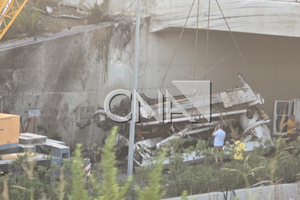
This Wednesday, around 4:00 PM, a serious accident occurre...

Tirana Police have shared details regarding the accident t...
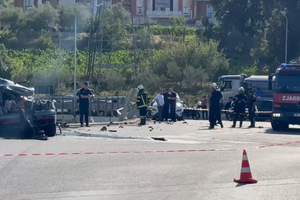
New details have emerged regarding the accident that occur...

New details have emerged from the serious accident that oc...
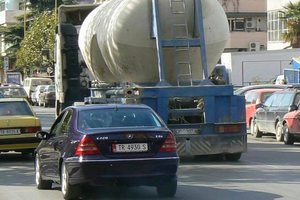
A serious accident that occurred this Wednesday with the c...

The Institute of Geosciences has shared a forecast for wea...
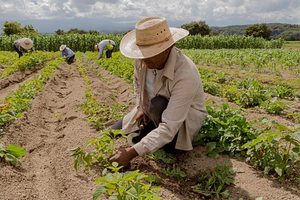
Rising energy and fertilizer prices are expected to contin...

Over 18,000 foreign citizens from 140 countries have appli...

US President Donald Trump has issued another warning to Ir...

Prime Minister Andy Burnham has announced that most bus fa...

France's parliament has passed a law to ban social media f...

US Secretary of State Marco Rubio arrived in Manila on Jul...

At a time when industrial products are increasingly taking...

Trust among people is not just a three-syllable word. It c...

Master of humor Todi Llupi has passed away at the age of 7...
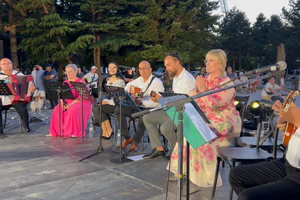
The ninth edition of "MIK Festival" kicked off with one of...

Businesses will no longer be required to simply register t...

Despite economic growth and income in recent years, Albani...

This Wednesday, one US dollar is bought for 81.4 lek and s...
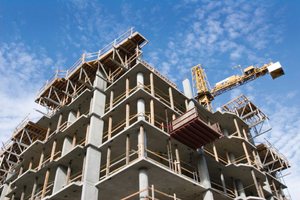
Construction company licenses will have a validity period ...