

Euro at the rate of 104 ALL/ Exchange rate, November 10, 2023
Today, on November 10, 2023, the US dollar is bought at 97...


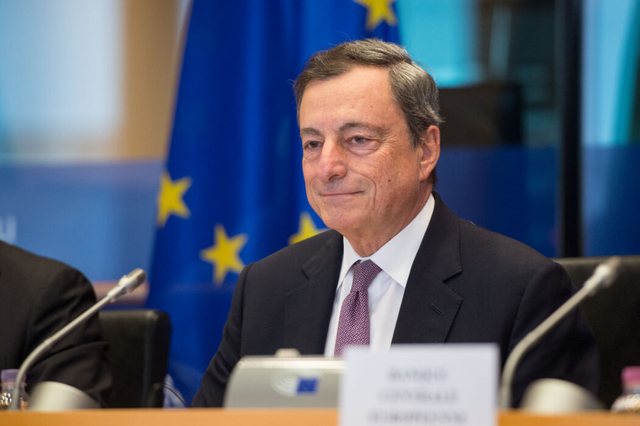
The former president of the European Central Bank, Mario Draghi, has given a negative picture regarding the economic growth of the European Union, predicting a recession by the end of this year, while he has warned that the long-term survival of the European project depends on urgent political integration.
"It is almost certain that we will have a recession by the end of the year," he told the FT Global Board conference.
"It's pretty clear that the first two quarters of next year will show that."
The former Italian prime minister said the recession was unlikely to be "deep" or "destabilising", but his assessment was weaker than recent forecasts from the ECB or the IMF, both of which expect a return to European growth from the last months of this year.
Draghi's warning comes as the EU economy struggles to recover from back-to-back crises caused by the coronavirus pandemic and Russia's ongoing war against Ukraine, which exposed weaknesses in the bloc's supply chains, energy market and dependencies. global.
"Or Europe acts together and becomes a stronger union, a union capable of expressing a foreign policy and a defense policy, in addition to all economic policies. . . or I fear that the European Union will not survive unless it is a single market", added Draghi.
Draghi has been tasked by the European Commission to prepare a report on how the EU can handle its global competitiveness, especially compared to the US and China, which have invested heavily in supporting the green transition of their economies.
"We should be very concerned about this. The European economy has lost competitiveness in the last 20 years, not only to the United States, but to Japan, South Korea and, of course, China," said Draghi.
That came, he said, as the bloc's past model of relying heavily on the United States for defense, China for trade and Russia for energy has ended.
"The geopolitical, economic model on which Europe relied since the end of the Second World War has disappeared."
He singled out Europe's low productivity, high energy costs and lack of skilled labor as weaknesses.
"To have an economy capable of supporting an aging society at the pace we have in Europe, we must have much higher productivity. Where we need to come together is energy. We're not going anywhere by paying two or three times more for energy than it costs in the rest of the world.”
The eurozone economy shrank 0.1 percent in the third quarter compared to the previous quarter, according to preliminary estimates released by Eurostat, and many economists expect a further contraction in the fourth quarter.
However, the ECB's latest forecast for the eurozone is for a return to economic growth of 0.1 percent in the last quarter of this year, 0.3 percent in the first quarter of 2024 and then a period of growth of 0.4 per cent. cent.
Draghi said the impact of the expected recession on the European economy is likely to be softened by the relatively low unemployment rate, which rose slightly in September after hitting a record low of 6.4 percent earlier this year. Financial Times

Today, on November 10, 2023, the US dollar is bought at 97...

Liabilities to the public distribution company reached...

Today, on November 9, 2023, the US dollar is bought at 97....

The reform of the pension scheme is under revision in ...
Today, on November 7, 2023, the US dollar is bought at 97....
The capacity utilization rate is increasing for the se...

Many families in Kosovo are being forced to go into de...

Allocate 2.2 billion lek in the 2024 draft budget to the f...

Ndonëse vendi ka shënuar rritje të kënaqshme vitet e fundi...
Today, on November 7, 2023, the US dollar is bought at 97....
The draft budget 2024 sets a new level regarding the plann...
The lek has started the week with further strengthening in...

After the construction boom of the last two years, the sec...

Today, November 6, 2023, the US dollar is bought at 97.5 A...
The production of olives this year marks a decrease in Alb...
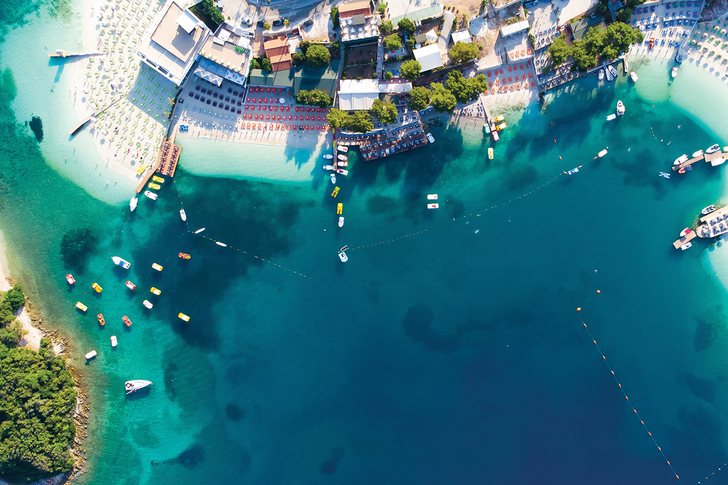
Albania has reached the highest peak this year, in the con...

Today, November 4, 2023, the US dollar is bought at 97.4 A...
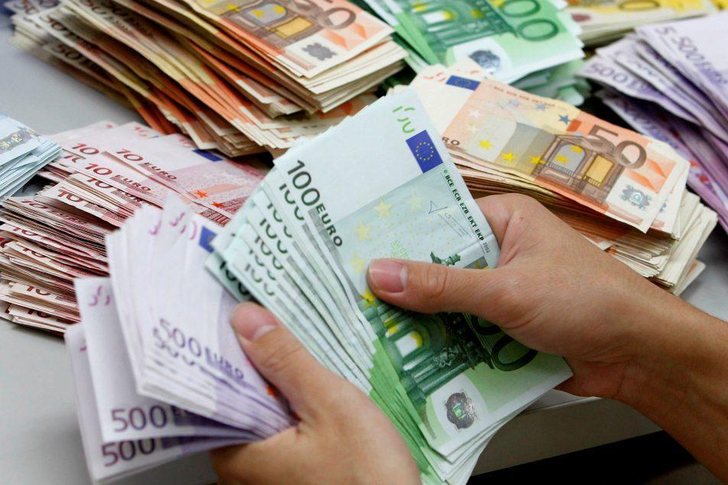
The Euro to Lek exchange rate is falling again. Accord...
Today, November 3, 2023, the US dollar is bought at 98.5 A...
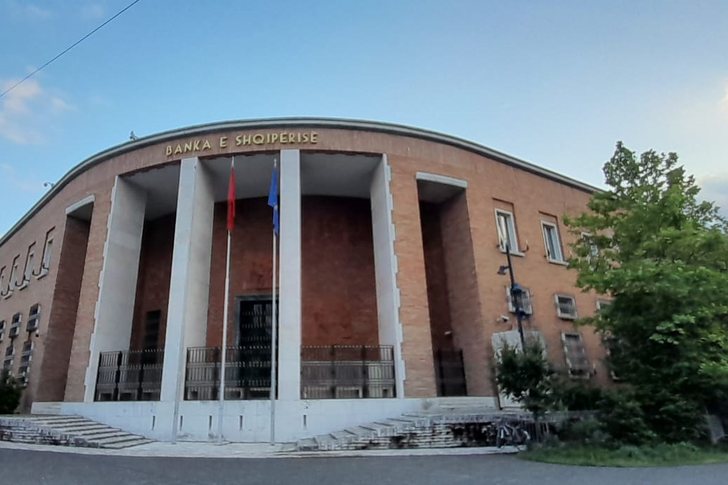
The Bank of Albania has prepared a draft regulation, a...

CNA has launched another investigation that could lead to ...

Irfan Hysenbelliu is a businessman that we call "Irfan the...

In March 2026, CNA launched another investigation centered...
The arrested mayor of Tirana, Erion Veliaj, with 13 charge...

The Special Board of Appeal (KPA) decided this Monday ...

The KPA vetting decided this Thursday to dismiss the p...

Suela Salavaçi, a prosecutor in the Prosecutor's Offic...

The Special Board of Appeal reinstated the prosecutor ...

Footage emerges from the serious accident that occurred th...

A Shkodra traffic police officer was hit with hard objects...

This Wednesday, around 4:00 PM, a serious accident occurre...

Tirana Police have shared details regarding the accident t...
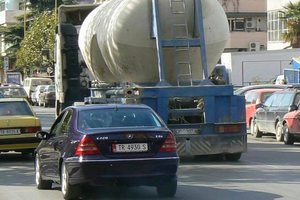
A serious accident that occurred this Wednesday with the c...

The Institute of Geosciences has shared a forecast for wea...

Rising energy and fertilizer prices are expected to contin...

Over 18,000 foreign citizens from 140 countries have appli...

The trial of ousted Venezuelan President Nicolas Maduro on...

US President Donald Trump has issued another warning to Ir...

Prime Minister Andy Burnham has announced that most bus fa...

France's parliament has passed a law to ban social media f...

At a time when industrial products are increasingly taking...

Trust among people is not just a three-syllable word. It c...

Master of humor Todi Llupi has passed away at the age of 7...

The ninth edition of "MIK Festival" kicked off with one of...
The price of diesel reached 206 lek per liter from 198 lek...

Businesses will no longer be required to simply register t...

Despite economic growth and income in recent years, Albani...

This Wednesday, one US dollar is bought for 81.4 lek and s...