

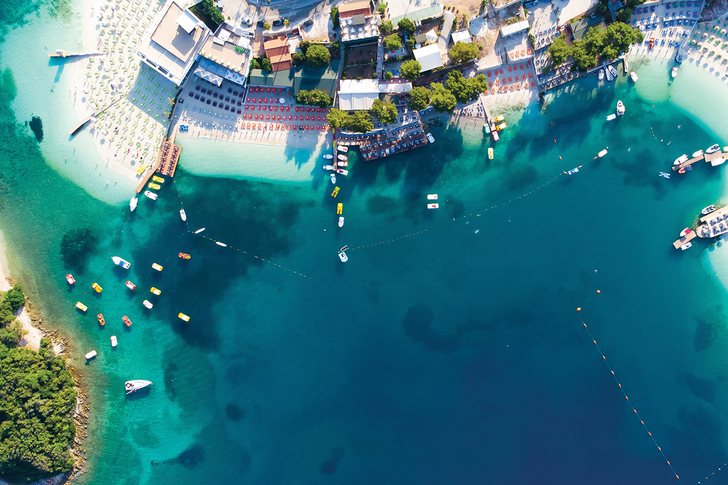
The positive balance of tourism, contracts with guarantees for the next year increase by 35%
Albania has reached the highest peak this year, in the con...


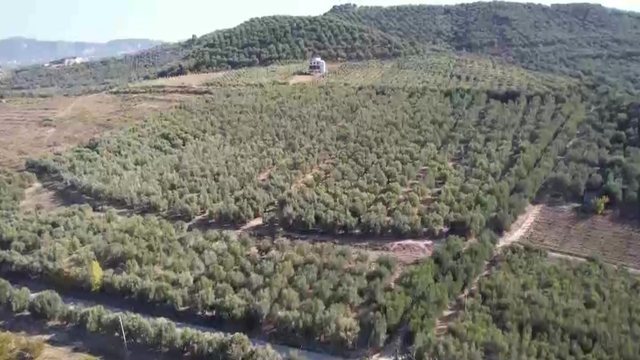
The production of olives this year marks a decrease in Albania and this is also accompanied by the doubling of the price of olive oil.
The country no longer has the amount of oil of previous years as the enterprises and farmers sold it to foreign enterprises in the first six months of this year.
Olive oil exports this year reached about 7,500 tons with a significant increase towards neighboring countries Italy and Greece.
The olive groves in Albania have a lower production this year than last year when the olive production reached about 160 thousand tons.
In Vlora, an area known for olive cultivation, the oil production factories have started to work at low rates.
The Director of the Center for the Transfer of Agricultural Technologies in Vlora, Meno Besimaj, says that in a general assessment of this center, which covers olive and oil issues at the national level, there is a lower production of olives, but a higher price of oil.
"In general, the situation of olive production this year is at lower levels compared to last year, since 2022 was a year with high olive production, about 160,000 tons nationwide. There is a positive thing this year for farmers as the price will be almost double compared to last year".
Even Enerik Xhaferaj, an olive oil producer, says that this year the price of olive oil has doubled.
The price of oil has almost doubled this year. From 4,000 Lek per liter last year, this year it has gone from 8 to 10,000 Lek.
The Technology Transfer Center in Vlora, which has an olive plantation, has managed to sell this year at auction the amount of olives at a price almost double that of a year ago.
"The price has increased since the supply this year is higher, the amount of production is lower, but since the consumption is also increasing, since the population has started to become aware of a greater use of olive oil. It is understood that even countries like Italy and Spain have had a lower production and since the olive oil processors have signed contracts for export, they are forced to respect them. Regarding the price increase, I am mentioning only one fact: we have the plantation of of olives here at our center, and this year at the auction, the price of grain olives was 80-90% higher than in previous years."
Mr. Besimaj further says that last year the stock production of olive oil went towards export thanks to an agreement in March of this year between the Ministries of Agriculture of Italy and Albania.
"Almost all the stock production was gone with the agreements with Italy, but the production was gone and the price was not at the level claimed by the farmers and with the cost that we extract the oil. It is understood that we have higher costs than other countries considering that the biggest expenses in our country are related to harvesting."
Farmers this year, says the producer Xhaferraj, are turning the production into oil and are not selling it, waiting for the old situation to happen when they bring it back to export it at a more favorable price.
"Farmers are not selling the oil they make but practice the method they followed for years, they take the oil home and will return it when the export market opens. I don't know how well this will work this year."
Mr. Xhaferi says that his factory has storage capacity, but the unstable price situation makes farmers not to deposit the quantities of oil they produce in the factory.
"We have deposits and opportunities to accumulate it, but because the price is not fixed, farmers are fluctuating, they don't like the price offered by the factories at this time and they think that the price increases more. Last year, the sale of oil started at a price of 3500 old lek per liter and reached the Italian market at 6000 lek, and the farmers were somewhat tempted. And this year it's happening."
While Mr. Besimaj says that the time has come for factories to look away from storage
"The farmer should take the amount he will need for his own consumption and sell the rest to the factory. So factories must be in storage, marketing, and labeling to increase the quality and value chain of olive oil production."
According to the data of the office, in the 8 months of this year, Albania exported about 7,500 tons of olive oil that belongs to the production of the previous year or years ago, in the value of over 26 million dollars.
Albanian customs data prove that a liter of olive oil was exported at an average of 3.5 dollars, a low price compared to the costs of local farmers and factories.
Albania is one of the main countries in Europe for olive cultivation with about 12 million olive roots, of which about 11 million are in production./ VOA

Albania has reached the highest peak this year, in the con...

Today, November 4, 2023, the US dollar is bought at 97.4 A...
The Euro to Lek exchange rate is falling again. Accord...

Today, November 3, 2023, the US dollar is bought at 98.5 A...
The Bank of Albania has prepared a draft regulation, a...
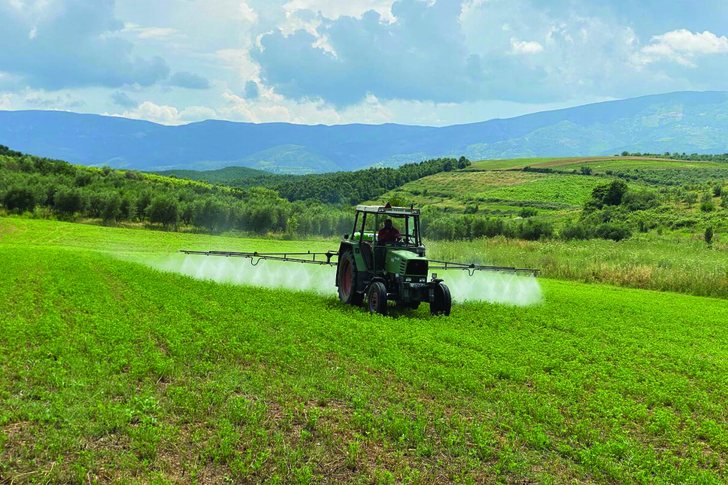
In the 2024 budget, the agriculture sector will receiv...
Today, on November 2, 2023, the US dollar is bought at 99....

The economy expert, Brisida Shehaj, stated that the Ti...

The Bank of Albania has increased by 0.25% the base in...
Today, on November 1, 2023, the US dollar is bought at 98....

The government has published the draft budget for 2024...
Buxheti i pushtetit vendor është përkeqësuar ndjeshëm ...

Educated people in our country are facing limited opportunit...

Foreign direct investment is an important employer in the ...

Today, on October 31, 2023, the US dollar is bought at 99....

Qyteti i Korçës do të ketë një kampus të ri universitar i ...

The 10-year bond yield rose at the last auction. According...
The World Bank analyzes that the strengthening of the exch...

Today, on October 30, 2023, the US dollar is bought at...
Today, on October 28, 2023, the US dollar is bought at 99....

CNA has launched another investigation that could lead to ...

Irfan Hysenbelliu is a businessman that we call "Irfan the...

In March 2026, CNA launched another investigation centered...
The arrested mayor of Tirana, Erion Veliaj, with 13 charge...

The Special Board of Appeal (KPA) decided this Monday ...

The KPA vetting decided this Thursday to dismiss the p...

Suela Salavaçi, a prosecutor in the Prosecutor's Offic...

The Special Board of Appeal reinstated the prosecutor ...

Footage emerges from the serious accident that occurred th...

A Shkodra traffic police officer was hit with hard objects...
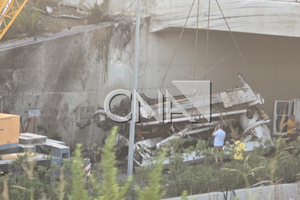
This Wednesday, around 4:00 PM, a serious accident occurre...

Tirana Police have shared details regarding the accident t...
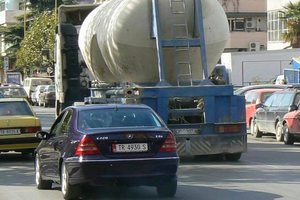
A serious accident that occurred this Wednesday with the c...

The Institute of Geosciences has shared a forecast for wea...
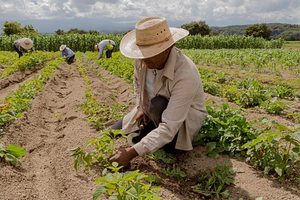
Rising energy and fertilizer prices are expected to contin...

Over 18,000 foreign citizens from 140 countries have appli...

The trial of ousted Venezuelan President Nicolas Maduro on...

US President Donald Trump has issued another warning to Ir...

Prime Minister Andy Burnham has announced that most bus fa...

France's parliament has passed a law to ban social media f...

At a time when industrial products are increasingly taking...

Trust among people is not just a three-syllable word. It c...

Master of humor Todi Llupi has passed away at the age of 7...

The ninth edition of "MIK Festival" kicked off with one of...
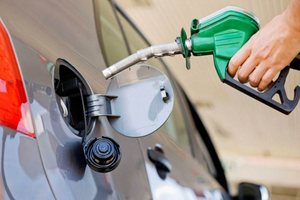
The price of diesel reached 206 lek per liter from 198 lek...

Businesses will no longer be required to simply register t...

Despite economic growth and income in recent years, Albani...

This Wednesday, one US dollar is bought for 81.4 lek and s...