


Veliaj's gross mistake/ Concrete mixers "invade" the streets of Tirana
The problem with the circulation of heavy vehicles on the ...

The problem with the circulation of heavy vehicles on the ...

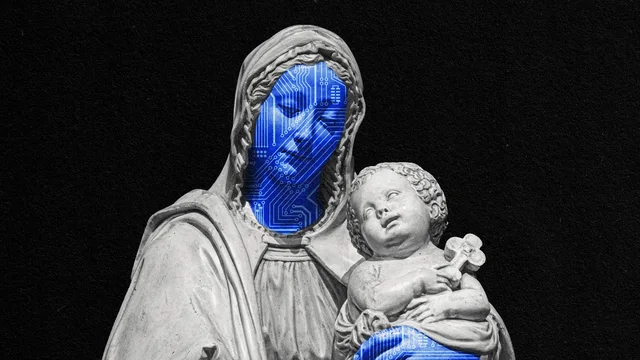
Since the beginning of this century, the practice of religious beliefs has suffered a worldwide retreat. According to the results from the World Values ??Survey, conducted between 2007-2019, the importance of God in human life fell on average in 39 of the 44 countries analyzed.
Additionally, the percentage of people who identify as non-religious has increased by more than 10 percent in countries such as Singapore, Iceland, Chile, and South Korea over the past decade. The decline in religious belief is even more striking in the United States.
During the years 1940-2000, church membership hovered around 70 percent of the population. With the beginning of the new millennium, it suffered a significant decline. In 2020, church membership was only 47 percent. Meanwhile, between 2007 and 2020, the percentage of Americans who were not affiliated with any religion rose from 16 to 30 percent.
Belief in and worship of supernatural beings, gods, and deities has been a fundamental aspect of human existence for thousands of years. However, the decline in the following of religious beliefs is more than obvious. But what can explain this upheaval in global society?
Technological progress is the aspect that attracts the most attention of researchers as a possible explanation. People used to turn to religious faith for answers and to solve problems. Now we have the technology.
"When people are able to use technology to predict the weather, diagnose and treat disease, and produce resources, they may rely less on religious beliefs and practices," an international team of researchers recently wrote in a published study. in "Proceedings of the National Academy of Sciences".
But if technology is eroding people's need for religion, then why wasn't there a massive decline in religious belief during the Industrial Revolution, the Space Race, or the expansion of personal computing? Why has the decline of religion become so widespread and rapid only in recent years?
Researchers offered a hypothesis for this phenomenon: It is not technology itself that diminishes the role of religion in people's lives, but automation in the form of robotics and Artificial Intelligence, which became prominent only at the beginning of this century.
“This claim is based on recent research on lay perceptions of automation. Such studies show that people attribute abilities that border on the supernatural to automation technology. Historically, people have turned to supernatural agents and religious clerics to solve instrumental problems beyond the realm of human ability. These problems may seem more solvable for people who work and live in highly automated spaces," they write.
To test their assumptions, the researchers conducted 4 experiments. In the first, they observed the decline in religious practices between 2006 and 2019 in 68 countries through a yes-or-no survey of more than 2 million respondents: "Is religion an important part of your life?" daily?".
They then correlated this data with the amount of industrial robots in each country.
"The number of the latter was strongly and negatively associated with religion across the globe," they reported.
This relationship existed even when verified in relation to GDP per capita, telecommunications development and energy development.
In the other experiment, the scientists focused only on the decline of religious belief in the United States, comparing religion and the development of robotics in metropolitan areas between 2008 and 2016.
"Metropolitan areas with higher levels of robotics growth experienced an annual decline of about 3 percent in religious belief in each decade," they reported.
In the third experiment, the researchers observed 46,680 individuals in a community between 2009 and 2020, measuring their self-reported belief in God and their exposure to automation in the jobs they did. They found that individuals working in jobs with higher exposure to Artificial Intelligence and robotics reported a significantly greater decline in religious belief over time.
"People in jobs with high exposure to Artificial Intelligence were 45 percent less likely to believe in God, compared to people in occupations with an average level of exposure to AI," the authors write. However, the last experiment was conducted at a more local level.
The researchers monitored 238 employees within an organization, directly measuring their exposure to AI and their religious belief. Again, exposure to AI was found to be associated with a decline in religious belief. All studies are correlational, and therefore do not prove causation.
But taken together, they strongly support the authors' claim that automation reduces religious belief. "Our studies show that automation is linked to the decline of faith in many countries, whether Christian, Muslim or Buddhist, and in all regions of the world such as North America, South Asia and Oceania," they said./ " Big Think ” - Translated and adapted by CNA


If there was a bet on how Yevgeny Prigozhin would die, mos...

Japan has the highest public debt in the world. It is equa...

At the end of July, during archaeological excavations near...

Finally there is a date, 2030, for the Europe of the futur...

President Joe Biden was "fine" according to White House Co...

About 930,000 years ago, the human race was on the ver...

It is 1 o'clock in the afternoon on a summer Saturday, and...

Cheating is a complex topic, with an emotional charge, tha...

On a hot summer day in July 1954, a man arrived at Haneda ...

Fosili i një majmuni i zbuluar së fundmi në Turqi, ka nxit...

Flying is the safest way to travel. According to the lates...

When London was hit with the bubonic plague in 1665, many ...

When I heard that hospitals in the US were short of blood ...

At the Bled Strategic Forum held this week, European C...

By Ross Pomeroy "Big Think" Over time, a person's persona...

Gone are the days of old scams, with "princes" offering th...

The Boeing E-4B aircraft, also known as the "End of the Wo...

Water is the main component of our body and a fundamental ...

While intelligence is often considered a very valuable tra...

After several years full of anxiety about the backward ste...

CNA has launched another investigation that could lead to ...

Irfan Hysenbelliu is a businessman that we call "Irfan the...

In March 2026, CNA launched another investigation centered...
The arrested mayor of Tirana, Erion Veliaj, with 13 charge...

The Special Board of Appeal (KPA) decided this Monday ...

The KPA vetting decided this Thursday to dismiss the p...

Suela Salavaçi, a prosecutor in the Prosecutor's Offic...

The Special Board of Appeal reinstated the prosecutor ...

New details have emerged regarding the accident that occur...

New details have emerged from the serious accident that oc...

A serious accident occurred this Wednesday on the Elbasan-...

Citizen MH, 61, a fisherman, was found dead near the islan...

A serious accident that occurred this Wednesday with the c...

The Institute of Geosciences has shared a forecast for wea...

Rising energy and fertilizer prices are expected to contin...

Over 18,000 foreign citizens from 140 countries have appli...

US President Donald Trump has issued another warning to Ir...

Prime Minister Andy Burnham has announced that most bus fa...

France's parliament has passed a law to ban social media f...

US Secretary of State Marco Rubio arrived in Manila on Jul...

At a time when industrial products are increasingly taking...

Trust among people is not just a three-syllable word. It c...

Master of humor Todi Llupi has passed away at the age of 7...

The ninth edition of "MIK Festival" kicked off with one of...

Businesses will no longer be required to simply register t...

Despite economic growth and income in recent years, Albani...

This Wednesday, one US dollar is bought for 81.4 lek and s...

Construction company licenses will have a validity period ...