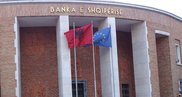



In Albania, the financial fraud scheme with loans, which affected a very high number of citizens, involved administrators of non-banking financial institutions, as well as private executors, who operated in a closed cycle between them. Suspicions were raised in 2020 by the Ministry of Justice, which filed a criminal complaint. But investigations began intensively last year. Citizens, victims of this fraud scheme, have been forced to take out new loans to pay off the old ones, or their assets have been seized that far exceed their obligations. The Bank of Albania requests legal changes and expects the Ministry of Justice and Finance to take action.
"After receiving the loan from MCA, letters started coming continuously, claiming very large figures to repay the debt, which was very high. They made the seizure of a land collateral and various actions, such as locking money in the guarantor's account. They made a calculation for me and the amount was approximately 8 million old lek, the remaining obligation. They made me a schedule that I would adhere to regularly to pay off the loan. Thinking that I paid off my obligations and I would rest in peace, after I had paid it off, I received another sheet from the enforcement where it says that "you owe another 5 million new lek" I communicated with one of them and he tells me that I will do an offer and out of 50 million you will pay 20 million old lek. This one said 20 million, another said without 30-35 million it cannot be done. It seemed as if we were in the market and we were shopping" - testified to the Voice of America, Gezimi not a real name.

This is one of the many clients of Micro Credit Albania, MCA, the non-bank financial institution put at the center of the investigations. He asked to remain anonymous.
At least 9 people, the administrators of two of the 5 non-banking financial institutions licensed for the purchase of bad loans, and former bailiffs are under arrest and house arrest for theft and abuse of office charges.
On the bank accounts of some of them, as well as on the two non-bank financial institutions, Micro Credit Albania and Final, the Prosecutor's Office of Tirana placed a seizure worth 10 million euros.
In Albania, 26 non-bank financial institutions are licensed by the Bank of Albania. With a history of more than 30 years, they operate in the market with low loan amounts, high interest and accelerated procedures.
Unlike second-tier banks, they do not have deposits, but only loan portfolios, for which they use their own funds. They offer loans mainly to that segment of the population that does not have access to traditional banks, due to stricter lending rules.
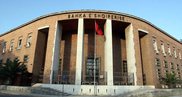
Although their loans amount to 540 million euros, or about 6% of the total loan portfolio, they represent 260,000 loans out of 360,000 that the banking system has. Non-bank financial institutions that buy loans from second-tier banks began to appear in the market in 2013. When the portfolio of bad loans in 2015 became problematic, accounting for about 24% of total loans, the Bank of Albania requested for them to be licensed in order to supervise their activity. There are a total of 5 such licenses.
The purpose, as explained by the Bank, was to supervise their activity and make it possible to keep problematic customers' loans in the register. First, to remove them from this register if they repay the loan, and second, to prevent them from taking other loans in banks while they have the status of a bad borrower.
The 5 non-bank institutions have 64 thousand credit clients. Of these, 17,000 are from Micro Credit Albania, which is under investigation by the prosecution.
In order to clean up their negative balances, second level banks over the years have sold problematic loans to these institutions, worth from 2 to 35% of the total value.
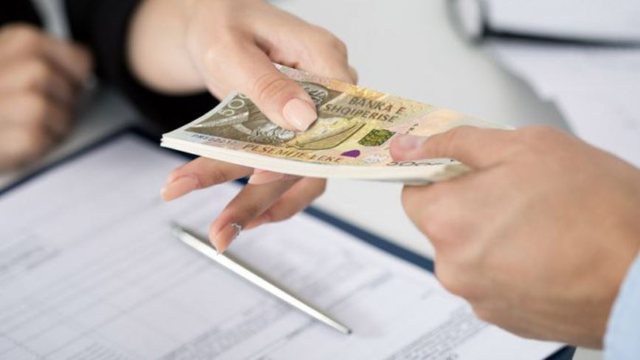
According to the Bank of Albania, the value of bad loans that have been sold to non-bank institutions so far amounts to 90 million euros, but only 10% of this figure has been collected. On the other hand, it is not known what is the value of the assets sold at auction by the executors, after the sequestration from the debtor citizens, on account of the repayment of bad loans.
According to the investigations of the Prosecutor's Office, during the procedures followed by MCA for the collection of debts, the first serious problems began to emerge, from the coercion of clients to obtain new loans and the abusive enforcement procedures.
"Every day it is understood more and more that within this system there was another system, that of benefiting and taking the properties of these people, part of which were collateral in the bank where they had taken loans. Often without warning them without letting them know. Using enforcement in some cases. Some were sold at auctions even without the knowledge of the one who had the unpaid loan. They were bought by these companies at low prices and then resold on the market at their real price, putting an extraordinary number of citizens in great difficulty," said Adrian Civici, an economic expert, for the Voice of America.
In the report of the Ministry of Justice, which the Voice of America was able to secure, there are typical cases of sequestration of debtors' assets that have exceeded the value of the obligation many times, which, as stated in the report, are beyond any legal and logical requirement for the execution of the obligation. to the approximate extent of its completion.
One of them on account of MCA, when for an obligation in the amount of ALL 5517, the debtors were put into conservative sequestration of two separate apartments. 80 and 90 square meters.
In the report, it is stated that seizures of this type were placed on the assets of persons who were not related to the execution. The prosecutor's office has also noticed legal violations in the amount of late interest fees, on the part of the bailiffs.
Meanwhile, the National Chamber of Private Bailiffs did not respond to VOA's repeated request for an interview regarding these issues. But in a public reaction, he clarified that the former executors under investigation are not part of this Chamber.
The 2020 report against 21 people and 5 companies follows an administrative investigation by the Ministry of Justice that concluded with the revocation of the license of some bailiffs. The file was initially forwarded to the special prosecutor's office, which turned it back, under the conditions of incompetence to investigate. Only a year ago, the investigations began intensively by the Prosecutor's Office of Tirana.
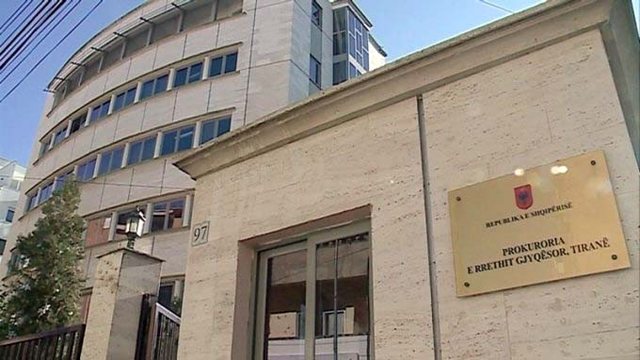
The prosecutors say that during the investigation, they managed to prove that the former bailiffs, summoned by the Ministry of Justice, refused to hand over the enforcement files according to the law, after the license was revoked. In October 2019, the Ministry of Justice completed 104 bags of enforcement documents that were not inventoried.
The Prosecutor's Office of Tirana has established that data on 5,800 enforcement cases were found in them, while at least 4,944 other enforcement files/cases are still not submitted by the former bailiffs under investigation.
During the inventory, the Ministry of Justice managed to establish, as stated in its report, that three enforcement companies, a law firm and the Micro-Credit Albania company, have acted as a single entity, with the same address, creating a coercion scheme of debtors for obtaining new loans, for the benefit of MCA.
The main protagonists, according to the report, are people with direct family ties who interact with each other in a closed cycle.
Many experts have raised concerns about the need for stricter supervision by the Bank of Albania of non-bank financial institutions, and mainly of those that buy bad loans from second-tier banks.
"For several years, this bell has been ringing about where we are going with this system, which needs to be regulated from a legal, supervisory and licensing point of view. But this system also needs to be analyzed based on the fact that it is possible to take advantage of this system in a way that is not criminal, to exploit someone's difficult situation" - says Adrian Civici, an expert in the economy.

In an interview for Voice of America, the Director of Supervision at the Bank of Albania, Deniz Deralla, said that inspections have been carried out in non-bank financial institutions. Due to the fact that it was informed by the Ministry of Justice about a criminal report against Mirco Credit Albania, the Bank of Albania conducted a special inspection in this financial company immediately after the report, at the beginning of 2020.
"We inspected several weeks, we did not encounter a case of fraud, but we assessed some weaknesses of the company, which were mainly related to the way of provisioning, to the reflection of a customer's obligation in their balance sheets, to the accounting records of loans purchased from banks, to the classification of these loans within their portfolios as well as with the reporting relationships they had with the credit registry", says Deniz Deralla, director of the supervision department at the Bank of Albania.
For these reasons, the MCA company's license for the purchase of new loans was suspended for one year, until the complete suspension at the end of 2023. While a few days ago the Bank of Albania decided to revoke its license, after the administrator Elda Ibro was accused of theft by the prosecution.
The license was also revoked from the company Final. This measure was taken after its administrator Arben Meskuti is accused of abuse of office and does not meet the criterion of a high ethical reputation, according to the Bank.
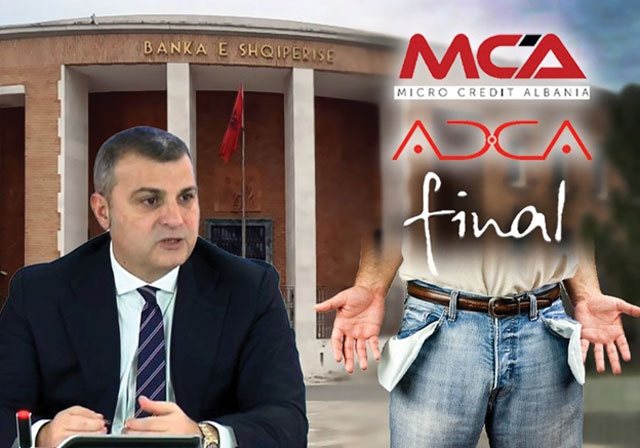
The removal of the license for the two financial companies in question constitutes a difficult moment for the treatment of debtors with bad credit in the absence of legal provisions for such a case.
"These days we have placed representatives of the Bank of Albania near these companies and have suggested to the citizens that for any case of complaint they should refer to the email address of the Bank of Albania. At the same time, we asked the employees of these two companies to continue their work and meanwhile we are preparing legal and regulatory changes in order to align the treatment of the liquidation of these companies with that of banks", continues Mr. Deralla, Director of the Supervision Department in Bank of Albania.
Another report on bad loans was submitted to the Tirana Prosecutor's Office, but due to incompetence, it was forwarded to the Special Prosecutor's Office. It is still not known what the report is about, but for this matter, SPAK's powers include either the Governor of the Bank of Albania, or the case of a structured criminal group. Governor Sejko, while reporting to the parliamentary economy committee, said that he is not aware of any investigation against him.
"There is a very big misunderstanding. The supervisory and regulatory role of the Bank of Albania has been translated into a very big misunderstanding. This misunderstanding came from those who investigated it and I was not informed, I have no information and I was never asked by the investigating body. The investigative bodies did not understand the role, misunderstood it and put it in the role of misunderstood legal compliance. Let's go into the details of the process and understand it as a function and then assign responsibilities and measures to solve it. I do not avoid any responsibility", said Gent Sejko, Governor of the Bank of Albania.

Officials of the Bank of Albania say that the expansion of the microcredit sector was also accompanied by the further improvement of the existing legal and regulatory framework, both for the licensing process and for consumer protection. Two of them are limiting the amount of penalties charged to a consumer loan borrower to 30% of the amount of the unpaid obligation, since this amount exceeded several times the amount of the principal, as well as setting a limit on interest rates. reducing them up to 3 times after concerns about high loan costs, with interests up to 260%.
In the Bank of Albania, there were also 85 complaints from clients of the MCA company. Officials of this institution explain that they are related to the process of mandatory execution by the enforcement service, an activity that is controlled by the Minister of Justice, to which the Bank of Albania has no legal status.
Lawyer Virtyt Sokoli, who has been contacted and has offered consultancy to many citizens on their problems related to microcredits, puts more emphasis on the prevention of such acts.
"Things have to be prevented. And not turn into a problem and then deal with conflicts. If they are prevented it is better for everyone. And we don't have conflicts and we won't have victims and we won't have people falling into absolute poverty. Any conflict that is conveyed through loans turns into social conflict, separation of married couples, family violence and all of them have very serious social consequences", says Mr. Sokoli.
The Bank of Albania states that legal interventions and improvements to enforcement procedures are needed and that since 2020 it had requested cooperation with the Ministry of Finance and the Ministry of Justice, as institutions that have the right to propose legal changes.
The Ministry of Justice did not respond to the Voice of America's request for information regarding the issue of microcredits and the need for legal changes, with the argument that the matter is under investigation./ VOA

The Italian Prime Minister is visiting our country on Wedn...
The son of Remzi Hoxha, kidnapped and disappeared 28 y...

While in its delirium the government counts the touris...
The General Director of Taxes, Ceno Klosi, resigns. I...
The Bar Association has decided to boycott court proce...

The former Director General of Police, Gladys Nano wil...
By Edi Rama Report's journalists were surprised and said...
Prime Minister Edi Rama addressed a request to Albanians t...
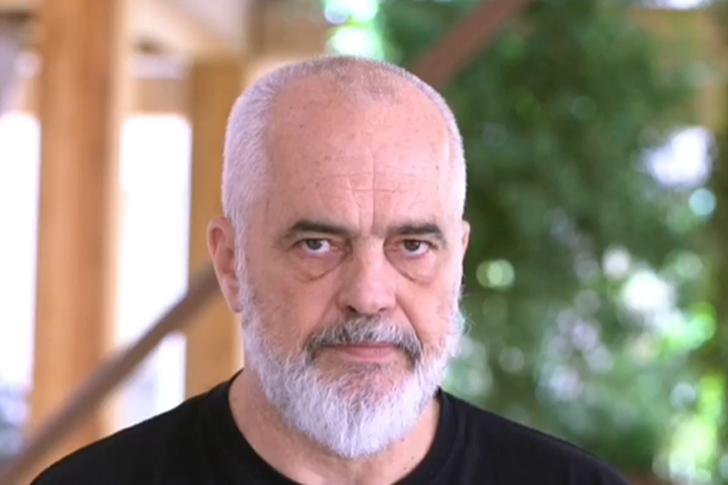
Prime Minister Edi Rama reacted publicly, through a video ...
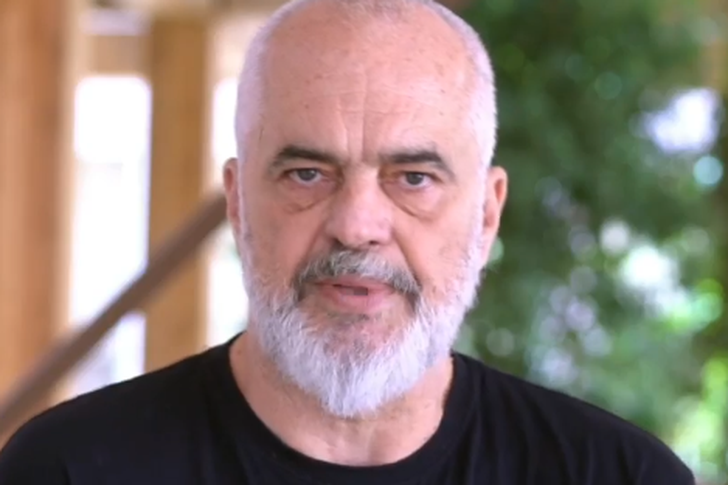
Prime Minister Edi Rama has issued a message after the inv...
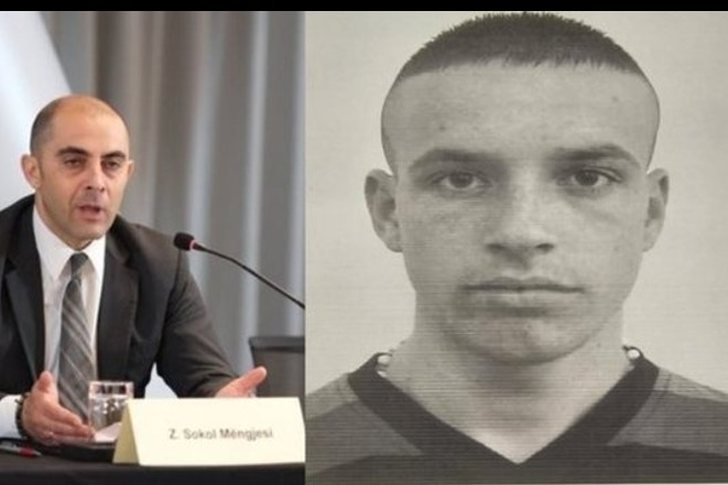
The 32-year-old Dorian Alia, one of the perpetrators o...
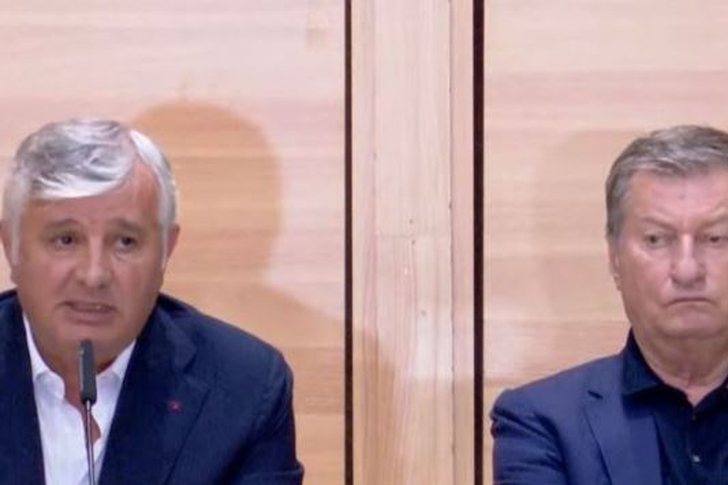
The meeting of the National Chamber of Advocacy is tak...
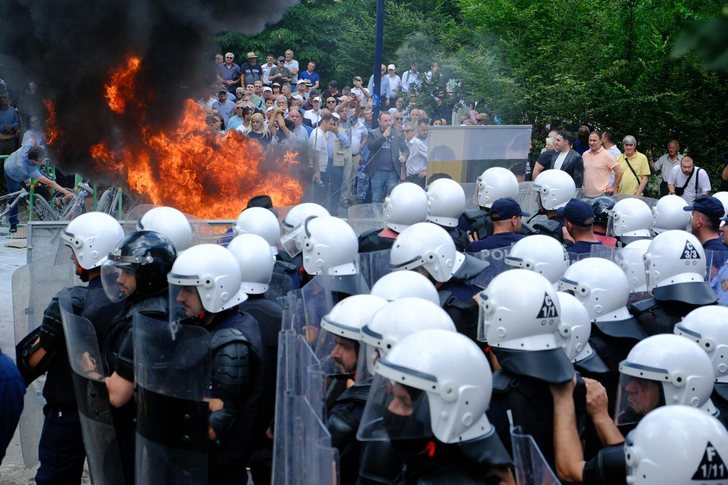
In today's protest that took place in front of Tirana ...
Today, the 10th protest took place in front of Tirana City...
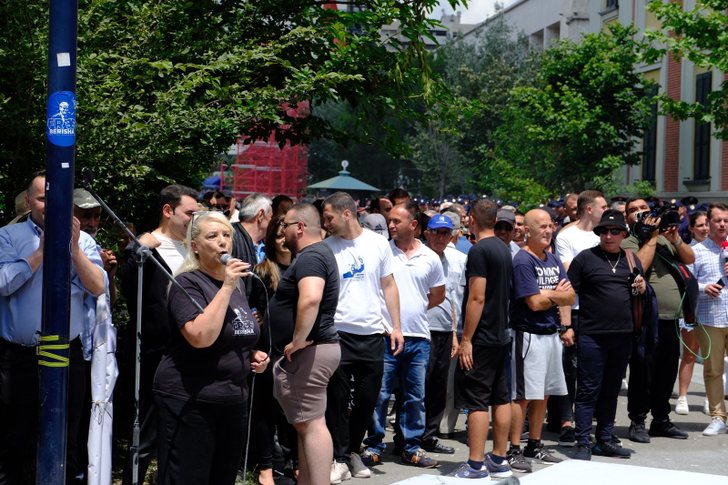
The 10th protest in front of Tirana City Hall has ended. T...
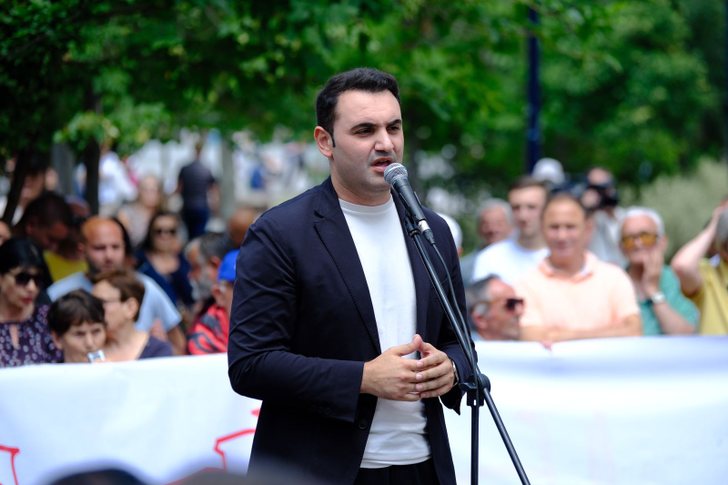
The political leader of the PD for Tirana, Belind Kell...
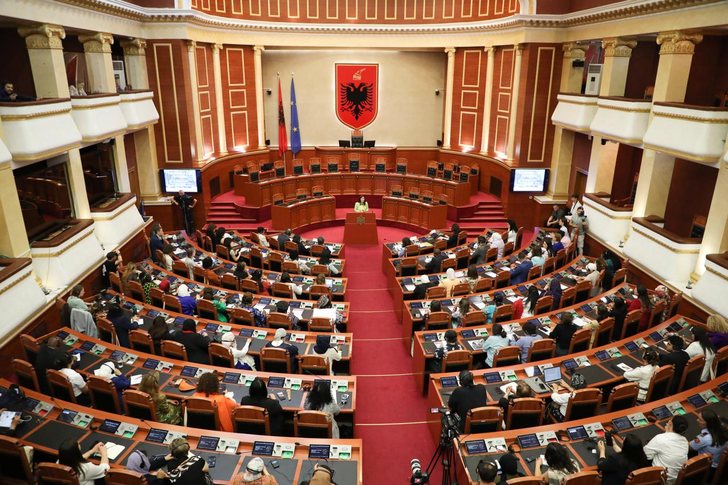
The special session of the 10th International Civil Societ...
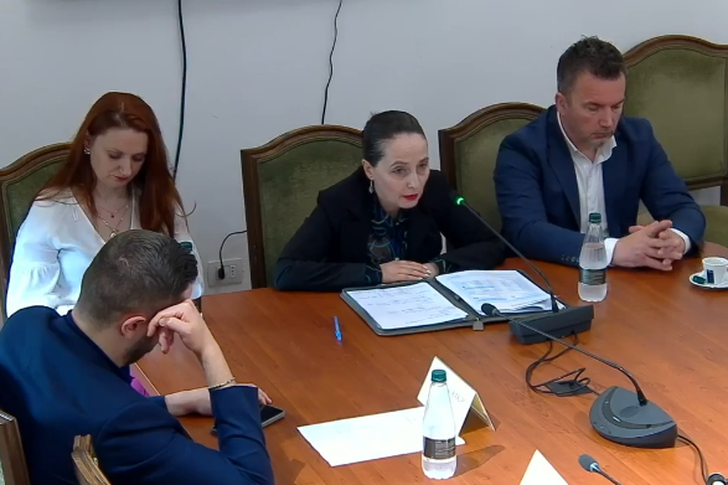
Today, a hearing was held at the Commission for European A...
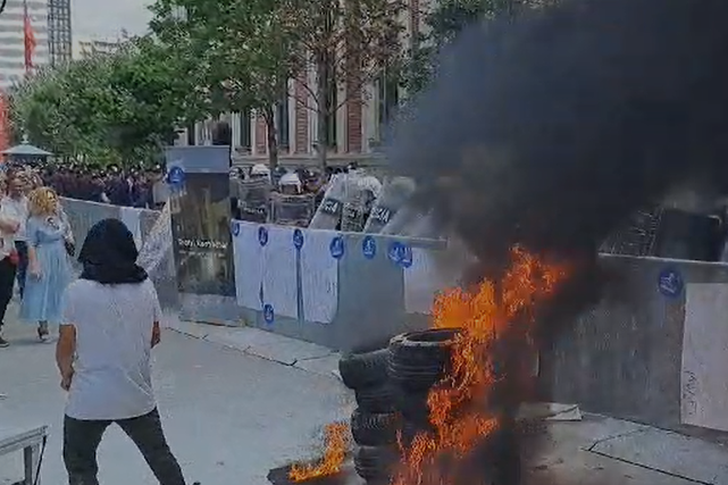
The situation in the protest in front of Tirana City Hall ...
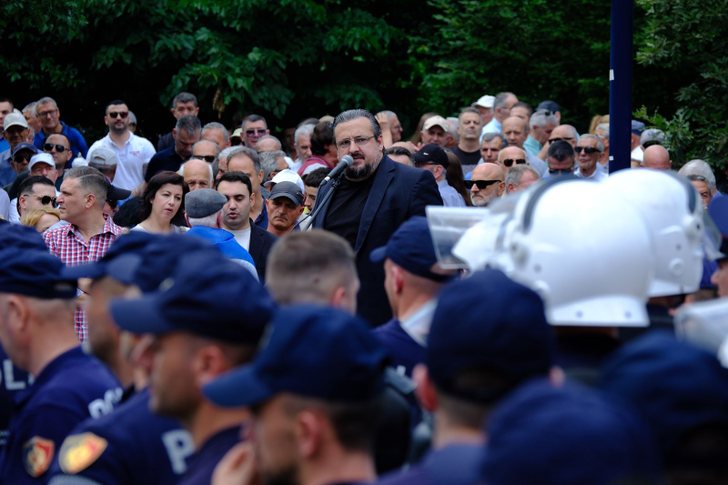
The member of the Tirana Municipal Council, Dorian Tel...
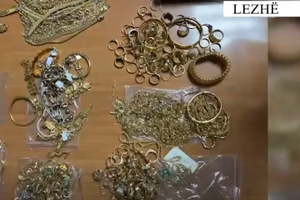
A 39-year-old citizen has been arrested in Lezha, after se...

CNA has launched another investigation that could lead to ...

Irfan Hysenbelliu is a businessman that we call "Irfan the...

In March 2026, CNA launched another investigation centered...

The Special Board of Appeal (KPA) decided this Monday ...

The KPA vetting decided this Thursday to dismiss the p...

Suela Salavaçi, a prosecutor in the Prosecutor's Offic...

The Special Board of Appeal reinstated the prosecutor ...

55-year-old Belere Plaka, who was injured today with a sho...
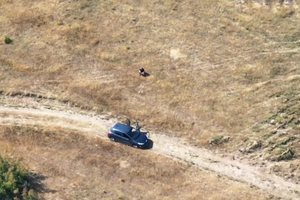
Police Announcement: Following preliminary information...

New details from the operation being carried out in Fier t...

The 17-year-old, who was seriously injured yesterday after...

By noon, cloudiness is expected to prevail in almost all o...

Children without parental care, for whom alternative famil...

On Thursday, our country will be under the influence of st...

A serious accident that occurred this Wednesday with the c...
A bipartisan group of US lawmakers is calling for a Europe...

US President Donald Trump will host his Ukrainian counterp...
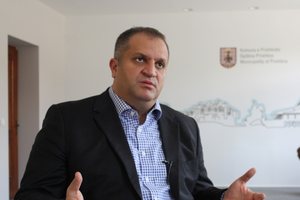
The Basic Court in Pristina found the former mayor of Pris...

The European Union Office in Kosovo has called on all poli...

At a time when industrial products are increasingly taking...

Trust among people is not just a three-syllable word. It c...

Master of humor Todi Llupi has passed away at the age of 7...

The ninth edition of "MIK Festival" kicked off with one of...
The number of active enterprises in Albania continued to g...
In Albania, the bar-cafe has long become an almost unique ...

This Friday, one US dollar is bought for 81.7 lek and sold...
The average sale price of apartments in Tirana reaches rec...