

The hearing for former Minister Mediu is postponed / The reason is revealed
The GJKKO has postponed the hearing for former minister Fa...



Organized crime groups recruited hundreds of women from Albania's poor cities as daily wage workers in cannabis greenhouses between 2020-2024 – often with serious legal and emotional consequences.
At dawn on November 10, 2022, a State Police team landed in the village of Rërëz in Berat, where they found four greenhouses covered with plastic and adapted for growing cannabis.
The greenhouses were equipped with electricity and water supply lines, were protected by armed men, and one of them had been transformed into a dormitory with 81 air mattresses spread out on the floor.
Only the dried stems of the narcotic plants remained on the ground. The cannabis had been moved to an improvised silo inside 700 crates lined up one after the other, while 11 black bags containing another 871 kilograms were prepared for the market.
Kapanoni was the workplace for 95 women from different cities in Albania – daily wage workers of the structured criminal group that is accused of producing around 1.8 tons of cannabis during that year alone.
Police forces found the women scattered throughout the greenhouses, and some of them later testified that they had arrived in Berat through a station in the center of Kamza in search of daily payments that amounted to up to 5 thousand lek per day.
This is not an isolated case in Albania, where women's involvement in the cannabis economy goes back decades and has its roots in the difficult economic conditions since the early 1990s. However, the monopolization of this industry at the hands of organized crime in recent years has brought new legal and emotional consequences for the women involved.
Data obtained by BIRN through three court files shows that criminal groups are exploiting the poverty and unemployment of women in the peripheral areas of Albania to recruit them not only as workers in cannabis cultivation, but in some cases also as collaborators.
During 2022 alone, over 110 women were detained by the police while working for criminal groups in Berat, Shkodra and Puka in the final stage of the process, which involves drying, cleaning and packaging the narcotics.
While most of the women implicated in this industry were released from their cells and investigated while at large, the Special Prosecution Office suspects that a small number of them now have deeper connections with members of criminal groups and have helped them secure free labor for their illegal activities.
SPAK prosecutor Behar Dibra, who led the investigation into the Berat case, told BIRN that at least two of the women are accused of being members of the criminal group.
"They have had the quality of recruiting other women into this criminal activity," said Dibra.
For lawyers who advocate for these issues, women involved in cannabis cultivation are victims of poverty.
“The bad post-communist politics have impoverished the honest man to the point of forcing him to live illegally to guarantee his own livelihood and that of his dependents,” said Artan Simoni, a court-appointed lawyer for one of the defendants.
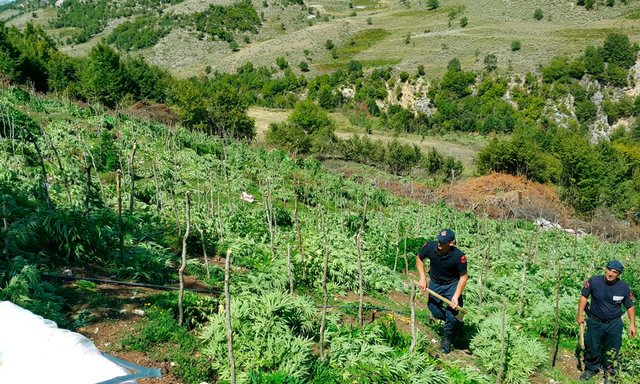
Three decades after the fall of communism, Albania continues to be a cannabis producing country in Europe and a transit country for organized crime activities in the trafficking of hard drugs from Latin American countries to Europe. During 2024 alone, the State Police destroyed hundreds of thousands of cannabis roots throughout the territory as part of an operation called “Clean Territory”.
According to the US State Department's 2023 Narcotics Control Report, Albania's narcotics problem is fueled by corruption, weak law enforcement, and unemployment.
Like most illegal activities, cannabis cultivation is also considered a 'men's job' in Albania, and almost 96% of defendants are male. However, hundreds of women from poor areas of Albania were also involved as 'seasonal workers' in this industry during 2020-2024, after being recruited by criminal groups to clean and package the narcotic plant.
Among them, 106 women and girls were prosecuted for the criminal offense of producing and cultivating narcotic plants between 2020 and 2024 in Albania, according to data BIRN obtained from the State Police. At the end of 2024, none of them were serving a sentence in prison.
Last year, the Special Court against Corruption and Organized Crime tried two structured criminal groups based in Berat and Shkodra, accused of producing hundreds of kilograms of cannabis thanks to the work performed by women employed from different cities in Albania. A third case was examined in late 2023 by the Shkodra Court, where six women, including a minor girl, were found guilty of the criminal offense of “production and sale of narcotics.”
According to court records, most of the women recruited by criminal groups come from the outskirts of Tirana or Kruja, as well as from rural areas of poor towns like Cerrik, Librazhd, or Milot. They are also unemployed, or work in unskilled and poorly paid jobs.
Investigations suggest that members of criminal groups spread word in these communities that they were looking for workers for 30-50 thousand lek a day to collect "sage" or "olives."
Some of the women told investigators that they would then organize themselves with each other and initially travel to the center of Kamza, where they would wait for the cars of the criminal group members, who would send them straight to the greenhouses.
In their testimonies to the Prosecution, a number of women listed difficult economic conditions and unemployment as the main motivation.
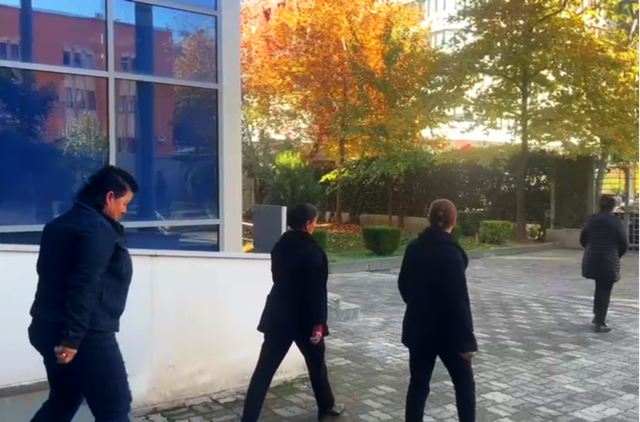
Denisa*, 44, worked for years as a nanny in a suburban neighborhood of Tirana before being arrested in a small makeshift cannabis den in the village of Bardhaj on the outskirts of Shkodra in October 2022.
Just minutes after landing in the village with eight other women, she found herself surrounded by dozens of police forces. The Special Prosecution Office accuses Denisa of being part of a criminal group with a role in recruiting other women, but she insisted in an interview with BIRN on condition of anonymity that she had already been recruited.
"They accuse me of being a recruiter, but most of the women are my friends," she complained at the entrance to the Special Court. "They asked me about property, cars and wealth, but I have nothing. I live in very difficult economic conditions and my only wealth is my two children."
After her arrest in October 2022, Denisa spent 18 months in prison before being placed under house arrest. She is not much different from the other women with whom she shares the dock in the hearings held at the Special Prosecution Office; she belongs to the low-income class; her husband works for minimum wage as a construction worker, while she herself found part-time work as a babysitter to raise her two children, now teenagers.
She says she set off for Shkodra with the promise of earning 3,000 lek per day "gathering sage", but was arrested as soon as she arrived at the promised place of work, without even touching anything. During the 18 months spent in prison, Denisa says her biggest hostage was her children.
"I left my 14-year-old son and 16-year-old daughter at the most delicate age, where they faced unpleasant situations, without any protection and without my care," said Denisa.
"It would be better not to breathe than to know the state my children were in at that time," she added.
Unlike Denisa, Lumturia* from Kurbini told BIRN that when they arrived near an abandoned house in the village of Bardhaj, Shkodra, they quickly learned that the matter was not related to the sage, but “something else.” She says she left before the police arrived, but later turned herself in and spent five days in jail.
A mother of three and with sick family members, Lumturia says she had worked for years collecting sage in the Kurbin mountains to provide additional income for her family. The woman claims she said no to working with cannabis.
"I walked for about an hour and got off in Shkodra, where I took a bus to Milot, my apartment," says Lumturia, referring to the return trip.
"I went for the sweat of my brow, for the children's bread, not for dirty work," she added.
Women involved in the cannabis industry are generally investigated for the criminal offenses of cultivating narcotic plants or producing and selling narcotic plants with sentences ranging from three to ten years in prison.
Although judicial practice has generally been sparing with prison sentences, most of them face costly legal and emotional consequences.
The twelve women detained in October 2022 in the village of Bardhaj, Shkodra, travel every two weeks to the Special Court in Tirana to be present at the trial, despite family problems or economic difficulties.
They are also deprived of legal employment, as long as their identification documents are kept blocked by the Prosecutor's Office.
Lumturia told BIRN that the constant trips, first to Shkodra and then to Tirana, have further depleted her family's meager budget. She also says her unclear legal situation has prevented her from finding a job.
"I travel to court hearings in vans, I pay 400 lek round trip. Where do we get the money to travel once every two weeks to Tirana," the woman complains.
"I'm unemployed because no one keeps you employed when you have to go and report once a week or once every ten days, not in Tirana, not in Shkodra. The private sector doesn't keep you employed," she added.
SPAK prosecutor Ened Nakuçi, who is pursuing the Shkodra case, says that the women are being tried in the same process in Tirana for judicial economy, although most of them are not suspected of links to the criminal group.
"The defendants are accused of simple collaboration, not being part of a criminal group, because there is no consistency. They appear to have committed active actions at the end of the criminal activity," said Nakuçi, adding that the file has not been divided because "it makes no sense to conduct two processes."
Some of the lawyers defending women implicated in the cannabis industry criticized the Prosecutor's Office's approach as harsh and unfair.
Lawyer Ardian Visha, who is defending one of the women accused of producing and selling narcotic plants within the criminal group, told BIRN that attributing this accusation to the cannabis grower was speculative.
"Punishing as a member of the daily wage worker group constitutes an excess of state violence and these people who are in conditions of quasi-extreme need," said Visha, basing the argument on the economic situation, lack of social integration, and limited education for this category of women.
Even the lawyer appointed primarily by the court, Arben Peçi, considers the accusation raised to be extreme.
“The defendants are victims of the economic difficulties their families are going through,” Peçi said, adding that they have been forced to work. “Even by being contacted by criminal groups as part of a modern slavery,” he concluded./ Reporter. al

The GJKKO has postponed the hearing for former minister Fa...
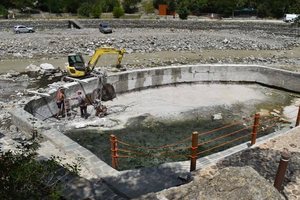
A group of Vlora water utility workers have risen up in pr...
Deputy Prime Minister Belinda Balluku has published images...

The Special Prosecution Office today questioned Hekuran De...

This Tuesday, we are introducing you to some of the main h...
Journalist Ferdinand Samardzi has revealed details about t...
The Tirana Local Police Directorate has taken all necessar...

The body of Archbishop Anastasios has arrived in Kakavija....

The body of Archbishop Anastasios is expected to arrive in...
Former Deputy Prime Minister Arben Ahmetaj has made strong...
"When we raise the storm, you will fly into the sky." ...

Former Deputy Prime Minister Arben Ahmetaj, in an intervie...
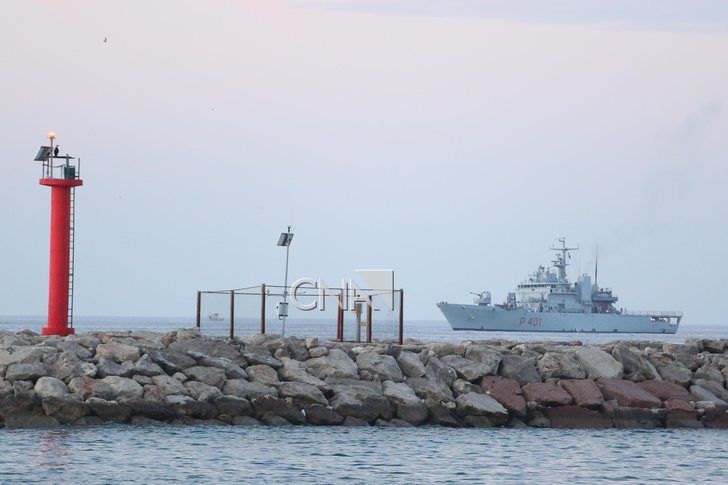
The ship "Cassiopeia" has approached the Port of Shengjin....

Entrepreneur Gjergj Luca explained in detail the sacrifice...
Today, the Steering Council of Radio Television continued ...
Këshilli drejtues i Radio Televizionit vijoi me procesin p...

Two inspectors and a deputy commissioner at the Pogradec b...

The trial of the former mayor of Himara, Jorgo Goro, began...

The Special Prosecution Office has dismissed the case agai...

Radio Ngjallja commemorated Archbishop Anastasios by b...
Journalist Elton Qyno has made a complaint regarding the w...

After the first denunciation, the Plug show has continued ...
Today, CNA has published a complaint from residents of the...
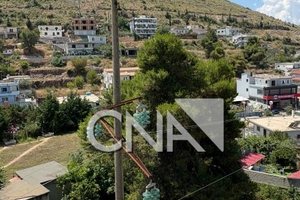
A complaint from residents of the village of Gjashtë in Sa...

The Special Board of Appeal (KPA) decided this Monday ...

The KPA vetting decided this Thursday to dismiss the p...

Suela Salavaçi, a prosecutor in the Prosecutor's Offic...

The Special Board of Appeal reinstated the prosecutor ...
Tirana Police announce that 11 citizens have been identifi...
A police officer at Durres prison has been arrested in fla...

An accident occurred this afternoon on the Elbasan-Peqin a...
The Police Supervision Agency has suspended the former dir...

Today, our country will be affected by almost the same met...

As climate change warms coastal waters in northern Europe,...

Today, our country will be affected by almost the same met...

Turkish police said on Tuesday they had arrested more than...
Multiple explosions are reported by foreign media in the U...

Prime Minister Mark Carney spoke today with US President D...

US Secretary of State Marco Rubio concluded a three-day vi...

A cargo ship was damaged this Thursday after being hit by ...

The promotion of the book by author Aleksandër Ikonomidhi ...

The Albanian Embassy in Switzerland has organized an eveni...

This Wednesday, the prominent actor of Albanian cinema, Gj...
Several archaeological excavations conducted during this s...

Austria was the leading foreign investor in Albania in the...

Between 2015 and 2025, residential construction prices inc...

Oil prices have fallen to levels not seen since before the...

The seasonally adjusted unemployment rate in the euro area...