

Staged the threat scheme/ The judge escapes from Albania
Judge Arnisa Kelliçi has escaped from Albania, CNA lea...


From January 1, 2024, 2,150 businesses connected to the 20 kilovolt voltage appeared on the free market, which means that they must only provide energy from licensed suppliers.
This is a new step for these businesses, which are in the procedural phase to choose the alternative that suits them and offers them the best price, where among the list of private suppliers is also the opportunity offered by the public company, the Free Market Supplier .
This supplier is part of the OSHEE Group, but the "race" to attract as many customers as possible or to keep them is the same as private ones. Officially, the 2,150 businesses should have already concluded contracts and started supplying at agreed prices with one of the 21 potential suppliers, but "de facto", all are being supplied by FTL.
What remains pending at the moment is the price at which these businesses will be invoiced for January (the invoice is received in February) by this public company, something that is still in negotiation terms. It is estimated that the fee for this group of businesses will be around 18.5 ALL.
The liberalization of the energy market is turning out to be one of the most challenging processes of the sector, where from its beginning in 2018, only businesses in 35 kilovolts have managed to take this step completely, although even the latter took quite some time.
This excludes businesses connected to high voltage 110 kv, which have significant consumption and have passed this link for years, still before the law on the energy sector of 2015 was approved.
The conditions in the energy market in relation to the links are more complete today in 2024, compared to 2018 when liberalization began, but again challenges seem to be present when we come from an energy crisis that has not yet fully faded.
OSHEE Group, at the end of December, announced that businesses connected to the 20 kilovolt voltage, 2150, from January 1, 2024, would enter the free market. For this phase, OSHEE said that it had notified all subjects in advance so that the transition from the partially regulated market where they were, to the fully liberalized one, would be simpler.
These businesses were, until 31 December 2023, supplied by the Universal Service Provider (FSHU) through its unit, known as the Supplier of Last Resort. Legally, they were on the free market from January 2022, but due to the energy crisis, which peaked two years ago, the government decided to keep them at preferential prices to minimize the negative consequences.
A good part of these businesses are producers and agro-processors, which as a result of the high prices at the time declared that they could not afford the costs and were going to close. Their average price for 2022 was ALL 18.58/kWh, 70% higher than what they had in the regulated market.
For 2023, this price was ALL 18.26. In the stock market, the price of energy has fallen significantly, but still remains above the pre-crisis level that started in September 2021, warning that the market price will continue to remain higher than the former price in the regulated market.
In this new phase where we are today, businesses can contract with a private supplier, or if they are unable to find one with a 1-year contract with the Free Market Supplier at fixed prices.
Exactly, the issue of the fixed price for 2024 is expected to be decided these weeks, which will also clarify the real costs for these businesses.

Free Market Supplier, the company that is supplying businesses connected in 35 kilovolt voltage and those in 20 kilovolt, is aiming to continue to keep this category close to itself, aiming at competitive prices in relation to other suppliers in the market.
The administrator of OSHEE, Enea Karakaçi, explained that it is intended that a part of the energy coming from the priority producers, which are HECs up to 15 MW, as well as photovoltaic producers, should be oriented to the supply of this group.
Currently, FTL buys energy from HPPs up to 15 MW at a fixed price of 10 ALL, approved by the Energy Regulatory Authority. For this alternative, there is still no decision-making, but it is still being negotiated.
"The purchase of electricity from Renewable Energy Sources (HEC, Solar and Wind) on the basis of VKM for the determination of the Public Obligation in the Electricity sector has been entrusted to FTL sh.a.
A part of this energy will be used by FTL sh.a to cover losses and a part to supply customers at the voltage level 35kV and 20kV.
The selling price of electricity to final consumers in the unregulated market is a Demand/Offer relationship and is freely negotiated between the parties. Also, FTL will take measures not to worsen the position of these customers compared to the past two years.
FTL has a wide portfolio of electricity from RES, is the leader of the largest balancing group in the country and has a staff trained and prepared to offer the best prices in the market, as a Supplier for this category of customers". - says Mr. Caracas.
Some changes approved by the government in decision no. 456, dated 29.6.2022 "On the approval of the conditions for establishing the public service obligation that will be applied to licensees in the electricity sector who exercise the activity of production, transmission, distribution and electricity supply" give the green light to the distribution company on how the energy received from priority producers will be treated. Thus, the link that approves the final price for the sale of each unit of energy that comes from the most preferred producers is first determined.
"The purchase price of energy from the surplus of renewable sources for the supply of customers of the public supplier in the free market, starting from January 1, 2024, is the purchase price of the energy of producers with hydro priority, while the selling price per unit is approved by The General Assembly of the Society" is stated in the decision.
The same decision also determines what happens with surplus energy from this group.
"In case of surpluses created by the production of renewable energy sources, they will initially be traded for the supply needs of the public supply company's customers in the free market, while the remaining amount will be deposited with the public production company, to be used for universal customer supply needs.
The quantities are reconciled on a monthly basis and exchanged during the year to cover the losses of the Distribution System Operator and the needs of the public supply company in the free market, based on the quantity and programs requested by the free market supplier, for which it has fallen agreed between the parties" underlines the decision.
The Energy Regulatory Authority published at the end of December 2023 a list of market suppliers. This publication came as a reminder to all businesses in the 20 kV voltage, which OSHEE declared would be in the free market.
This list includes from public to private companies, which are simply suppliers or also hold production licenses. The transition from the Supplier of Last Chance to a private supplier technically looks like an easy step, where one replaces the other, but in practice it comes with difficulties for all market parties. First, businesses sometimes find it difficult to predict their average monthly consumption.
This is an impasse that then brings them difficulties in their negotiation with the private supplier, as the latter finds it difficult to accommodate the imbalances. The latter are created as a difference between the forecast and real consumption, and filling this imbalance in both directions leads to financial losses.
Large companies, mainly public ones, find it easier to accommodate imbalances for the sake of the relationship they have within the system with subsidiary companies, or the Albanian Electric Corporation. The issue of imbalances is not simple and has often been encountered in the relationships that companies have had with the subjects they supply.
Earlier, it was FSHU that addressed this issue to ERE about the responsibility that businesses should have at 35 kilovolts. In October last year, while discussing the August price for businesses connected to the 35 kilovolt voltage, it was underlined that the costs of imbalances would be included in the final price of energy and for this, FSHU would have to notify the subjects.
"FSHU sh.a., with letter no. 5622/2 prot., dated 07.09.2023, protocoled with ours no. 2002/4 prot., dated 11.09.2023, announced, among other things, that:
...According to Law 43/2015 "On the electricity sector" as amended (Article 81), as well as the Balancing Market Rules and other acts in force, the Supplier is responsible to the Transmission System Operator for any imbalance caused, while customers are responsible to the supplier for imbalances caused.
Due to the fact that FMF currently finds it technically impossible to include the costs of imbalances as a separate item in the electricity bill, since this process requires a modification of the current energy bill, these costs are added to the price approved by ERE for this category of customers, and are reflected in the bill in the electricity price item...
FSHU sh.a. in the role of the FMF, through the completed applications, the goal is to inform the Energy Regulatory Entity about the inclusion in the energy bill for these customers" - the document states.
Taking into account these requirements, the Entity underlined that in compliance with the law, the Supplier of Last Chance must inform customers on the electricity consumption bill about each component element of the price, as well as the corresponding costs.
This means that the FMF should make it known that the cost of imbalances should be notified to businesses, as an integral part of the total price that passes each month for approval at the ERE.
The liberalization of the energy market is expected to continue even beyond the 20 kV voltage entities. It is about those businesses connected to the 10 kV voltage, which will most likely have to provide the only energy from private suppliers, at market prices, but an exact deadline still remains undefined.
The administrator of OSHEE Group, Enea Karakaçi, told "Monitor" that currently, the entities connected in voltage 6 and 10kV will continue to be supplied by FSHU sh.A, part of the OSHEE group.
"This customer category (that is, 6 and 10kV) enjoys the status of a customer that is supplied by the Last Chance Supplier (FSHU sh.a), while the electricity consumption tariff is approved by ERE, based on the methodology of calculating the price for FMF ", he underlined.
These businesses, like those connected to 20 kilovolts during 2023, were supplied with a partially regulated price that was approved by the Energy Regulatory Authority for the entire year and which was 18.26 lek./ Monitor.al

Judge Arnisa Kelliçi has escaped from Albania, CNA lea...

Dozens of citizens and supporters of former Prime Minister...

Farmers and livestock breeders in the Devolli area have pr...

Journalist Anila Hoxha has explained in a television i...

Drejtoria e Përgjithshme Detare ka njoftuar se është n...
The largest flow of natural hydrogen gas ever recorded...

This Saturday we are introducing you to some of the ma...

After being sentenced to 1 year in prison for "Prostit...
Që pas vitit 1990 Shqipërinë e kanë vizituar pesë Sekretar...
Analisti Mentor Kikia ka deklaruar se SPAK ka arritu të fi...
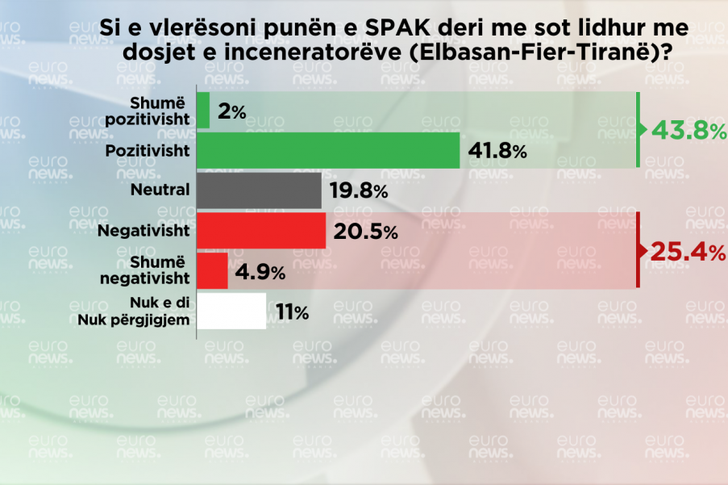
The Barometer has asked the citizens this time for an asse...
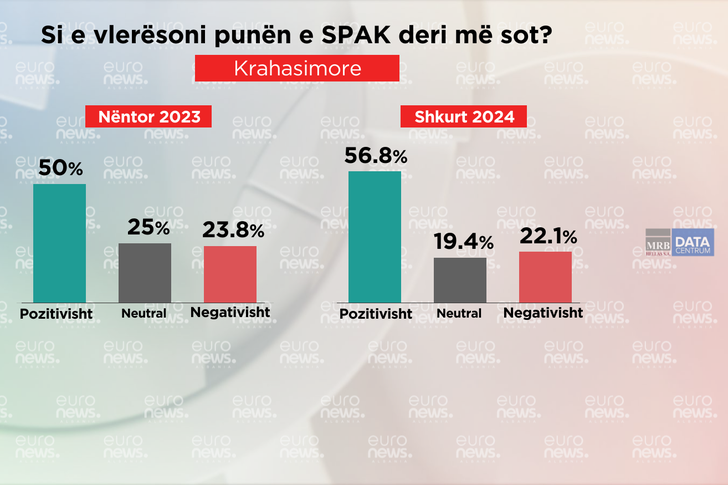
Gjetjet e fundit të Barometrit tregojnë se qytetarët vazhd...

The visit of American Secretary Blinken to Albania is hist...
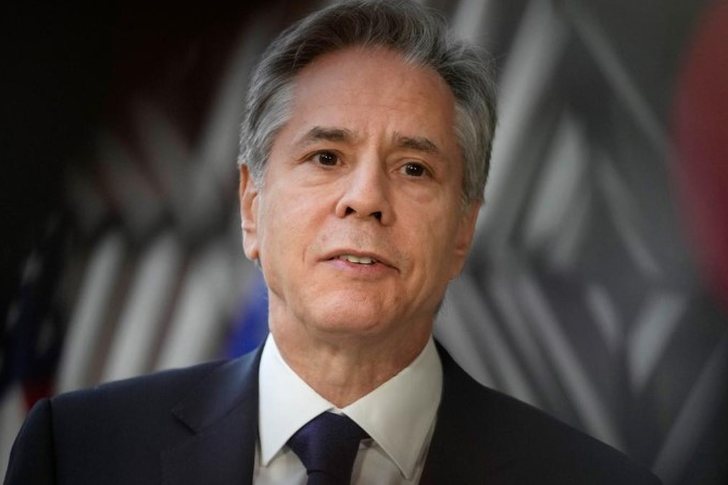
Sekretari Amerikan i Shtetit Antony Blinken do të vizitojë...
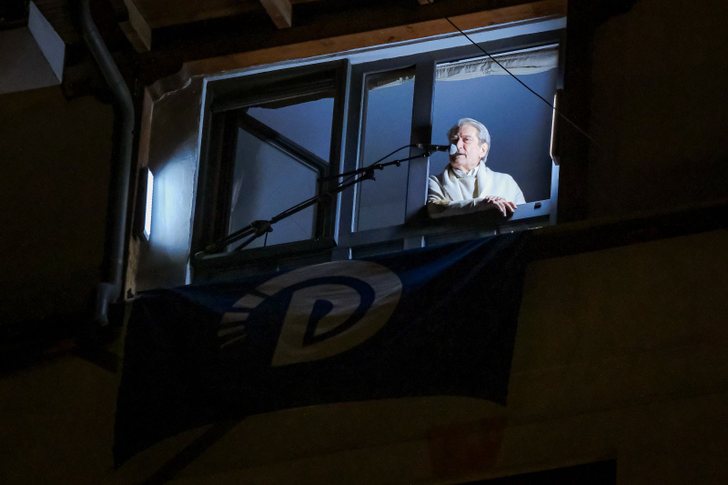
Former Prime Minister Sali Berisha has gone back in time t...

Nënkryetari i Këshillit Bashkiak të Tiranës, Dorian Teliti...
Opozita prej kohësh ka nisur aksionin e saj brenda Kuv...
The man who plunged the Democratic Party into defeat, ...
Sekretari Amerikan i Shtetit, Antony Blinken, do të udhëto...
The Ethics Commission has examined the request of the SP f...
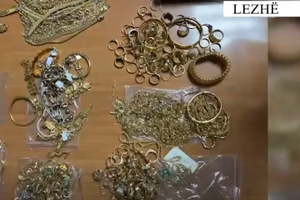
A 39-year-old citizen has been arrested in Lezha, after se...

CNA has launched another investigation that could lead to ...

Irfan Hysenbelliu is a businessman that we call "Irfan the...

In March 2026, CNA launched another investigation centered...

The Special Board of Appeal (KPA) decided this Monday ...

The KPA vetting decided this Thursday to dismiss the p...

Suela Salavaçi, a prosecutor in the Prosecutor's Offic...

The Special Board of Appeal reinstated the prosecutor ...
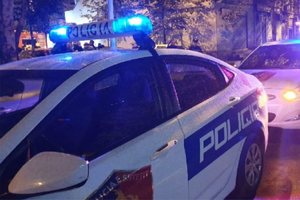
A conflict for weak motives was recorded today in the vill...

An accident involving three vehicles occurred a few minute...

55-year-old Belere Plaka, who was injured today with a sho...

Police Announcement: Following preliminary information...

Today, our country will be under the influence of stable a...

By noon, cloudiness is expected to prevail in almost all o...

Children without parental care, for whom alternative famil...
On Thursday, our country will be under the influence of st...
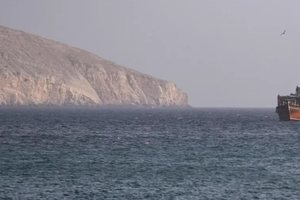
Saudi Arabia launched airstrikes on Houthi rebel targets i...

More than 220,000 people have been evacuated in France and...

Peru and Venezuela will restore diplomatic relations, the ...

United States President Donald Trump has left open the pos...

In my research at the Central State Archives, specifically...

At a time when industrial products are increasingly taking...

Trust among people is not just a three-syllable word. It c...

Master of humor Todi Llupi has passed away at the age of 7...
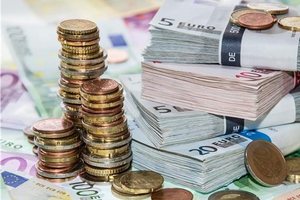
This Saturday, one US dollar is bought for 81.7 lek and so...

War, weather and supply disruptions could send gas prices ...
The number of active enterprises in Albania continued to g...
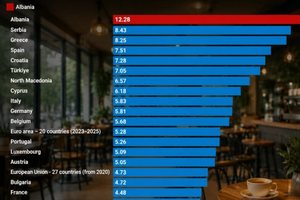
In Albania, the bar-cafe has long become an almost unique ...