


"Whims" of the weather/ Temperatures up to 37 degrees Celsius, the two days that are expected to rain
This summer season has started with the presence of rain t...



The goal of not allowing climate change to cause temperature changes of more than 1.5 degrees Celsius compared to pre-industrial times is becoming unattainable, environmental experts say. They express concern that countries have failed to set ambitious climate targets, despite record temperatures on land and sea.
As representatives of many countries gathered in Bonn, Germany earlier this month to prepare for the annual climate negotiations to be held in November, global average temperatures were, for several days in a row, above 1.5 degrees Celsius on higher than pre-industrial temperatures, said the European Union-funded Copernicus Climate Change Service (C3S).
Although average temperatures have temporarily exceeded the threshold of 1.5 degrees Celsius in the past, this is the first time that this change has been recorded during the summer period in the Northern Hemisphere. Sea temperatures also broke records for April and May.
"We are running out of time because even change takes time," said Sarah Perkins-Kirkpatrick, a climatologist at Australia's University of New South Wales.
As envoys from the two top greenhouse gas emitters, the US and China, prepare to meet next month, records for the highest June temperatures were broken in the Chinese capital, Beijing, as extreme heatwaves have hit the United States of America.
Parts of North America were about 10 degrees Celsius above the seasonal average in June, and smoke from wildfires blanketed Canada and the US east coast. Carbon emissions are estimated to have reached a record 160 million metric tons.
In India, one of the regions most at risk from climate change, deaths were reported to have increased as a result of high temperatures. Extreme heat has also been reported in Spain, Iran and Vietnam, raising fears that last year's deadly summer could become routine.
World leaders agreed in Paris in 2015 to try to keep long-term average temperature rises to 1.5 degrees Celsius, but there is now a 66 percent chance the annual average will exceed that threshold, according to World Organization forecasts. Meteorological in May.
Global average sea surface temperatures reached 21 degrees Celsius at the end of March and remained at record levels throughout April and May. Australia's weather agency warned that sea temperatures in the Pacific and Indian Ocean could be 3 degrees Celsius warmer than usual by October.
Global warming is the main factor, said Piers Forster, professor of climate physics at the University of Leeds, but El Nino, the fall of Saharan dust on the ocean and the use of low-sulphur transport fuels have also played a role.
"So overall, the oceans are being attacked by a quadruple whammy," he said. "It is a warning of the things that await us."
Thousands of dead fish washed up on Texas beaches, while heat-induced algal blooms have been blamed for killing sea lions and dolphins in California.
Warmer seas can mean less wind and rain, creating a vicious cycle that leads to even more heat, said Annalisa Bracco, a climatologist at the Georgia Institute of Technology./ REL

This summer season has started with the presence of rain t...

Even for this week that we are looking forward to, our cou...

Violeta has been married to Fadil for 30 years. In her pre...

Unbelievable indeed, but our country will have another...

On Friday, our country will be under the influence of ...

On Thursday, the weather is expected to be cloudy in the f...
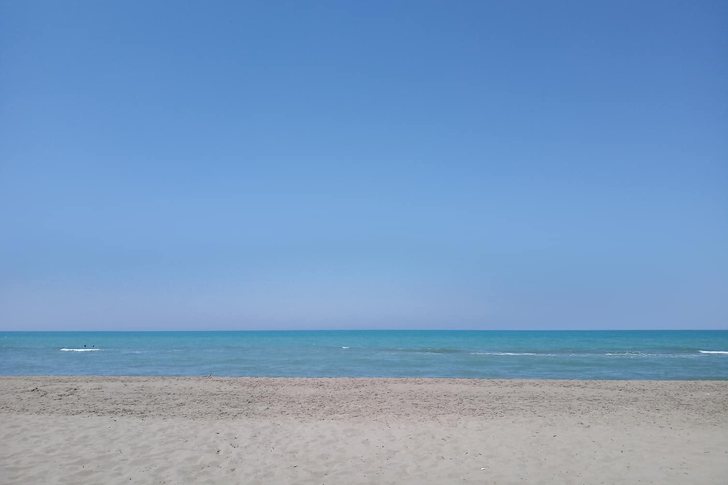
For Wednesday, our country is expected to be affected by r...
The week that started is expected to be influenced by rela...

Both the mind and the organism are new. And as such they a...

The weather will be clear and moderately cloudy followed b...
Fundjava pritet të jetë nën ndikimin e kushteve atmosferik...

Adults, when they discover that the child begins to openly...
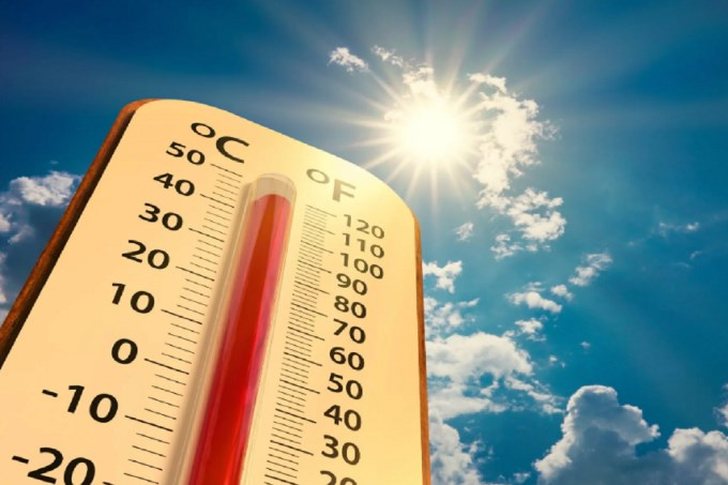
On Friday, our country will continue to remain under the i...
Even for Thursday, our country will continue to be under t...
The African heat that surrounds the Mediterranean will dic...
Pas disa javësh me mot të paqëndrueshëm, për javën që pres...

Europe should prepare for more deadly heat waves fueled by...
Më në fund pas disa javësh me mot të paqëndrueshëm, për ja...

According to the report of the Institute of Statistics, in...
Edhe për ditën e premte vendi ynë do të jetë në ndikim të ...

The 50 million euro tender for the maintenance of national...

Today we will bring another article that breaks down the w...
CNA has put under scanner the assets of Sokol Sadushi, the...

A 39-year-old citizen has been arrested in Lezha, after se...

The Special Board of Appeal (KPA) decided this Monday ...

The KPA vetting decided this Thursday to dismiss the p...

Suela Salavaçi, a prosecutor in the Prosecutor's Offic...

The Special Board of Appeal reinstated the prosecutor ...

During the checks carried out by the State Police for envi...

Police have revealed details of the incident that occurred...

According to preliminary information, a person in his 60s ...

A triple accident occurred on the Peqin-Elbasan axis n...

The public sector took the lead in absorbing the workforce...

Today, our country will be under the influence of unstable...

The Institute of Geosciences has today shared a forecast r...

Company leaders can improve productivity by investing in a...

US President Donald Trump said today that he could order n...

The Pentagon revised its official casualty count from the ...

The Competition Authority, at the conclusion of the in-dep...
Oil prices fell in early trading on Monday, falling furthe...

Two windows, a century of history and the metaphysics of p...

In my research at the Central State Archives, specifically...

At a time when industrial products are increasingly taking...

Trust among people is not just a three-syllable word. It c...

The Ministry of Finance will hold the reopening of the 15-...

After strong savings growth in the years following the pan...

This Monday, one US dollar is bought for 81.5 lek and sold...

This Sunday, one US dollar is bought for 81.5 lek and sold...