


"With fake but original FB"/ Rama stings Qori, Lapaj and Shehaj
Prime Minister Edi Rama has ironically mocked the infiltra...

Prime Minister Edi Rama has ironically mocked the infiltra...

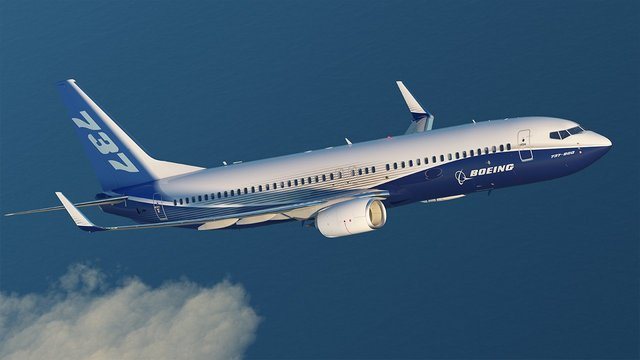
The different types of public transport aircraft include several categories, which are divided according to their capacity and use. Here are some of the main types:
1. Short-haul aircraft : These aircraft are designed for short-haul flights and usually have small to medium capacity. Examples include aircraft such as the Embraer E-Jet and the Bombardier CRJ.
2. Medium-haul aircraft : These aircraft serve medium-haul flights and have a higher capacity, usually up to 200 seats. An example would be the Airbus A320 or the Boeing 737.
3. Long-haul aircraft : These aircraft are capable of intercontinental flights and can carry a large number of passengers. Examples include the Boeing 777 and the Airbus A350.
4. Regional aircraft : These aircraft are dedicated to flights within certain regions, usually with short distances and smaller capacity. An example is the ATR 72.
5. Large capacity aircraft : These include aircraft such as the Airbus A380 and Boeing 747, which can carry many passengers and are commonly used on long flights with large passenger flows.
Each type of aircraft has special characteristics and is designed to meet the special needs of public air transport.
There are many models of aircraft, each of them has special characteristics and is designed for different purposes. Below are some of the most popular models of public transport aircraft:
Short and medium-haul aircraft
1. Boeing 737: One of the best-selling aircraft in history, known for its flexibility and efficiency on short and medium flights.
2. Airbus A320: A direct competitor to the Boeing 737, widely used by airlines for regional and medium-haul flights.
3. Embraer E-Jet: A series of small and medium-sized aircraft, widely used by airlines for local and regional flights.
Long-haul aircraft
4. Boeing 777: A twin-engine aircraft known for its efficiency and ability to fly long distances.
5. Airbus A350: A modern aircraft with advanced technology, offering an excellent compromise between comfort and fuel efficiency.
6. Boeing 787 Dreamliner: An aircraft with new technology, known for the comfort offered to passengers and fuel efficiency.
Large capacity aircraft
7. Airbus A380: The world's largest aircraft, which can carry up to 800 passengers in certain configurations. It is usually used for long flights with large passenger flows.
8. Boeing 747: An icon of civil aviation, known as the "King of the Sky", often used for long flights and high capacity.
Regional aircraft
9. Bombardier CRJ: A series of regional jets that are widely used for short-haul flights and connections between smaller cities.
10. ATR 72: A turboprop aircraft, ideal for short-haul regional flights.
These are some of the main models of aircraft used in public transport. Each model has its advantages and disadvantages, and the proposed choice usually depends on the needs of the airline and specific routes.
Airbus is one of the largest and most popular aircraft manufacturers in the world. The company's history begins at the end of the 20th century and includes the development of several revolutionary aircraft. Below is a summary of Airbus' history:
Founding and Beginnings (1970)
• 1970: Airbus was founded as a European consortium to compete with American manufacturers such as Boeing. This included various manufacturers from France, Germany, Spain and Great Britain.
• 1972: The first aircraft, the Airbus A300, was introduced. The A300 was the first twin-engine commercial airliner, offering high efficiency for airlines.
Growth and Development (1980)
• 1982: Airbus begins developing the A310, a smaller and shorter version of the A300, which made the company more profitable in the short-haul market.
• 1988: The Airbus A320 is introduced, the first aircraft with digital controls and a fly-by-air system, which revolutionized civil aviation.
Market dominance and new developments (1990s and 2000s)
• 1994: A330 and A340 are introduced. The A340 was a four-engine aircraft that offered long-haul, multi-seat flights.
• 1999: The Airbus A3XX is introduced, later renamed the A380. This is the largest commercial aircraft in the world, known for its high capacity and comfort.
Recent Innovations (2010)
• 2013: The Airbus A350, an advanced aircraft with new technology, was introduced and entered service. It is built with composite materials to provide high fuel efficiency and comfort.
• 2016: Airbus begins developing new and improved A320 series aircraft with more advanced technologies for higher energy efficiency.
Now and the future
Airbus continues to be a leader in the aviation industry, offering a wide range of commercial aircraft, narrow and wide body, with a focus on innovation and sustainability. Airbus R&D is also focusing on more sustainable aircraft with more advanced technologies to meet climate change-like demands.
Airbus is a key player in global aviation, offering aircraft that are known for their performance, safety and fuel efficiency.
Embraer is one of the largest aircraft manufacturers in the world, known for small planes and those for regional transport. The company was founded in Brazil in 1969 and has developed a wide range of aircraft with different characteristics. Below are some of the popular models and series of Embraer aircraft:
Game and main models
1. Embraer EMB 110 Bandeirante:
o A turboprop aircraft that began flying in 1972. Mainly used for regional flights and cargo transport.
2. Embraer ERJ Series:
o ERJ 135: A 37-seat aircraft, popular for short flights and small private jets.
o ERJ 145: One of Embraer's most popular models, used for regional flights, has capacity for around 50 passengers.
3. Embraer E-Jet Series:
o E170: A 70-78-seat aircraft designed for regional and short-haul flights.
o E175: A longer version with a capacity of up to 88 passengers.
o E190: A larger aircraft with 100-110 seats, known for its comfort and performance.
o E195: An extended version of the E190, with a capacity of up to 124 passengers.
4. Embraer E2 Series:
E175-E2: A new version of E175 with improved efficiency and reduced pollution.
E190-E2: Known for its advanced systems and fuel efficiency.
E195-E2: The most modified and advanced aircraft of the E series, with the ability to transport up to 146 passengers./ CNA
Features and advantages
• Fuel efficiency: Embraer aircraft, especially the E series, are known for their fuel efficiency, reducing operating costs for airlines.
• Comfort: Embraer aircraft offer a high comfort experience for passengers, with ample legroom and natural light from the windows.
• Flexibility in operation: With diverse capacity and the ability to operate on short runways, Embraer aircraft are important in connecting smaller and larger cities.
Now and the future
Embraer continues to develop new aircraft and innovative technologies to meet the diverse needs of the aviation industry. A particular focus is on sustainability and the development of low-emission aircraft.


The linden tree, scientifically known as Ficus carica, is ...

Nature belongs to everyone, especially when it comes to th...

In September 2023, a giant landslide in eastern Greenland ...

Hairs are internal structures that grow from follicles...

No one says exactly when Erisa and Jovan's gossip star...
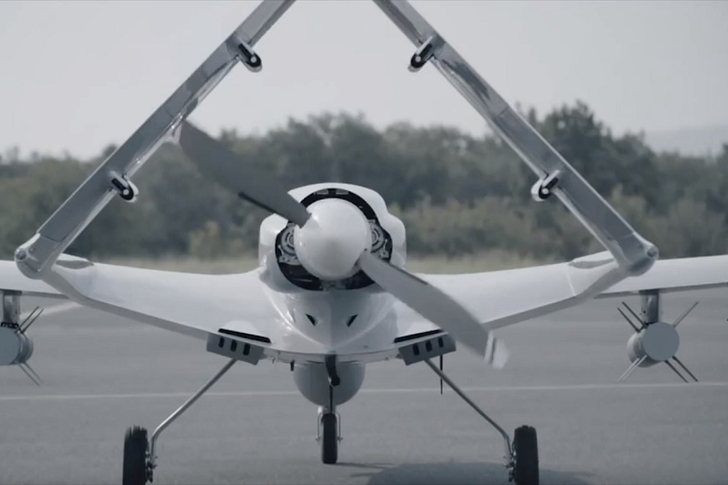
Drones, or unmanned aerial vehicles (UAVs), have evolved s...

The world produces 57 million tons of plastic waste ea...

Lower-wage countries such as Italy and Spain surprisin...

Cocktails became popular in England in the early nineteent...

It was the image that made the wreck of the Titanic instan...

Socrates was a famous Greek philosopher who lived from...

Below are 24 unjust and historic punishments that have occ...

Here is a list of 42 interesting curiosities about the eag...

Glaciers are one of the most famous and important natural ...
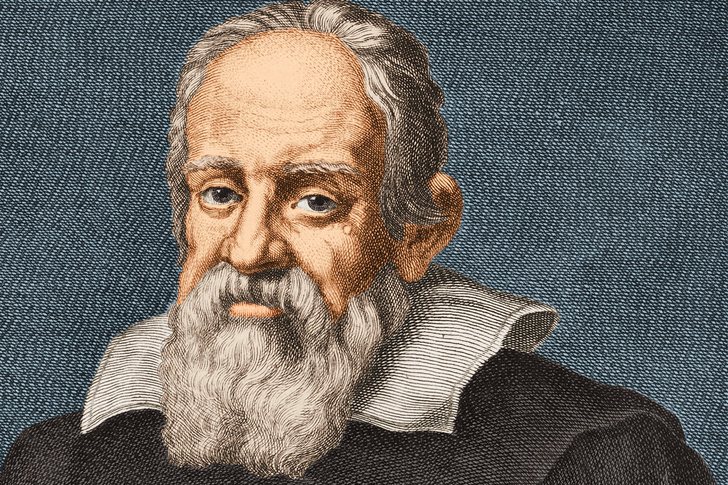
Galileo Galilei (1564-1642) was an Italian scientist, ...

50 interesting curiosities about Paris, the capital of...

1. Foundation: Rome was founded on April 21, 753 BC accord...

Have you ever wondered why oranges are often sold in t...

Hitler and his hierarchs, despite having very traditio...

An investigation of human skeletons from the 17th-century ...

CNA has launched another investigation that could lead to ...

Irfan Hysenbelliu is a businessman that we call "Irfan the...

In March 2026, CNA launched another investigation centered...
The arrested mayor of Tirana, Erion Veliaj, with 13 charge...

The Special Board of Appeal (KPA) decided this Monday ...

The KPA vetting decided this Thursday to dismiss the p...

Suela Salavaçi, a prosecutor in the Prosecutor's Offic...

The Special Board of Appeal reinstated the prosecutor ...

The bad weather that swept the country on Tuesday evening ...

A road accident occurred this evening on Nikolla Zoraqi St...

Three people were shot and wounded in Elbasan last night b...

A serious incident occurred this Tuesday in the Yrshek are...

This Wednesday, our country will be under the influence of...

All of Southern Europe will face changing weather conditio...

Albania was hit by temperatures significantly higher than ...

For the first time, Pogradec welcomed the Inter-Lake Chess...

Prime Minister Andy Burnham has announced that most bus fa...

France's parliament has passed a law to ban social media f...

US Secretary of State Marco Rubio arrived in Manila on Jul...

In the space of a few days, Ukrainian President Volodymyr ...

At a time when industrial products are increasingly taking...

Trust among people is not just a three-syllable word. It c...

Master of humor Todi Llupi has passed away at the age of 7...

The ninth edition of "MIK Festival" kicked off with one of...

Businesses will no longer be required to simply register t...

Despite economic growth and income in recent years, Albani...

This Wednesday, one US dollar is bought for 81.4 lek and s...

Construction company licenses will have a validity period ...