


Former President Trump appeals to Americans: Stay strong and determined
In the wake of the assassination attempt, former Presi...


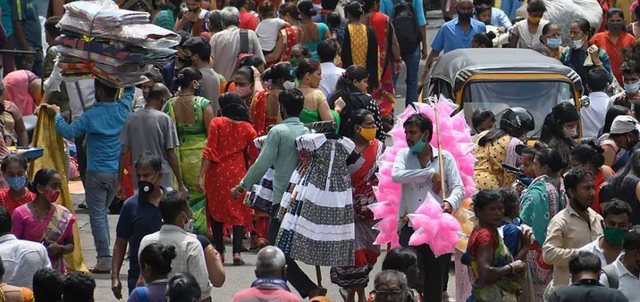
Only from the year 2084 will the world's population shrink again, to just under ten billion people. This comes from the new world population forecast that the United Nations (UN) published this week. today on World Population Day in New York.
Even the Federal Institute for Population Research (BiB) in Germany presented some trends. According to the researchers, women around the world are having one fewer child on average today than in 1990. The decline in births has affected all regions in recent decades, they say. Currently, women around the world have an average of 2.2 children.
However, due to the inertia of demographic processes, it will take until 2084 before the world population reaches its maximum. After that, the declining number of births is expected to be overtaken by the increasing number of deaths. The world's population will not only age, it will also begin to shrink.
The age structure is remarkably young in sub-Saharan Africa
BiB's Frank Swiaczny sees sub-Saharan Africa - ie. countries in sub-Saharan Africa - as a key region for population growth in the coming decades. While a growing number of countries are recording higher death tolls, the birth rate there still averages 4.3 children per woman. By the end of the century, this region will continue to see population growth, from today's 1.2 to 3.4 billion people, even if the birth rate falls to two children per woman.
The reason for population growth in sub-Saharan Africa lies in the extremely young age structure, says Jan Kreutzberg, Executive Director of the German Foundation for World Population (DSW). In this region of the world, where more than 40 percent of people are under 15, many girls give birth too early and often more children than they can care for. In addition, in many cases, teenage pregnancy means the end of school life, depriving women and girls of the opportunity to get an education and earn an independent income.
Equal rights for women are not only essential for sustainable population development in sub-Saharan Africa, points out Catherina Hinz, Director of the Berlin Institute for Population and Development: "Only if girls and women have equal access to education, work and health care, they can lead a life of self-determination, especially when it comes to family planning." /DW

In the wake of the assassination attempt, former Presi...

President Joe Biden condemned the assassination attemp...

Less than 24 hours after the assassination, former Pre...

FBI Special Agent Kevin Rojek recently said that, so far, ...

A new law could give Donald Trump, Joe Biden and president...

The picture is outstanding. Shot by a New York Times p...

New details have been revealed about 20-year-old Thomas Ma...

Melania Trump has just reacted to the assassination of...

The prime minister of Slovakia, Robert Fico, who suffered ...

At an election rally in Pennsylvania on Sunday, a pers...

Several people have been killed and others injured in an a...

The former American president, Donald Trump, has react...

On Saturday, former US President Donald Trump was atta...
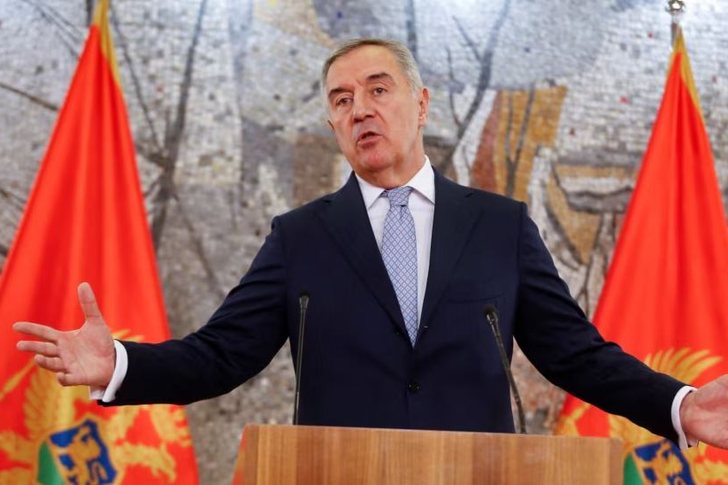
The Montenegrin police have increased the security mea...

For the assailant with a firearm against former US Pre...

The shooting at former President Donald Trump's rally ...

The daughter of former American President Donald Trump...

A gun attack took place on Saturday during a rally of Pres...

After the shooting of a gunman at a rally in Butler, P...

Former US President Donald Trump said late Saturday th...

Journalist Elton Qyno has made a complaint regarding the w...

After the first denunciation, the Plug show has continued ...
Today, CNA has published a complaint from residents of the...

A complaint from residents of the village of Gjashtë in Sa...

The Special Board of Appeal (KPA) decided this Monday ...

The KPA vetting decided this Thursday to dismiss the p...

Suela Salavaçi, a prosecutor in the Prosecutor's Offic...

The Special Board of Appeal reinstated the prosecutor ...
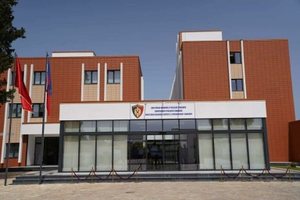
The Crime Investigation Specialists of the Shkodra Police ...

Tirana Police announce that 11 citizens have been identifi...

A police officer at Durres prison has been arrested in fla...

An accident occurred this afternoon on the Elbasan-Peqin a...

Today, mainly stable weather conditions. According to the...

Today, our country will be affected by almost the same met...

As climate change warms coastal waters in northern Europe,...
Today, our country will be affected by almost the same met...

A severe heatwave is expected to sweep across Central Euro...

At least 235 people have been killed and more than 4,300 i...

Is the Chancellor at a loss for words? What do experts say...

Multiple explosions are reported by foreign media in the U...

The promotion of the book by author Aleksandër Ikonomidhi ...

The Albanian Embassy in Switzerland has organized an eveni...

This Wednesday, the prominent actor of Albanian cinema, Gj...

Several archaeological excavations conducted during this s...

The agricultural sector faced a very challenging year in 2...

This Friday, one US dollar is bought for 82.2 lek and sold...

Austria was the leading foreign investor in Albania in the...

Between 2015 and 2025, residential construction prices inc...