


Parliament convenes for plenary session on Monday, agenda revealed
The Albanian Parliament will convene again on Monday to ho...

The Albanian Parliament will convene again on Monday to ho...

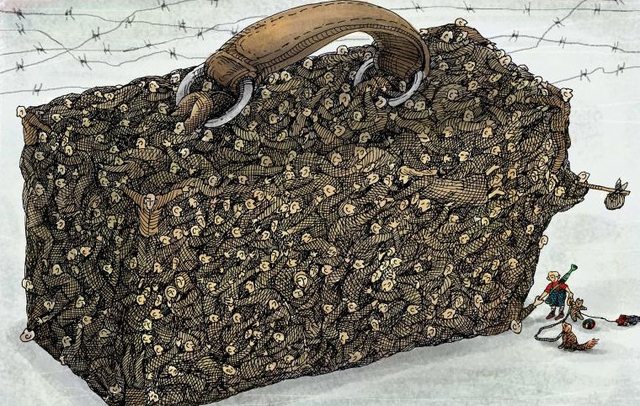
A few years ago, at the end of an interview about the Pact on Immigration and Asylum, presented by the European Commission, the Italian lawyer Ana Brambila made a proposal: "Let them establish an international mutual aid group for frustrated lawyers."
The idea of ??Brambila, member of the Association for Legal Studies on Immigration in Italy (ASGI), was born from an observation: in a European context increasingly hostile to immigrants, and in the face of an increasingly rapid dismantling of the right to asylum from of foreigners, when protecting the rights of immigrants had become an almost impossible mission, a profession discredited by governments that spoke increasingly harshly against "activist human rights lawyers".
Since 2020, the situation has worsened, strengthening the feeling of powerlessness among lawyers working alongside asylum seekers and other people trying to legalize their presence on the territory of the European Union. From left to right, European governments are trying to limit the rights of non-European people by changing or ignoring laws, thereby violating their basic rights.
No practice is more emblematic than that of evictions. Although international law prohibits the return of asylum seekers to territories where their life or freedom may be threatened, this type of operation is already common in many member states, such as at the external borders of the union (Bulgaria, Croatia, Spain, Greece, Hungary. .. the list is long) as well as within the EU (as is currently happening on the Franco-Italian border).
Lithuania was the last in line to pass a law legalizing this practice. But most countries that carry out deportations do so by deliberately breaking the law. On Lesvos, a Greek island a few kilometers off the coast of Turkey, such deportations occur almost daily, in some cases several times a day, even though the authorities systematically deny them, says Ozan Balpetek, head of communications and advocacy at the Lesbos Legal Center ( LCL), a non-profit organization registered in Greece, which provides free legal assistance to immigrants.
In Poland, lawyer Aleksandra Pulçcni, a member of the Association for Legal Intervention in Warsaw, describes a similar situation: "Since August 2021, people coming from Belarus have been transferred by Polish border guards to the Bialowieza forest. Deportations still continue today, because despite the construction of the wall, immigrants still manage to enter Polish territory. Even if there were decisions against it by some courts, the border authorities continue the deportations".
In order to strengthen the legal and humanitarian assistance for people who arrive at the border, the association has created with other partners, the "Grupa Granica" network. At the European level, the association has joined the PRAB project, which brings together various organizations dedicated to countering opposition. "Joining forces with others is very essential" - says Pulçni.
Balpetek agrees, but underlines how important it is to build alliances that go beyond the borders of the EU, as happened on the occasion of the 7th anniversary of the cooperation agreement between the EU and Turkey, denounced by LCL and 73 partners of her.
"The fact that people continue to die in international waters should push lawyers working in the EU to cooperate with their colleagues in neighboring countries," he emphasizes.
Balpetek cites cooperation in the case of Barish Byjyksu, a Turkish national who died on October 22, 2022, minutes after being found in a dinghy near the Turkish city of Bodrum. According to some witnesses, he had arrived on the Greek island of Kos, where he was allegedly detained and tortured by Greek authorities before being turned back with 14 other people. The autopsy report, recently released in Turkey, confirms the allegations of torture.
"The more deportations happen, the more we feel the need to cooperate with our colleagues in Turkey. Because mainland Greece is 500 kilometers away from here, and now as I'm talking to you I can see Turkey from my window. Europe does not end in Greece or Bulgaria" - he emphasizes.
All three associations focus on strategic litigation, bringing emblematic cases before national or international courts, with the aim of achieving broader legal and social change. "This work can be useful. But there is also the opposite side of the coin. Because even when he wins, power reorganizes to undo that result. We must not be discouraged. But it is probably necessary to re-examine the approach, anticipating what the possible response of the state authorities could be" - she emphasizes.
Pulcni gives an example. After several decisions of the European Court of Human Rights, which condemned Poland for the administrative detention of minors, some Polish courts had changed their stance.
"The state is sorry to submit to the law" - says Belgian lawyer Selma Benkhelifa, member of the Progress Lawyers Network. "When I started practicing as a lawyer in 2001, judges and lawyers agreed on basic principles: the existence of human rights, the fact that a white person and a black person are equal.
But they told us: Your client is lying, and we had to prove that he is not lying. But for several years, even when we show that the person could die if he were to return to his country of origin, the judge responds with a cynical word "Patience!" - she says.
Despite 8,000-plus court convictions and multiple orders from the European Court of Human Rights, the Belgian authorities continue to break the law by leaving thousands of asylum seekers on the streets, even though they have the right to shelter.
Benkhelifa says that the refusal to respect the judicial decisions marks a turning point: "I often say that foreigners are a testing ground for liberticidal policies. The erosion of fundamental rights starts with them, because nobody cares. This is a very dangerous precedent."
Brambilla talks about the need to change course and perspective, not to think exclusively in terms of asylum, but to return to an original reflection on rights, freedom of movement and emigration./ Adapted from CNA.al


The final results of the elections in Greece have been...
Russia attacked Ukraine's Dnipropetrovsk region with missi...

The United States and Papua New Guinea are poised to sign ...
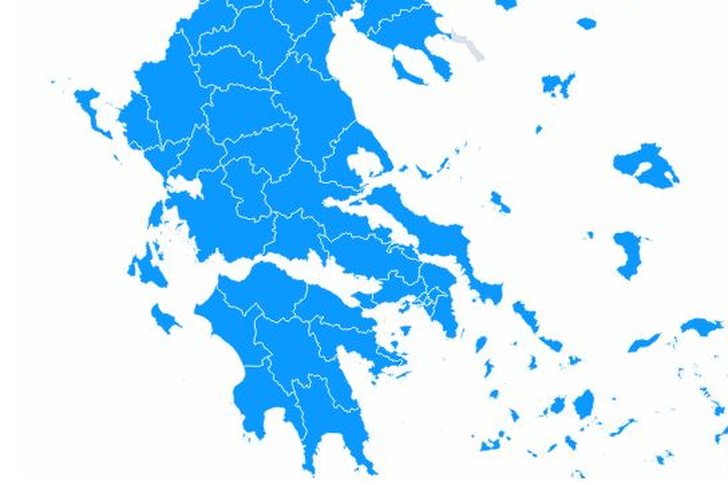
The clear leadership of in 58 out of 59 constituencies sho...
Kreu i SYRIZA, Aleksis Tsipra dhe kundërshtari më i fortë ...

Preliminary election results in Greece have so far declar...
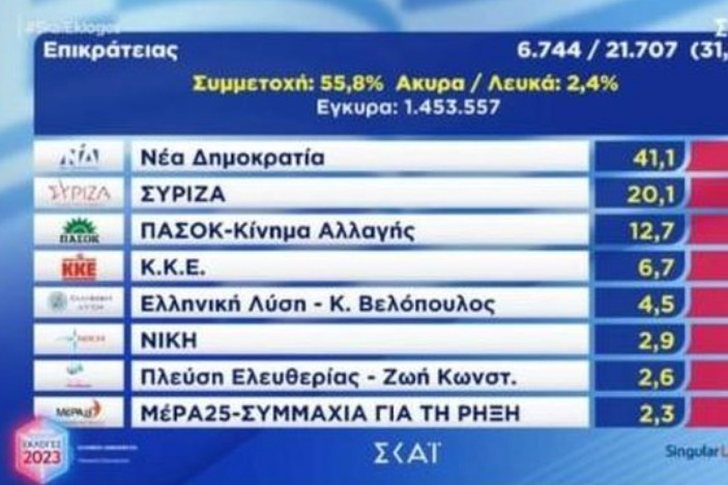
Voting has closed in Greece and the preliminary results of...
The preliminary results of the Exit Polls for the parliame...
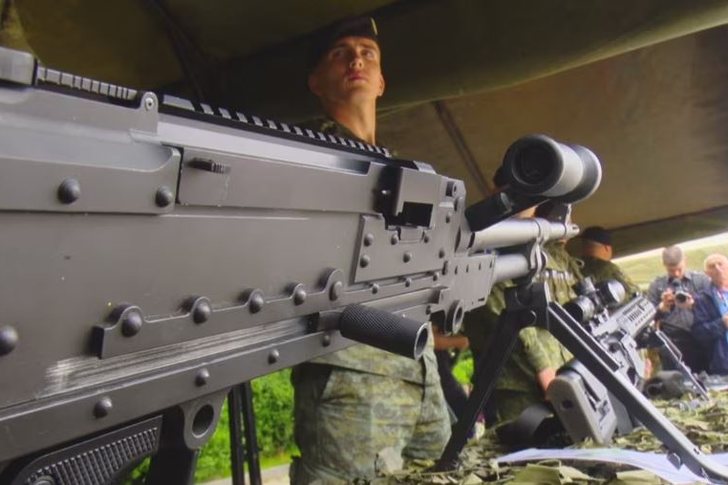
The opening ceremony of the joint multinational military e...

Tens of thousands of people rallied in Moldova's capital, ...
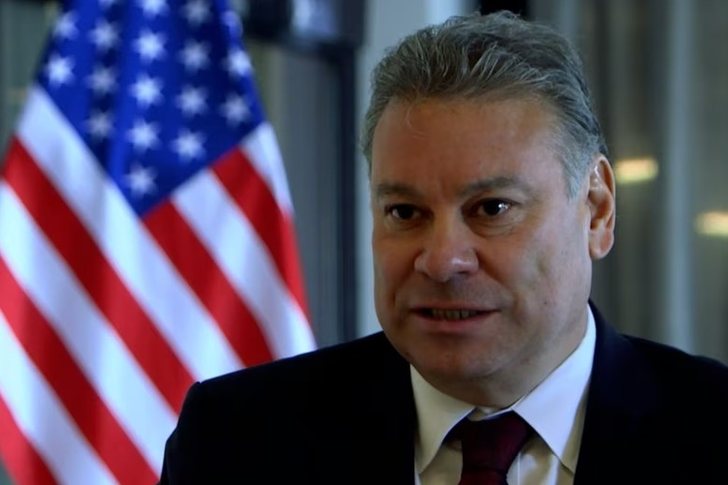
The special envoy of the United States of America (USA) fo...
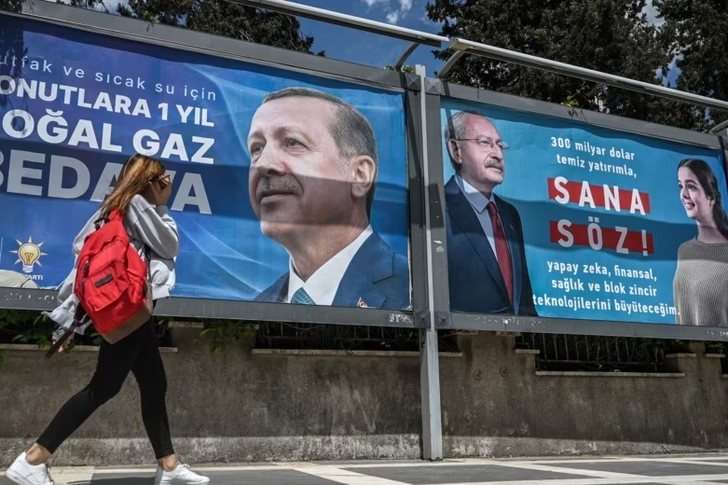
Turkey's strategic position and its importance as a li...
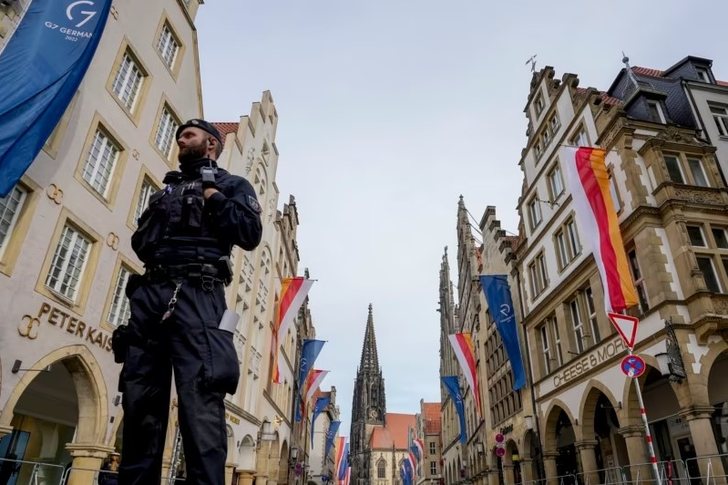
German police on May 21 launched an investigation into...

The severe weather and heavy rainfall in Italy have result...

Zgjedhjet rajonale të këtij muaji në Spanjë vendosin s...
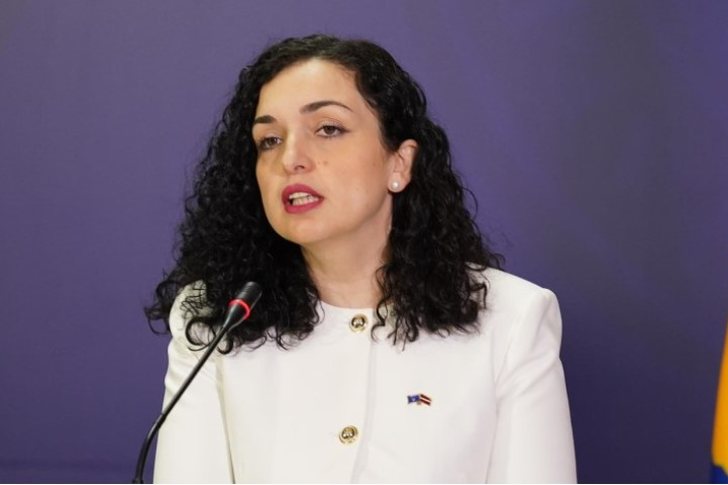
The 24th anniversary of the Serbian genocide in Stagov...
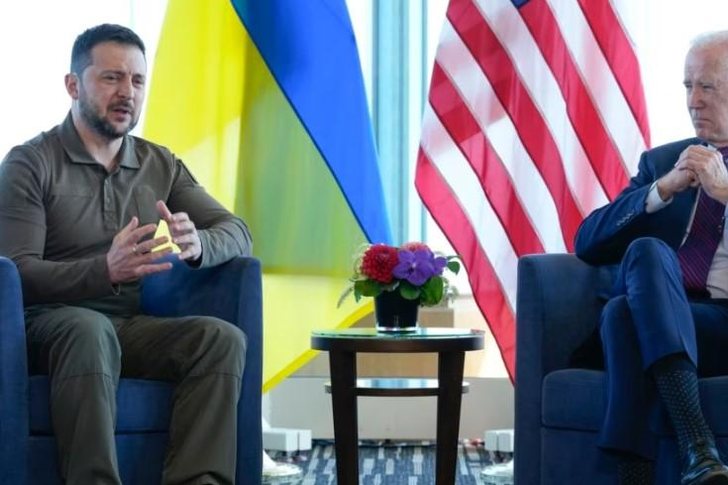
During a meeting with G7 leaders, President Joe Biden ...
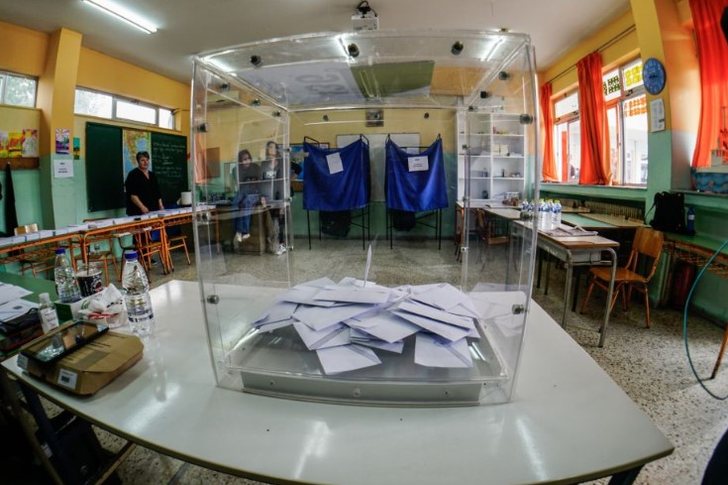
Parliamentary elections are being held in Greece today...

The Prime Minister of the United Kingdom Rishi Sunak state...

Presidenti i Ukrainës Volodymyr Zelensky ka konfirmuar...

A 39-year-old citizen has been arrested in Lezha, after se...

CNA has launched another investigation that could lead to ...

Irfan Hysenbelliu is a businessman that we call "Irfan the...

In March 2026, CNA launched another investigation centered...

The Special Board of Appeal (KPA) decided this Monday ...

The KPA vetting decided this Thursday to dismiss the p...

Suela Salavaçi, a prosecutor in the Prosecutor's Offic...

The Special Board of Appeal reinstated the prosecutor ...
Police Announcement: Following preliminary information...

New details from the operation being carried out in Fier t...
The 17-year-old, who was seriously injured yesterday after...
RENEA is headed towards Roskovec after the murder that occ...

By noon, cloudiness is expected to prevail in almost all o...

Children without parental care, for whom alternative famil...

On Thursday, our country will be under the influence of st...

A serious accident that occurred this Wednesday with the c...
A bipartisan group of US lawmakers is calling for a Europe...

US President Donald Trump will host his Ukrainian counterp...
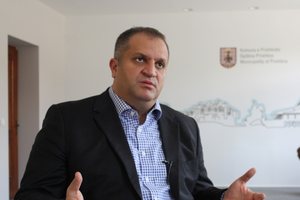
The Basic Court in Pristina found the former mayor of Pris...

The European Union Office in Kosovo has called on all poli...

At a time when industrial products are increasingly taking...

Trust among people is not just a three-syllable word. It c...

Master of humor Todi Llupi has passed away at the age of 7...

The ninth edition of "MIK Festival" kicked off with one of...
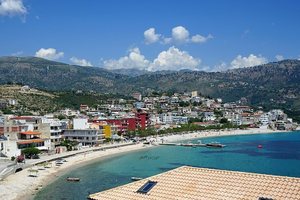
The number of active enterprises in Albania continued to g...
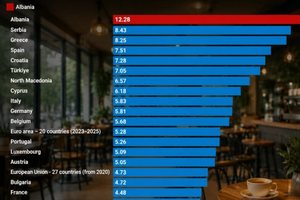
In Albania, the bar-cafe has long become an almost unique ...

This Friday, one US dollar is bought for 81.7 lek and sold...
The average sale price of apartments in Tirana reaches rec...