


Euro falling, British pound rising/ Exchange rate, February 25, 2025
Today, February 25, 2025, in the foreign exchange market, ...



The report "Perspectives of German businesses in Central and Eastern Europe 2025" by KPMG has analyzed the prospects of German investments in Central and Eastern Europe (CEE), emphasizing the region's key countries and sectors with high development potential.
He estimates that the region remains a strategic destination for German businesses, due to competitive labor costs, proximity to the EU market and growing domestic demand. However, challenges such as labor shortages, political instability and delays in institutional reforms continue to be influential factors in attracting investment.
Although German enterprises operating in Albania were also surveyed, our country does not appear as an attractive destination for German investments.
Serbia and Croatia are among the countries of most interest to German investors in the Western Balkans. Serbia has recorded the largest increase in German investment in the last decade, while Croatia benefits from EU membership and economic stability.
Other Balkan countries, such as Bosnia and Herzegovina, Montenegro, North Macedonia and Kosovo, are mentioned as emerging markets, but with greater institutional and economic challenges. Albania is also included in the overall analysis, but does not figure among the top destinations for German investment.
The report highlights that the manufacturing, technology and renewable energy sectors are increasingly attracting investment in the region. As CEE economies continue to integrate more deeply with the European Union, foreign investment is expected to increase, especially in those countries that manage to improve political stability and economic infrastructure.
In conclusion, the report concludes that the region remains one of the most important for German business expansion, but long-term success will depend on the ability of governments to offer better conditions for investors.
According to the report, German investment in Central and Eastern Europe (CEE) has continued to grow significantly over the past decade. In 2022, the net stock of German direct and indirect investment in the region reached 134.7 billion euros, making CEE a key destination for German capital.
At the national level, Poland is the top destination for German investment, with 44.1 billion euros of direct investment, while Kosovo has the lowest level with only 144 million euros. Meanwhile, Serbia recorded the largest percentage increase in German investment between 2010 and 2022, with an increase of 176%, compared to the region's average growth of 62%.
Trade between Germany and the CEE region continues to be important. The total bilateral trade volume is expected to reach 519 billion euros in 2024, exceeding Germany's combined trade with the US and China (504 billion euros).
For the Western Balkan countries, Serbia and Croatia are among the most important destinations for German investment, with a strong presence in the manufacturing, energy and logistics sectors. Investments in North Macedonia, Bosnia and Herzegovina, Montenegro and Albania remain more limited, but are gradually increasing as part of the diversification of supply chains.
Serbia is the Western Balkan country that has attracted the most German investment in the last decade. According to the report, Serbia has recorded the highest percentage increase in German direct investment, with an increase of 176% between 2010 and 2022. This high interest, according to the report, comes thanks to competitive labor costs, strategic position and facilities for foreign investors.
Serbia is the sixth destination for German investments in CEE, after Poland, Hungary, Ukraine, Hungary, the Czech Republic, while Bosnia and Herzegovina is in tenth place.
Albania, few German investments
Other data from the Bank of Albania indicate that the stock of German investments in Albania is 464 million euros, which represents the inflow of German capital after the 1990s. Germany ranks as the ninth largest investor in Albania, after the Netherlands, Switzerland, Canada, Italy, Turkey, Bulgaria, Austria and France.
Sectors where Germany is interested in investing in CEE
Overall, the report confirms that CEE remains a priority region for German investment, with a particular focus on manufacturing, technology and renewable energy.
Industrial manufacturing and machinery – This sector remains one of the most important for German investment, with a strong presence in CEE countries, especially in Poland, the Czech Republic, Hungary and Serbia.
Automotive – The automotive industry is another key area of ??investment, with Germany having factories and supply chains in several CEE countries, including Hungary, Slovakia and Serbia.
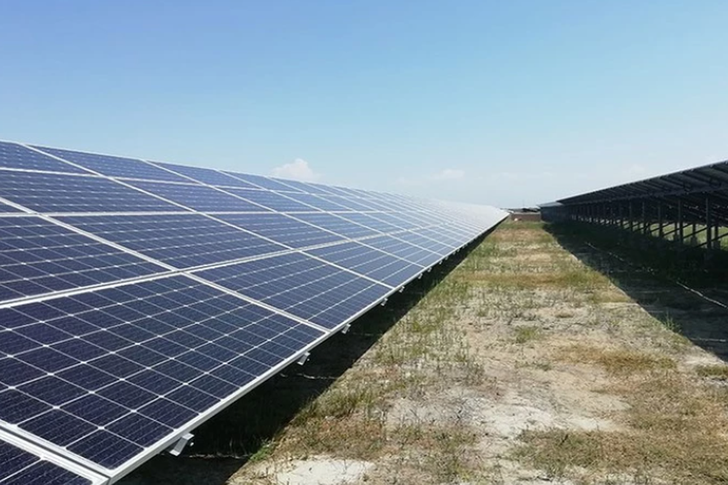
Renewable energy – Germany is expanding investments in clean energy, especially in wind and solar projects in the region, aiming to harness the potential of CEE countries to reduce dependence on imported energy.
Information technology and telecommunications – With a significant increase in IT centers in the region, especially in Poland, the Czech Republic and Romania, investments in this sector are on the rise, with German companies looking to take advantage of specialized talent and low costs.
Transport and logistics – The strategic position of the CEE countries makes this sector an important point for German investments, with Poland and Hungary as the main hubs of European supply chains.
Agribusiness and food processing – Germany has major interests in the food and agricultural industry in the region, investing in agricultural product processing and food exports./ Monitor Magazine

Today, February 25, 2025, in the foreign exchange market, ...
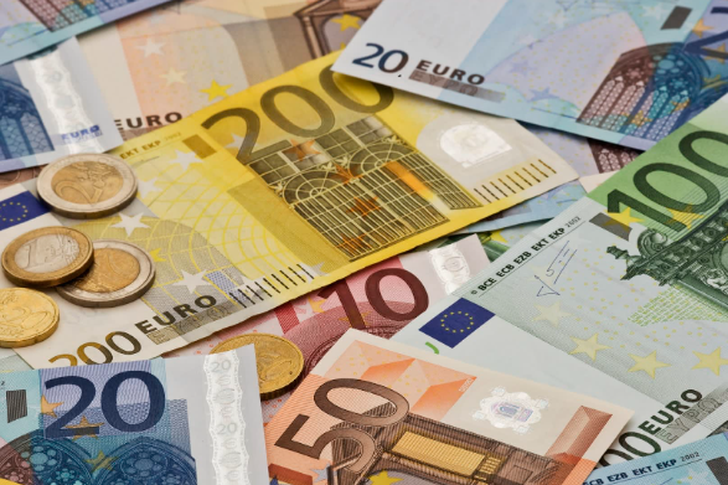
The euro surged to a one-month high on Monday after German...
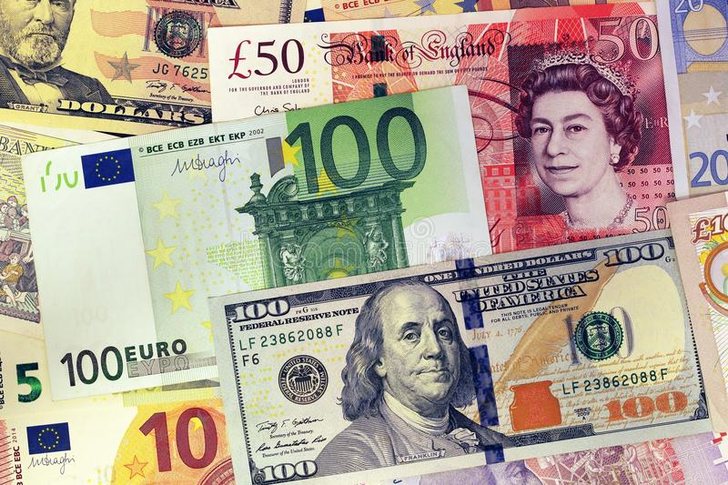
Today, February 24, 2025, in the foreign exchange market, ...
Today, on February 23, 2025, in the foreign exchange marke...
Today, on February 22, 2025, in the foreign exchange marke...

The increase in milk imports continued throughout 2024. Ac...

Today, on February 21, 2025, in the foreign exchange marke...
Asylum is no longer the preferred form of immigration. For...
Today, on February 20, 2025, in the foreign exchange marke...
Albania is soon expected to surrender to the still accepta...

Today, on February 19, 2025, in the foreign exchange marke...

Consumers in the Balkans are unhappy with the price situat...
Vulnerable employment is a concept used by the Internation...

Today, on February 18, 2025, in the foreign exchange marke...
The maximum interest rate (maximum NEI) for consumer loans...
The country's population is shrinking year by year, but co...
Today, on February 17, 2025, in the foreign exchange marke...

Today, on February 16, 2025, in the foreign exchange marke...
The floating solar plant in Vau e Dejës should start produ...

The digital romance economy is an increasingly important c...

CNA has launched another investigation that could lead to ...

Irfan Hysenbelliu is a businessman that we call "Irfan the...

In March 2026, CNA launched another investigation centered...
The arrested mayor of Tirana, Erion Veliaj, with 13 charge...

The Special Board of Appeal (KPA) decided this Monday ...

The KPA vetting decided this Thursday to dismiss the p...

Suela Salavaçi, a prosecutor in the Prosecutor's Offic...

The Special Board of Appeal reinstated the prosecutor ...
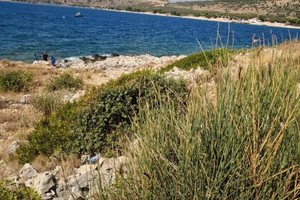
Citizen MH, 61, a fisherman, was found dead near the islan...
Another phase of the international operation, codenamed "T...
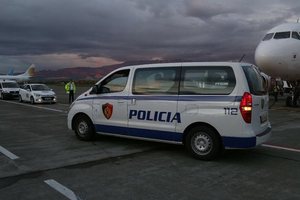
Police have arrested a 34-year-old woman at Rinas Airport ...

A serious accident has occurred on the Lezhë-Shëngjin axis...

The Institute of Geosciences has shared a forecast for wea...
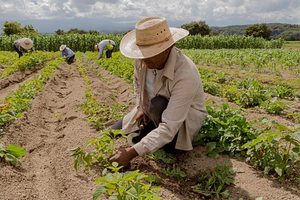
Rising energy and fertilizer prices are expected to contin...

Over 18,000 foreign citizens from 140 countries have appli...
This Wednesday, our country will be under the influence of...

Prime Minister Andy Burnham has announced that most bus fa...

France's parliament has passed a law to ban social media f...

US Secretary of State Marco Rubio arrived in Manila on Jul...
In the space of a few days, Ukrainian President Volodymyr ...

At a time when industrial products are increasingly taking...

Trust among people is not just a three-syllable word. It c...

Master of humor Todi Llupi has passed away at the age of 7...

The ninth edition of "MIK Festival" kicked off with one of...

Businesses will no longer be required to simply register t...

Despite economic growth and income in recent years, Albani...

This Wednesday, one US dollar is bought for 81.4 lek and s...

Construction company licenses will have a validity period ...