


Foreign currencies falling/Exchange rate, February 21, 2025
Today, on February 21, 2025, in the foreign exchange marke...


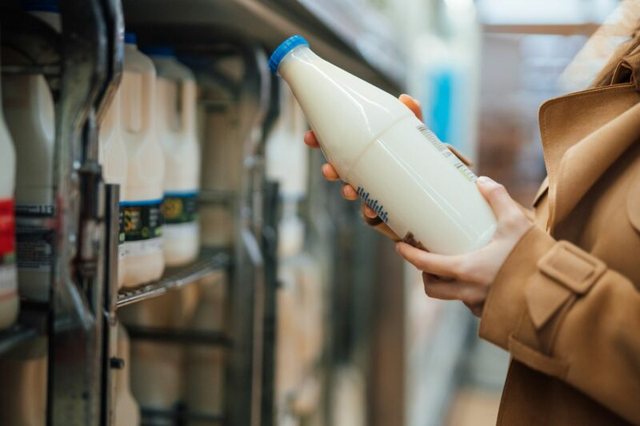
The increase in milk imports continued throughout 2024. According to Customs data, 22.8 million liters of milk were imported in 2024. Compared to 2023, imports increased by 23%.
Imports are expected to expand further through 2025, as processing operators plan to purchase milk as raw material from abroad during the summer months.
"At the moment, we do not plan to buy imported milk, because we have more milk than we need. But during the summer months, we definitely plan to buy, as we cannot meet our needs with local production from farmers," says Luis Ndreka from the ADG company.
Another problem for the processing industry continues to be the high production costs due to the expensive prices of domestic milk supplies for raw materials.
"The price of cow's milk on large farms in the country is 66 lek per liter (excluding VAT). On small farms (where the costs of collecting it are higher) the price of milk goes up to 60 lek (excluding VAT). This is at the farm gate, so without transport," says Mr. Ndreka.
But despite frequent price reductions, which were accompanied by protests by livestock farmers twice in April 2024, milk produced by local farmers continues to remain more expensive, compared to milk produced in the region or Europe.
During that period, cow's milk from large and medium-sized farms was collected at a price of 65 to 67 lek excluding VAT per liter, down from 78 lek excluding VAT previously (a decrease of 16 to 20%).
While milk from small farms was collected at a price of 60 lek per liter excluding VAT. While the price of cow's milk in 2024 from imports, including transport costs and taxes, reached 55 lek per liter, or about 38 lek per liter cheaper than domestic production.
Experts claim that it is the lack of subsidies per liter of milk produced that creates a huge difference in the selling price of cow's milk compared to farms in the region and Europe.
Also, since January 2025, farmers have been facing increased costs for keeping livestock due to the increase in feed prices of up to 60%. The price of corn from 27 lek/kg that was previously traded, is currently being purchased for 34 lek/kg. An increase of 26%.
The price of hay from 22 lek/kg becomes 29 lek/kg. The increase is 24%. The price of barley from 25 lek/kg becomes 33 lek/kg. The increase is 32%. While the price of alfalfa from 500 lek that was traded in the May-June period, is currently 700-800 lek/dengu. The increase varies from 40 to 60%.
But for processors, the increase in costs is not expected to bring another increase in the price of milk for collection, as demand is lower than supply. Meanwhile, agronomists warned that the increase in the price of nutrients is expected to affect the reduction of heads on farms./ Monitor Magazine

Today, on February 21, 2025, in the foreign exchange marke...

Asylum is no longer the preferred form of immigration. For...

Today, on February 20, 2025, in the foreign exchange marke...

Albania is soon expected to surrender to the still accepta...

Today, on February 19, 2025, in the foreign exchange marke...

Consumers in the Balkans are unhappy with the price situat...

Vulnerable employment is a concept used by the Internation...

Today, on February 18, 2025, in the foreign exchange marke...

The maximum interest rate (maximum NEI) for consumer loans...

The country's population is shrinking year by year, but co...

Today, on February 17, 2025, in the foreign exchange marke...

Today, on February 16, 2025, in the foreign exchange marke...
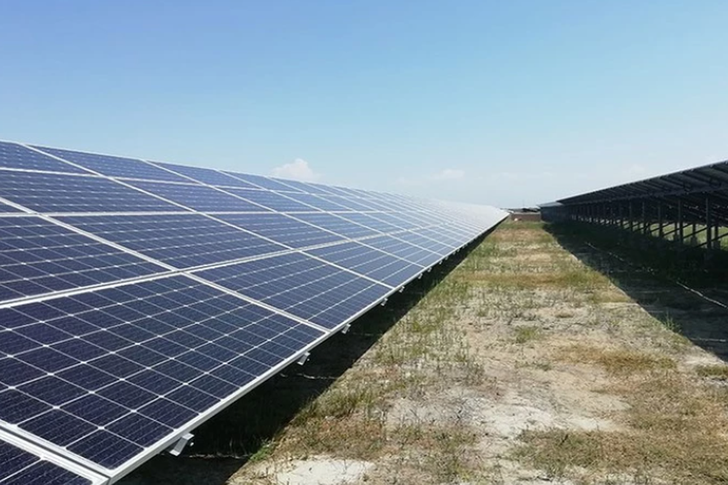
The floating solar plant in Vau e Dejës should start produ...

The digital romance economy is an increasingly important c...

Today, on February 15, 2025, in the foreign exchange marke...

On February 11, 2025, the Republic of Albania entered the ...

Spending on gifts, organizing dinners or travel, and power...

Today, on February 14, 2025, in the foreign exchange marke...
Today, on February 12, 2025, in the foreign exchange marke...

The Albanian government is expected to issue its next Euro...

CNA has launched another investigation that could lead to ...

Irfan Hysenbelliu is a businessman that we call "Irfan the...

In March 2026, CNA launched another investigation centered...
The arrested mayor of Tirana, Erion Veliaj, with 13 charge...

The Special Board of Appeal (KPA) decided this Monday ...

The KPA vetting decided this Thursday to dismiss the p...

Suela Salavaçi, a prosecutor in the Prosecutor's Offic...

The Special Board of Appeal reinstated the prosecutor ...
Citizen MH, 61, a fisherman, was found dead near the islan...

Another phase of the international operation, codenamed "T...

Police have arrested a 34-year-old woman at Rinas Airport ...

A serious accident has occurred on the Lezhë-Shëngjin axis...

The Institute of Geosciences has shared a forecast for wea...
Rising energy and fertilizer prices are expected to contin...

Over 18,000 foreign citizens from 140 countries have appli...

This Wednesday, our country will be under the influence of...

Prime Minister Andy Burnham has announced that most bus fa...

France's parliament has passed a law to ban social media f...

US Secretary of State Marco Rubio arrived in Manila on Jul...

In the space of a few days, Ukrainian President Volodymyr ...

At a time when industrial products are increasingly taking...

Trust among people is not just a three-syllable word. It c...

Master of humor Todi Llupi has passed away at the age of 7...

The ninth edition of "MIK Festival" kicked off with one of...

Businesses will no longer be required to simply register t...

Despite economic growth and income in recent years, Albani...

This Wednesday, one US dollar is bought for 81.4 lek and s...

Construction company licenses will have a validity period ...