

Foreign exchange rate, March 9, 2025
Today in the foreign exchange market, the euro will be ...



The report “European Regions of the Future 2025” recommends that Western Balkan cities should focus on developing infrastructure, creating fiscal incentives, promoting technology and clean energy industries, and improving their skilled workforce. Through these measures, they can become more competitive destinations for foreign investors and better integrate into the European economy.
The report “European Cities and Regions of the Future 2025” by FDI Intelligence analyzes Foreign Direct Investment (FDI) trends in Europe, identifying the most attractive cities and regions for investors.
Skopje, North Macedonia, has been ranked as the most cost-effective city among medium-sized cities in Europe. This ranking indicates a favorable business climate and low operational costs for investors, making it an attractive hub for new projects.
Tirana is in the same table, but is in eighth place. Overall, Skopje has a more attractive environment for international investors compared to Tirana, mainly due to lower costs and more business-friendly policies.
Skopje has lower living and operating costs. Lower rental prices for businesses and a more competitive labor force make Skopje more attractive to foreign investment.
Skopje has invested more in the development of urban and industrial infrastructure to attract new investments. The Macedonian government has also offered more favorable tax schemes and incentives for businesses investing in Skopje.
According to the report, the main factors that influence the qualification of a city with low operating costs for businesses are:
1. Labor cost. Average salary in different sectors and comparison with other European countries.
2. Cost of commercial properties and leases – How affordable are the prices for business space, including offices, warehouses, and manufacturing centers.
3. Taxes and fiscal incentives – Includes tax rates for businesses, tax exemptions for foreign investments, and administrative incentives.
4. Cost of services and infrastructure – Includes the price of energy, water, transportation, and other services necessary for business operations.
5. Cost of transportation and logistics – The city's connection to major markets and the costs of transporting goods.
6. Productivity and qualification of the workforce – The ratio between labor costs and its efficiency in different sectors.
7. Exchange rate and economic stability – Countries with stable currencies and low inflation have a greater advantage for long-term investments.
Leskovac, Serbia, has also been included among the most cost-effective micro-cities in Europe, reflecting its advantages for industrial investment and low-cost production.
Among other cities in the Western Balkans, Kakanj, Bosnia and Herzegovina, is ranked among the best micro-cities for foreign investment strategy. This shows the commitment of the local government to attract investment and create a favorable business climate.
Novi Sad, Serbia, has been rated as one of the most business-friendly cities in the small city category in Europe. The city has attracted a large number of foreign investments, especially in the technology and service industry sectors.

The report recommends that Western Balkan cities should focus on developing infrastructure, creating fiscal incentives, promoting technology and clean energy industries, and improving the skilled workforce.
Through these measures, they can become more competitive destinations for foreign investors and better integrate into the European economy. The main steps recommended are:
1. Improving infrastructure – One of the main factors influencing the attraction of foreign investment is the development of modern infrastructure. Cities such as Debrecen (Hungary) and Wroc?aw (Poland) have attracted large investments by creating industrial zones equipped with good roads, sustainable energy and easy access to European markets.
2. Lower business costs and provide tax incentives – To compete with Europe’s largest cities, Balkan cities need to offer fiscal benefits, lower taxes for businesses, and competitive labor costs. Skopje and Novi Sad already have an advantage in this regard, but they could follow successful models like Dublin, which attracts large companies due to its low tax rates.
3. Focus on strategic sectors – The report shows that investments are concentrated in certain sectors such as technology, renewable energy and data centers. Balkan cities should follow the example of Vilnius and Basel, which have become major centers for fintech and pharmaceuticals, by creating business incubators and support programs for startups.
4. Promoting education and a skilled workforce – Investors are looking for cities with skilled talent in fields like engineering, technology and applied sciences. Debrecen and Wroc?aw have upgraded their universities and formed partnerships with international companies to train local workforces, a strategy that could also be followed by Tirana and Pristina.
5. Support for the green economy and renewable energy – While investments in oil and gas are declining, the renewable energy sector is growing significantly. Balkan cities should invest in solar and wind energy projects, taking an example from cities like Barcelona and Copenhagen, which have created clear policies to attract investment in this sector.
6. Strong investment promotion strategies – Cities that have clear strategies for promoting foreign investment have had more success. The Paris Region and Northern Ireland are good examples of how investment agencies can attract capital by collaborating with foreign companies and simplifying bureaucratic processes. / Monitor Magazine

Today in the foreign exchange market, the euro will be ...

Today in the foreign exchange market, the euro will be exc...

Today, on March 7, 2025, in the foreign exchange market, t...
This Thursday, at the meeting of the Council of Ministers,...
An investment of around 24 billion euros is estimated to b...

Today, on March 6, 2025, in the foreign exchange market, t...

From January 1, 2025, self-employed professionals who earn...
Albanian workers are the lowest paid in Europe, both in te...
Today, on March 5, 2025, in the foreign exchange market, t...

The European Commission has unveiled its Clean Industry Pa...

Today, on March 4, 2025, in the foreign exchange market, t...

In Tirana, the value of confiscated properties of organize...
The banking sector's exposure to real estate loans reached...
Today, on March 3, 2025, in the foreign exchange market, t...
The European Investment Bank, a body of the European Union...

Today, on March 2, 2025, in the foreign exchange market, t...
Today, on March 1, 2025, in the foreign exchange market, t...
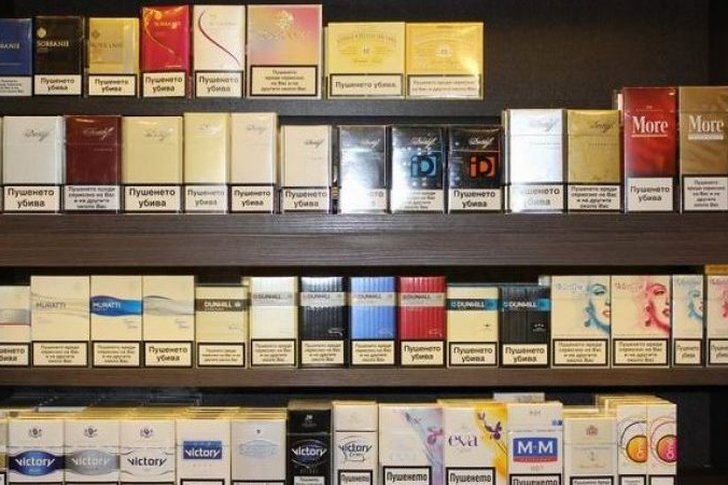
After the end of the concession contract, from January 202...
Today, on February 28, 2025, in the foreign exchange marke...

The average price of compulsory vehicle insurance increase...

CNA has launched another investigation that could lead to ...

Irfan Hysenbelliu is a businessman that we call "Irfan the...

In March 2026, CNA launched another investigation centered...
The arrested mayor of Tirana, Erion Veliaj, with 13 charge...

The Special Board of Appeal (KPA) decided this Monday ...

The KPA vetting decided this Thursday to dismiss the p...

Suela Salavaçi, a prosecutor in the Prosecutor's Offic...

The Special Board of Appeal reinstated the prosecutor ...
Citizen MH, 61, a fisherman, was found dead near the islan...
Another phase of the international operation, codenamed "T...

Police have arrested a 34-year-old woman at Rinas Airport ...

A serious accident has occurred on the Lezhë-Shëngjin axis...

Over 18,000 foreign citizens from 140 countries have appli...

This Wednesday, our country will be under the influence of...

All of Southern Europe will face changing weather conditio...

Albania was hit by temperatures significantly higher than ...
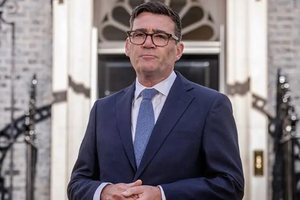
Prime Minister Andy Burnham has announced that most bus fa...

France's parliament has passed a law to ban social media f...

US Secretary of State Marco Rubio arrived in Manila on Jul...
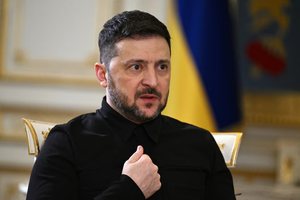
In the space of a few days, Ukrainian President Volodymyr ...

At a time when industrial products are increasingly taking...

Trust among people is not just a three-syllable word. It c...

Master of humor Todi Llupi has passed away at the age of 7...

The ninth edition of "MIK Festival" kicked off with one of...

Businesses will no longer be required to simply register t...

Despite economic growth and income in recent years, Albani...
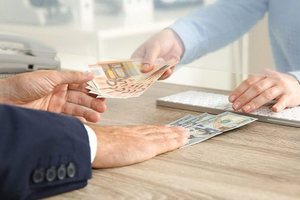
This Wednesday, one US dollar is bought for 81.4 lek and s...

Construction company licenses will have a validity period ...