


Euro at the rate of 105 ALL/ Exchange rate, October 10, 2023
Today, on October 10, 2023, the US dollar is bought at 99....


The International Monetary Fund (IMF) in the latest global report, just published, has significantly increased the forecast for the country's economic performance by 1.4 percentage points. According to the October report, the economy in 2023 is expected to expand by 3.6%.
In the April report, economic growth for 2023 was estimated to be 2.2%, to accelerate to 3.3% in 2024 and to remain around these levels until 2028.
For 2024, the IMF stands by the April estimates, for a growth of 3.3% that will improve slightly to 3.5% by 2028. The Fund made the review in accordance with the new estimates, where for 2022 the growth resulted in 4.8%, from 3.7% which was the initial estimate.
Other INSTAT data showed that in the first and second quarters of this year, the domestic economy grew by 2.83% and 3.23%, respectively, driven mainly by construction and real estate. Growth is expected to accelerate in the coming months, driven by the good performance of tourism.
For 2023, the highest growth in the region is expected to be in Montenegro with 4.5%, followed by Kosovo with 3.8%, Albania, North Macedonia with 2.5% and Serbia and Bosnia and Herzegovina with 2%.
The fund expects the average inflation this year to be 3.8%. In the April report, average inflation was expected at 3.9%. But, unlike the April report, when it was expected that inflation would return to 3%, which is the targeted objective of the Bank of Albania in 2024, in the October estimate inflation is expected to remain above this objective and in 2024, being predicted on average at 3.6%.
The global economy will slow down this year
According to the report, the global economy continues to slowly recover from the shocks of the pandemic, Russia's invasion of Ukraine and the cost of living crisis. In retrospect, the consistency has been remarkable.
Despite the problems in energy and food markets caused by the war, and the unprecedented tightening of global monetary conditions as a means of combating high inflation, the global economy has slowed but not stalled. However, growth remains slow and uneven, with growing global divergences. The global economy, the IMF says, is limping, not booming.
According to the IMF's latest forecasts, global growth will slow from 3.5 percent in 2022 to 3 percent this year and 2.9 percent next year, a drop of 0.1 percentage point for 2024. from the last July forecasts. This trend remains well below the historical average.
Inflation continues to slow, from 9.2 percent in 2022, on an annualized basis, to 5.9 percent this year and 4.8 percent in 2024. Core inflation, excluding food and energy prices, is also projected to decline, albeit more gradually. than total inflation, to 4.5 percent in 2024.
As a result, projections are increasingly consistent with a "soft landing" scenario, reducing inflation without a major slowdown in economic activity, especially in the United States, where the projected increase in unemployment is very modest, from 3.6 to 3.9 percent by 2025.
The IMF says that although the risks have been reduced since April, they still remain high, the most important of which are the real estate crisis in China, the volatility of commodity prices, especially oil and food, the still high levels of inflation despite the downward trend , the exhaustion of fiscal buffers, the gradual change in monetary policy toward easing that may increase risk, especially in emerging markets. /Monitor.al

Today, on October 10, 2023, the US dollar is bought at 99....

Concessions and public procurement contracts within the ye...

Today, on October 9, 2023, the American dollar is bought a...
Today, on October 8, 2023, the US dollar is bought at 94.4...
Today, on October 7, 2023, the American dollar is boug...
Today, on October 6, 2023, the US dollar is bought at 100....
Today, on October 5, 2023, the US dollar is bought at ...
The Bank of Albania will not intervene in the exchange...
The governor of the Bank of Albania, Gent Sejko spoke ...

Today, on October 4, 2023, the US dollar is bought at ...

Numri i të rinjve që iu drejtuan zyrave të punës erdhi...

While the economy failed to recover even in the second...
Sot, më 3 tetor 2023, dollari amerikan blihet me 100.2...
Today, on October 2, 2023, the American dollar is boug...

Public-Private Partnerships (PPP), in the form of concessi...
Today, on October 1, 2023, the American dollar is boug...
Today, on September 30, 2023, the US dollar is bought ...
Sot, më 29 shtator 2023, dollari amerikan blihet me 10...
The government this Thursday has approved the ratifica...

The new national strategy for Scientific Research, Tec...

CNA has launched another investigation that could lead to ...

Irfan Hysenbelliu is a businessman that we call "Irfan the...

In March 2026, CNA launched another investigation centered...
The arrested mayor of Tirana, Erion Veliaj, with 13 charge...

The Special Board of Appeal (KPA) decided this Monday ...

The KPA vetting decided this Thursday to dismiss the p...

Suela Salavaçi, a prosecutor in the Prosecutor's Offic...

The Special Board of Appeal reinstated the prosecutor ...

Footage emerges from the serious accident that occurred th...

A Shkodra traffic police officer was hit with hard objects...

This Wednesday, around 4:00 PM, a serious accident occurre...

Tirana Police have shared details regarding the accident t...
A serious accident that occurred this Wednesday with the c...

The Institute of Geosciences has shared a forecast for wea...
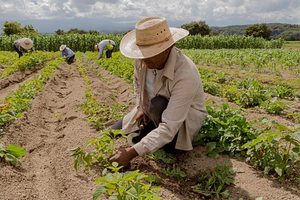
Rising energy and fertilizer prices are expected to contin...

Over 18,000 foreign citizens from 140 countries have appli...

The trial of ousted Venezuelan President Nicolas Maduro on...

US President Donald Trump has issued another warning to Ir...

Prime Minister Andy Burnham has announced that most bus fa...

France's parliament has passed a law to ban social media f...

At a time when industrial products are increasingly taking...

Trust among people is not just a three-syllable word. It c...

Master of humor Todi Llupi has passed away at the age of 7...

The ninth edition of "MIK Festival" kicked off with one of...

The price of diesel reached 206 lek per liter from 198 lek...

Businesses will no longer be required to simply register t...

Despite economic growth and income in recent years, Albani...

This Wednesday, one US dollar is bought for 81.4 lek and s...