

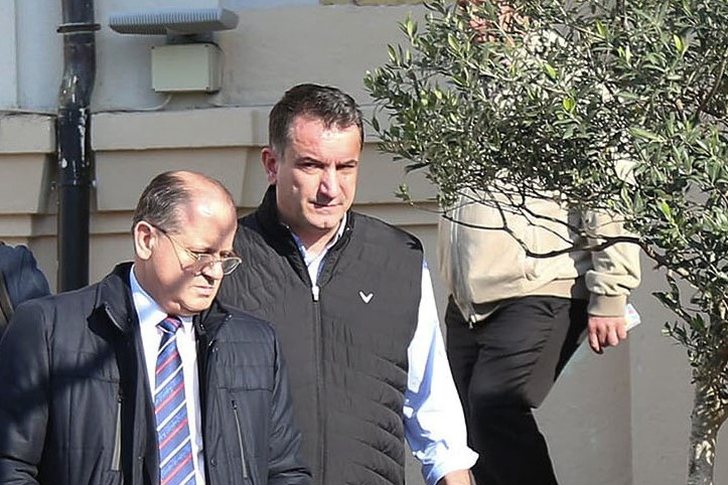
The heavy weight of a system
The arrest of the mayor of Tirana has highlighted frighten...


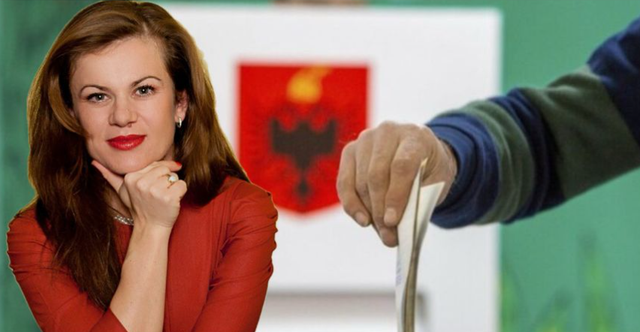
Yesterday, SPAK's strategy for the fight against electoral crime in Albania was made public. Naturally, the question arises as to why SPAK should enter the field of electoral crime with investigations and proceedings, and if so, does SPAK have the necessary skills and capacities to carry out this task?
What about the public's trust in the electoral investigation and that of political parties?
To help in forming a public opinion on this issue, I undertook to write these lines. Electoral crime has long been articulated in our country, and although there are various debates about how this crime should be fought and what purpose it serves, according to a report recently published by a non-profit organization, “Professional and independent justice is one of the accountability mechanisms that encourages the circulation of political elites in the absence of free, fair and honest elections.”
Elections are generally regulated by constitutions, electoral laws and election-related laws, such as laws on political parties, laws on the media, etc. As regards electoral laws, it is recommended that the main aspects of electoral legislation be included in a single electoral code, which should be adopted in an open and inclusive manner. While some countries have adopted a unified electoral code applicable to all types of elections, it should be noted that such a unified code is not applicable in all countries, especially not in federal states that have different electoral systems for sub-national elections.
In Albania, on June 1, 1995, with the entry into force of the Criminal Code, CHAPTER X CRIMINAL OFFENCES AFFECTING FREE ELECTIONS AND THE DEMOCRATIC ELECTION SYSTEM were provided for the first time in criminal legislation. Despite the fact that today the title of Chapter X has not changed, the provisions included in this chapter have been significantly improved over the years. Currently, this chapter contains 15 criminal offenses and misdemeanors, of which 2 are subject matter competence of SPAK.
The years 2012 and 2017 are the years in which this part of the criminal code has had the main interventions, which shows that the will of political parties to intensify the fight against electoral crime has been common. Two of the 15 such offenses are under the subject matter jurisdiction of SPAK. In fact, not from the importance but the impact that each of these offenses may have on the electoral result, and consequently the violation of democracy in a country, there is no substantial difference why two of the 15 such offenses are part of the work of the special prosecution.
The Constitution of the Republic of Albania establishes the independence and constitutional function of SPAK in the investigation of any criminal offense committed by special entities. The subject matter competences and criminal jurisdiction of SPAK, extending to the entire territory of the Republic of Albania, are provided for by special legislation following the 2016 reform currently in force.
To the extent applicable, the special law also provides for cooperation with the CEC in providing information for the investigation of criminal offenses in the field of elections, which does not violate the preservation of investigative secrecy. The Electoral Code provides for the prohibition of the use of the administration or even public infrastructure for the purpose of the election campaign by special entities.
Consequently, other criminal offenses/misdemeanors such as: Obstruction of electoral subjects; Falsification of electoral material and election results; Intentional damage to electoral material; Violation of the secrecy of voting; Voting more than once or without identification; Use of public office for political or electoral activities; Threatening or assaulting election participants; Obstruction of voters; Abandonment of duty by members of election commissions; Violation of the right to vote; Illegal taking or use of identification documents; Abuse of military authority; Abuse of police authority are within the subject matter competence of the prosecutor's office of general jurisdiction.
And although reports from important international organizations recommend that fragmentation of electoral legislation for the same elections should be avoided, regardless of whether it is unified or not, in some countries (such as, for example, Italy and the United Kingdom) electoral legislation is complex and fragmented, making its use difficult.
Electoral laws should be precise, clear and easily understandable for electoral officials, candidates and voters. The legal framework governing elections should provide an adequate basis for the conduct of democratic elections. As such, the law should avoid inconsistencies between the electoral law (or laws) and other legal provisions related to elections, such as those relating to political parties, the media, referendums, local self-government, civil and criminal codes or the changing digital environment.
While in many countries the electoral framework is stable and necessary changes are adopted well in advance of the next elections, in some other countries significant changes to electoral legislation occur frequently and belatedly. In some countries (e.g. Italy, North Macedonia, Poland, Turkey), important electoral reforms were adopted only a few months before the last elections, in a hasty and non-inclusive manner, without allowing for a broad public debate and consultation with stakeholders.
However, the issues that should be included in a country's general or specific electoral legislation have been the subject of frequent international reports and studies. It is the choice of the respective country whether or not to criminalize certain figures of electoral crime, as well as to determine which authority should pursue the investigation of criminal offenses in the field of elections.
For the reader's guidance, we note that according to a 2016 study, in most of the countries studied (72%), crimes and criminal offenses in the field of elections are provided for in the electoral law (Electoral Code), while only 21% of countries, such as Albania, have them provided for in the Criminal Code.
We clarify that the investigation and criminal proceedings are separate. Some countries have several types of proceedings depending on the nature of the electoral crime. However, according to data for 169 countries, the investigation of electoral crimes is carried out in 66 countries (39%) by the prosecutor general; in 57 countries (34%) by the police; in 11 countries (7%) by the special investigator; in 8 countries (5%) by the competent body for election management; in 20 countries (12%) by other bodies established by law; in 41 countries (24%) by unspecified authorities.
According to this data, electoral crime prosecution is carried out in 112 countries (66%) by the prosecutor general; in 7 countries (4%) by the competent body for election management; in 23 countries (14%) by other bodies established by law; and in 39 countries (23%) by unspecified authorities.
In the context of electoral crime, in countries with fragile democracies, electoral violence is a component that is most affected by organized crime. Neighboring Italy first implemented a comprehensive reform of electoral crime and violence in 1993. The reform changed the electoral system in Italy from proportional to majoritarian. Studies before and after the reform further showed that electoral violence before the reform depended negatively on the gap between the national vote margin of the two largest parties, while after the reform (majoritarian system) it had a negative impact on electoral districts in which victory was determined by a narrow number of voters.
To return to the current situation in our country, the OSCE/ODIHR report on the previous parliamentary elections emphasized that vote buying, voter intimidation and informal influence limited the free will of voters and undermined good electoral practices. According to INSTAT, in 2023, a total of 33,845 criminal offenses were recorded, 1.1% more than in 2022.
The strategy adopted by SPAK foresees a difficult situation regarding the investigation of criminal offenses related to electoral crime. According to this strategy, only 12.7% of cases (14 cases in total) were sent for trial in the previous electoral elections, suggesting that the percentage of investigations that end with the filing of charges and their sending to court is not within the expectations of the Special Prosecution Office. This indicator is related to the difficulties encountered in collecting evidence, the lack of cooperation from witnesses, the complexity of the criminal offenses and the subjects investigated by the Special Prosecution Office.
This strategy is a good orientation for the political forces in the race but the procedure followed will have to be verified step by step. On page 16 of the Strategy, the list of domestic and international collaborators is listed. There is a clear lack of cooperation with the main election actors in an election campaign, the political parties.
It is difficult to conclude why the campaign actors themselves, the main election officials themselves and the most interested parties, those who in the language of the projects are called "bearers of the flag", are not listed as collaborators, and naturally the doubt arises whether political parties are considered simple/ordinary subjects of SPAK and the strengthening of democracy has been transferred from the people who must choose through the guarantee of fair and independent elections to the judiciary, which let's assume is fair and independent.
By definition, political parties are voluntary associations of citizens based on ideas, beliefs, views or common political interests, which aim to influence the life of the country through participation in elections and representation of the people in elected bodies of power. I believe that cooperation with political parties should be a mechanism that sets in motion the strengthening of democracy.
The doctrine instructs us that the prosecution of electoral crimes must be carried out in an objective and impartial manner by authorities previously determined by law. The autonomy and independence of the competent prosecuting body must be guaranteed, and this body must enjoy the support of political parties or their factions. Studies conclude that usually the ordinary prosecutor is the most frequently mandated authority for the prosecution of electoral crimes.
Election management bodies have procedural capacity in only 7 countries, while the term used as "others" is present in countries such as Gibraltar, Sri Lanka, Trinidad and Tobago, as well as persons appointed by the prosecutor for this purpose in Kenya, and only in Mexico does there exist a special prosecutor for the prosecution of electoral crimes./ CNA

The arrest of the mayor of Tirana has highlighted frighten...

This is why SPAK prosecutors are on a heroic mission by cr...
By Baki Rexhepi The main objective of this “war” seems to...
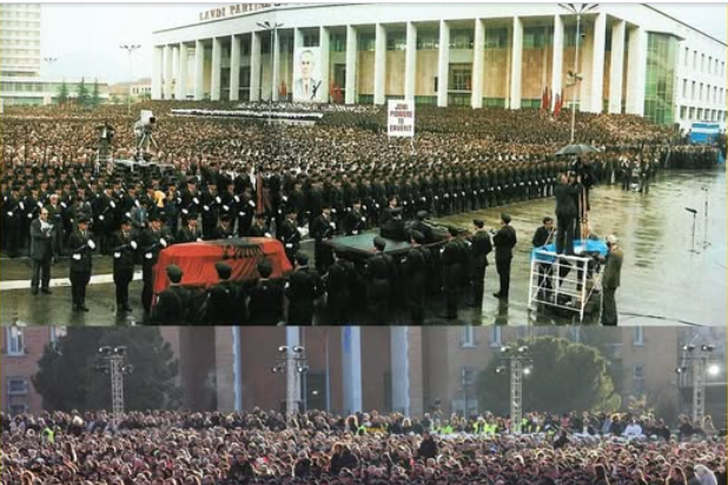
The square that said goodbye to the dictator 34 years ago!...
by Armand Shkullaku It sounds unbelievable, but Edi Rama,...
The arrest of Mayor Erjon Veliaj has produced a political ...
Journalist for Rilindja, Baton Haxhiu, in an article of hi...
I hear more and more often a discourse where it is said th...

Only this Carolina Herrera dress from the 2018 collection,...
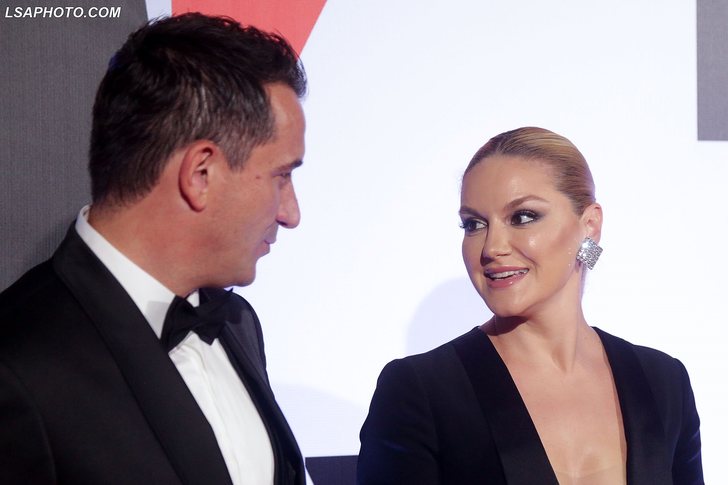
Andi Bushati në një shënim të tij te Lapsi.al, që mund ta ...

The mayor of Tirana continues to write his usual lies from...
The GJKKO press release proving that the police have refus...
Mayor Erion Veliaj reacted with a status saying, "Let them...
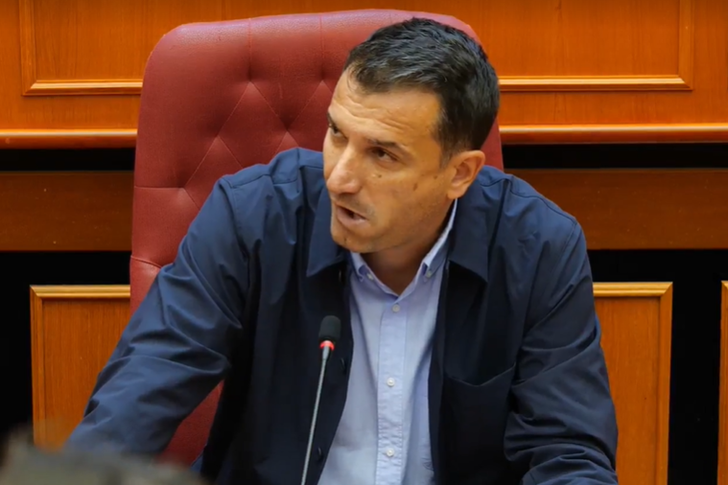
A small clarification for the collective hysteria that the...
By Spartak Ngjela As you can see, the investigated polit...

Luiza Gega, Çiljeta Xhilaga, Roland Hysi and others should...
In recent days, the introduction as the Democratic Party's...
The Prime Minister has made several speeches in the last 2...
By Afrim Krasniqi The Prime Minister has made several spe...
Lolita, a social media page, has published a status in su...
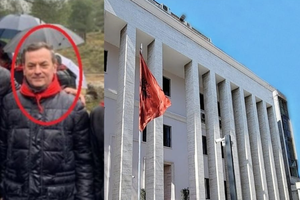
CNA has put under scanner the assets of Sokol Sadushi, the...
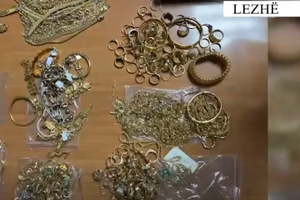
A 39-year-old citizen has been arrested in Lezha, after se...

CNA has launched another investigation that could lead to ...

Irfan Hysenbelliu is a businessman that we call "Irfan the...

The Special Board of Appeal (KPA) decided this Monday ...

The KPA vetting decided this Thursday to dismiss the p...

Suela Salavaçi, a prosecutor in the Prosecutor's Offic...

The Special Board of Appeal reinstated the prosecutor ...
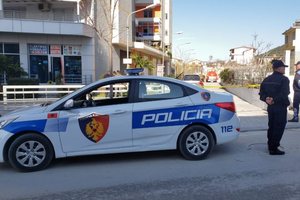
Police have revealed details of the incident that occurred...
According to preliminary information, a person in his 60s ...

A triple accident occurred on the Peqin-Elbasan axis n...

The police have provided details regarding the accident th...

The public sector took the lead in absorbing the workforce...

Today, our country will be under the influence of unstable...

The Institute of Geosciences has today shared a forecast r...
Company leaders can improve productivity by investing in a...
Oil prices fell in early trading on Monday, falling furthe...
Although Albania does not have a developed industry on the...
North Korea is said to have achieved some impressive resul...

US Ambassador to the United Nations, Mike Waltz, said toda...
Two windows, a century of history and the metaphysics of p...
In my research at the Central State Archives, specifically...

At a time when industrial products are increasingly taking...

Trust among people is not just a three-syllable word. It c...

After strong savings growth in the years following the pan...

This Monday, one US dollar is bought for 81.5 lek and sold...

This Sunday, one US dollar is bought for 81.5 lek and sold...

This Saturday, one US dollar is bought for 81.7 lek and so...