


Foreign exchange rate, December 31, 2025
This Wednesday, one US dollar will be bought for 81.2 lek ...



At the end of November 2025, the budget balance (the difference between revenues and expenditures) was in surplus at 49.1 billion lek, about 500 million euros, according to data from the Ministry of Finance.
This amount was higher than the plan in the initial budget which predicted a deficit of -23.1 billion lek or -230 million euros.
Instead of the surplus being reduced in accordance with the budget law, it was expanded beyond November, deviating not only from the plan, but also becoming a cause for financial mismanagement.
The Ministry of Finance expects to spend in December the entire budget surplus of 49 billion lek created in the 11 months of the year and another 61 billion lek in the form of the budget deficit programmed to be spent in December, a total of about 1.2 billion euros.
The concentration of budget expenditures in December is, among other things, an indicator of mismanagement of the budget cycle, as the Supreme State Audit Office has also noted in its special budget audits.
Instead of spending following a steady pace throughout the year, the budget creates a cascading effect throughout the year that is released hastily at the end, creating a wave of spending that is unrelated to the real needs of the economy at that moment.
Monthly data from the Ministry of Finance shows that the budget surplus has been steadily improving throughout the year. 2025 started with a surplus of around 18 billion lek in January, while this level gradually increased from month to month. In the first quarter, the surplus almost doubled, reaching over 33 billion lek in March, while in April and May the expansion continues at a rapid pace.
During the summer, the surplus was over 30–40 billion lek, reflecting increased revenues and weakness in expenditures.
In cumulative terms, the deficit is expected to be -68 billion lek at the end of December from +49 billion lek in November.
At the end of the year, budget payments accelerate, such as public investments, debt liquidations, subsidies or expenses carried over from previous months. At the same time, December is usually the month when final budget adjustments are made and financial commitments are closed.
From a fiscal perspective, such a development creates pressure on public finances at the end of the year and implies a lack of seriousness in the remaining months of the year. For experts and the Supreme Audit Office, this is not a healthy practice.
In most countries with consolidated fiscal administration, expenditures are distributed relatively evenly.
The concentration of spending in December is largely related to chronic delays in planning and procurement, especially for public investments. Projects that were supposed to start in the spring or summer are postponed for administrative, bureaucratic or political reasons, and when the fiscal year closes, institutions face pressure not to lose the allocated funds. Payments are made because the deadline is running out.
The main consequence is a decline in the quality of public spending. Contracts are concluded in a hurry, and oversight is weakened.
In this climate, the risk of suboptimal decisions and misuse of funds increases significantly.
From a macroeconomic perspective, such a large injection of funds at the end of the year increases local inflationary pressures, especially in sectors such as construction and services, where capacities are limited. Businesses are unable to plan normally, while the economy receives strong impulses that do not translate into sustainable growth. /Monitor

This Wednesday, one US dollar will be bought for 81.2 lek ...

Aktiviteti i ambulancave, poliklinikave dhe spitaleve publ...
The Albanian government has received around 589 million eu...
Kosovo is the main investor in Albania this year. Bank of ...

The insurance market has further expanded its profits in t...
This Monday, one US dollar will be bought for 80.6 lek and...

Updated official data show that there are currently 10 eco...

The way in which Gross Domestic Product (GDP) is growing s...

The number of emigrants returning after the pandemic has i...

This Sunday, one US dollar will be bought for 80.5 lek and...

In many cases, Albanian firms already have real experience...

Banking sector personnel expenses are increasing for the f...
Këtë të shtunë, një dollar amerikan do të blihet me 81 lek...

The price of silver surpassed $78 per ounce for the first ...

Qeveria shqiptare i ka pohuar Fondit Monetar Ndërkombëtar ...

SEPA membership is expected to save more than 71 million e...

If EU integration occurs without increasing the quality of...

This Friday, one US dollar will be bought for 81 lek and s...

Imports of construction materials decreased in value this ...

The accelerated growth of lending by Albanian banks signal...

CNA has launched another investigation that could lead to ...

Irfan Hysenbelliu is a businessman that we call "Irfan the...

In March 2026, CNA launched another investigation centered...
The arrested mayor of Tirana, Erion Veliaj, with 13 charge...

The Special Board of Appeal (KPA) decided this Monday ...

The KPA vetting decided this Thursday to dismiss the p...

Suela Salavaçi, a prosecutor in the Prosecutor's Offic...

The Special Board of Appeal reinstated the prosecutor ...

A conflict occurred this Thursday evening in the toy area ...

A person has died today on Orikum beach. According to repo...

Footage emerges from the serious accident that occurred th...

A Shkodra traffic police officer was hit with hard objects...

Children without parental care, for whom alternative famil...

On Thursday, our country will be under the influence of st...
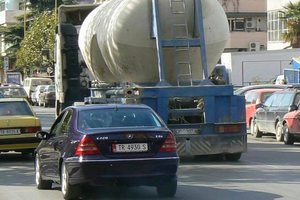
A serious accident that occurred this Wednesday with the c...

The Institute of Geosciences has shared a forecast for wea...

The European Union Office in Kosovo has called on all poli...
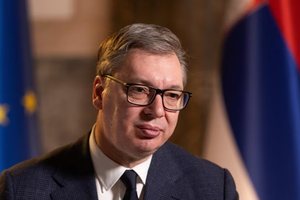
Serbian President Aleksandar Vučić, at a press conference ...
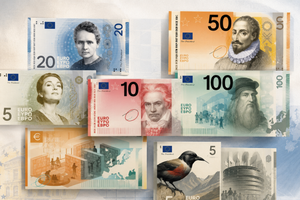
For the first time since the launch of the euro, European ...

Artificial intelligence (AI) models from the American comp...

At a time when industrial products are increasingly taking...

Trust among people is not just a three-syllable word. It c...

Master of humor Todi Llupi has passed away at the age of 7...

The ninth edition of "MIK Festival" kicked off with one of...

The average sale price of apartments in Tirana reaches rec...

This Thursday, one US dollar is bought for 81.5 lek and so...
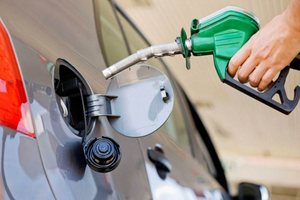
The price of diesel reached 206 lek per liter from 198 lek...

Businesses will no longer be required to simply register t...