


What is left for Grida Duma now?
Two days ago, in a scandalous manner, Grida Duma opened it...


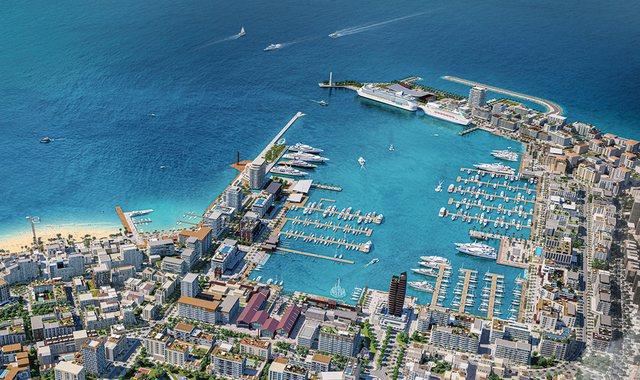
The Constitutional Court has today completed the review of the case requested against this institution by opposition members of Parliament, regarding the agreement for the strategic investment project "Marina & Yachts of Durrës".
In this case, the Court decided to dismiss the request by a majority vote. The Court specifies that the final decision will be announced with a reasoned decision within the legal deadlines provided for by the judicial procedures.
At the end of the review, the Constitutional Court dismissed the opposition's lawsuit against this investment project.
Full decision:
"On February 21, 2025, the Constitutional Court completed the review of the case with petitioners of no less than 1/5 of the deputies of the Assembly with the object:
1. Repeal of Law No. 79/2022 “On the approval of the framework agreement between the Council of Ministers of the Republic of Albania and Eagle Hills Real Estate Development, Albanian Seaports Development Company, sh.a., and NSHMI Development LLC regarding the strategic investment project “Durres Marina & Yachts”.
2. Repeal of DCM No. 861, dated 29.12.2021 “On the transfer to the real estate fund for the support of strategic investments, of state real estate for the development and implementation of the strategic investment project “Durres Marina and Yachts”, as amended by three other DCMs”.
Initially, the Court reiterated its position that it has jurisdiction to review the constitutionality of enacting laws, such as Law No. 79/2022, as long as the Court's jurisdiction is determined by the constitutional nature of the claims.
As regards the applicants' claims for the unconstitutionality of the four DCMs, against the relevant standards of constitutional jurisprudence, the Court, by majority vote, concluded that they (the DCMs) are individual acts and as such are not subject to constitutional jurisdiction pursuant to Article 131, paragraph 1 (c) of the Constitution.
The court assessed that the applicant is legitimate as a subject (ratione personae and ratione temporis) for all claims raised in the application regarding Law No. 79/2022.
Further, in assessing the content and constitutional nature of the specific claims (ratione materiae), the Court, by majority vote, assessed that the applicant's claims for the violation of:
· national identity and cultural heritage as a result of the development of the strategic project in the territory of the port of Durrës;
· Article 11/2 of the Constitution, due to the state's failure to protect this public property, by making it available to a private company (partially);
· the right to transparency due to: (i) failure to hold hearings with interest groups; (ii) failure to inform members of parliament about some parts of the contract; (iii) accelerated procedure in approving the law; (iv) uncertainties regarding the ultimate beneficial owner;
· Article 82/1 of the Constitution, because the draft law was not accompanied by a report justifying the financial expenses for its implementation;
· The Constitution, the SAA and the Visa Waiver Agreement between Albania and the EU, due to the creation of a golden passports type scheme;
· the principles of local autonomy, due to the fact that the Municipality of Durrës and the residents of that city will be deprived of the income that will come in the form of the infrastructure impact tax and the benefit of the legal quota for social housing,
will not be considered as long as the applicant has not managed to present constitutional arguments.
The Court also found that the applicant's claim for infringement of the freedom of economic activity, in terms of competition related to the principle of equality before the law, because the developer of the strategic project was selected without competition, concluded that it should not be considered, since the selection of the developer without competition is provided for in the international agreement between the Council of Ministers of the Republic of Albania and the United Arab Emirates, approved by Law No. 145/2020 and not by the law under review. Furthermore, the Court found that the competition between developers under the Law on Strategic Investments is carried out at the stage of obtaining the status of strategic investor.
The Court then proceeded to examine the merits of the following claims, alleging infringement of:
1. the constitutional principles of decentralization and local autonomy, due to the provision of Article 10.6 of the Framework Agreement approved by Law No. 79/2022 (subject of the request), which provides that the management of public spaces created by the implementation of the strategic project will be carried out by the strategic investor;
2. freedom of economic activity in terms of free competition linked to the principle of equality before the law, due to the exemption of the strategic investor from the obligation to pay the infrastructure impact tax, the obligation to contribute to social housing (Article 2/1 and 10.12 of the Framework Agreement) and the fact that public property has been made available to a private company without competition (Article 11/2 of the Constitution).
With regard to the first claim, in a reconciling interpretation between the contested provisions and Articles 13 and 113 of the Constitution, the Court, by majority vote, concluded that the management of public spaces by the strategic investor in Article 10.6 of the Framework Agreement should be understood as only an option, the implementation of which remains at the discretion of the local government.
Regarding the second claim, the Court, by majority vote, concluded that it is unfounded, since the exemption of the strategic investor from the obligation to pay these taxes/financial obligations does not give it a competitive advantage in the relevant market, as long as, despite the apparent advantages, in return the state has become a shareholder in the investing company to the extent of 33%, consequently it will participate in the distribution of dividends to the same extent. "/ CNA

Two days ago, in a scandalous manner, Grida Duma opened it...

The SafeJournalists Network has expressed concern about th...

The General Pediatric Hospital at the QSUT was inaugurated...
Pas daljes në ekranin e inceneratorëve, Safet Bajri është ...
There is a public debate, a point of view precisely put fo...

After his interview on Top Channel, one of the media outle...
The former head of the Albanian Anti-Corruption Agency, Da...
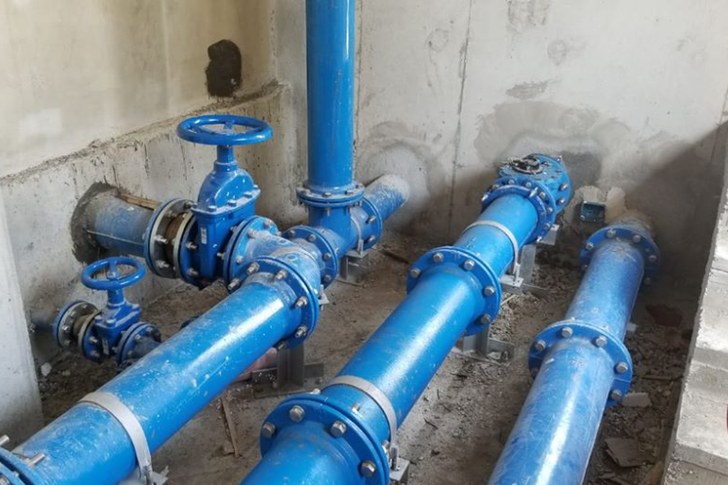
The Supreme State Audit Office (SSA) estimates that water ...

A court hearing is expected to take place today for the di...

Ajola Xoxa appeared today at SPAK for the implementation o...

On the front page of the newspaper "Panorama" you will rea...

The Audiovisual Media Authority announced today that in th...
The Special Prosecution Office has reacted to the statemen...
Socialist Party MP Plarent Ndreca has left SPAK after abou...
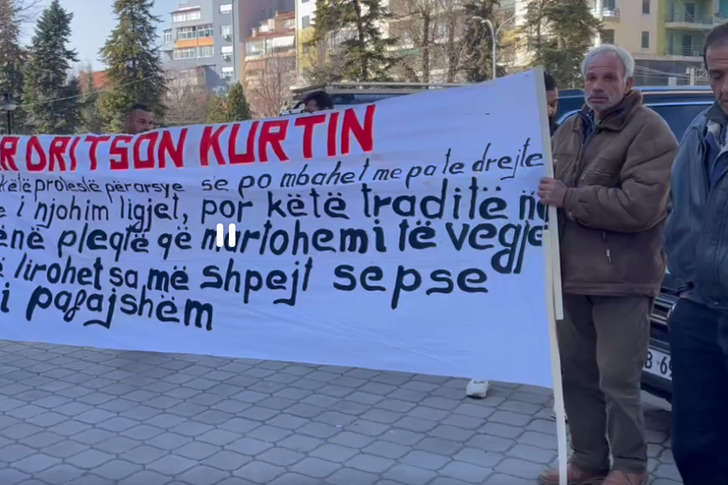
Në muajin shtator të vitit të kaluar, shtetasi Dritson Kur...

Today marks 34 years since the toppling of the statue of f...
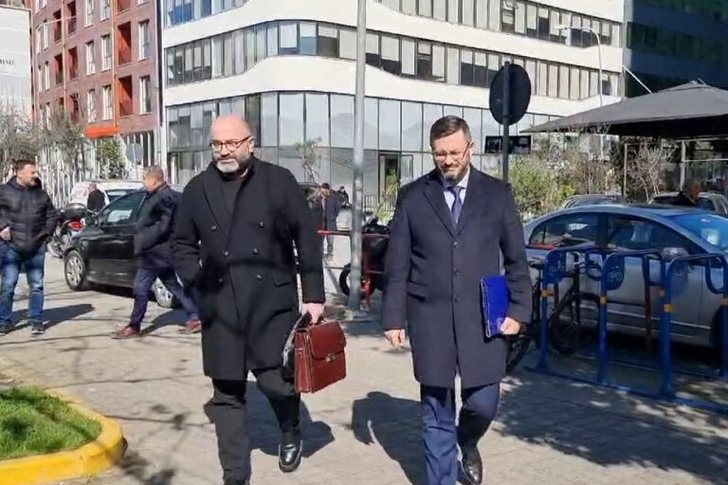
Zhvillohet në Gjykatën e Posaçme seanca paraprake për depu...

Tax authorities have frozen the accounts of the state-owne...

On the front page of the newspaper "Panorama" you will rea...
Safet Bajri, a well-known name in the police, due to his p...

CNA has launched another investigation that could lead to ...

Irfan Hysenbelliu is a businessman that we call "Irfan the...

In March 2026, CNA launched another investigation centered...
The arrested mayor of Tirana, Erion Veliaj, with 13 charge...

The Special Board of Appeal (KPA) decided this Monday ...

The KPA vetting decided this Thursday to dismiss the p...

Suela Salavaçi, a prosecutor in the Prosecutor's Offic...

The Special Board of Appeal reinstated the prosecutor ...
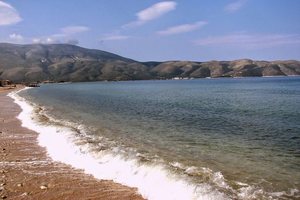
A person has died today on Orikum beach. According to repo...

Footage emerges from the serious accident that occurred th...

A Shkodra traffic police officer was hit with hard objects...
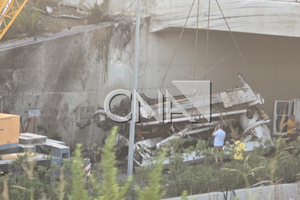
This Wednesday, around 4:00 PM, a serious accident occurre...

Children without parental care, for whom alternative famil...

On Thursday, our country will be under the influence of st...

A serious accident that occurred this Wednesday with the c...

The Institute of Geosciences has shared a forecast for wea...

Artificial intelligence (AI) models from the American comp...
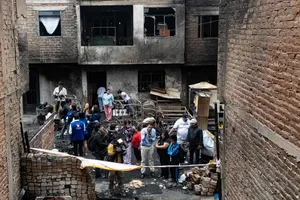
At least 10 people have died after a fire broke out in a h...
Yemen's Houthis have claimed to have attacked two Saudi oi...

The trial of ousted Venezuelan President Nicolas Maduro on...

At a time when industrial products are increasingly taking...

Trust among people is not just a three-syllable word. It c...

Master of humor Todi Llupi has passed away at the age of 7...

The ninth edition of "MIK Festival" kicked off with one of...
The average sale price of apartments in Tirana reaches rec...

This Thursday, one US dollar is bought for 81.5 lek and so...

The price of diesel reached 206 lek per liter from 198 lek...

Businesses will no longer be required to simply register t...