

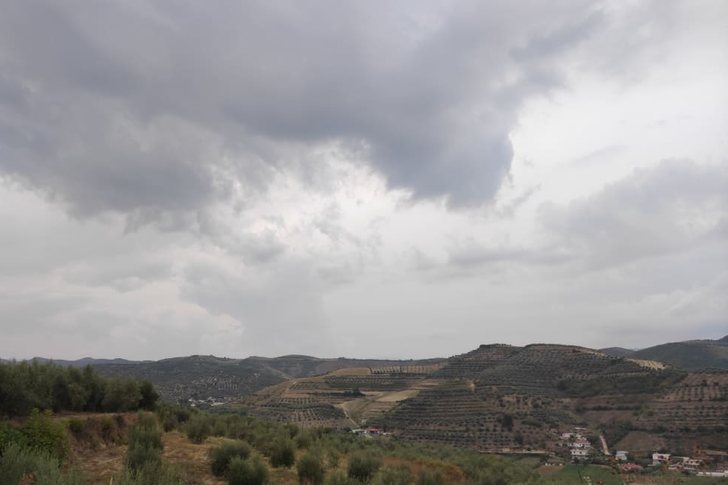
Temperature up to -2°C/ Weather forecast for today
Our country will continue to be affected by unstable weath...


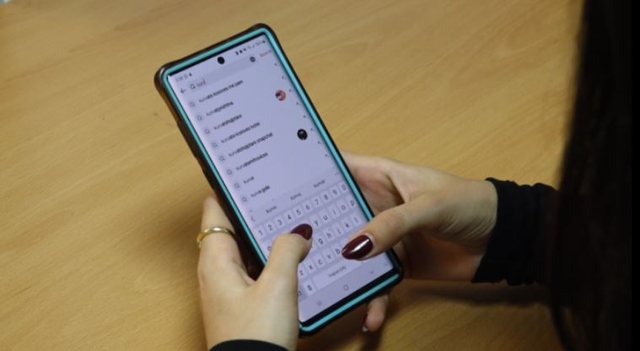
A BIRN analysis of hundreds of videos posted by TikTok users in eight Balkan countries shows that the platform has become a hub for the abuse of women and girls based on their appearance and behavior, real or perceived. sexual - 'slutshaming'.
Seven years ago, when she was 13, Nora took a picture of herself in the mirror wearing gym shorts after basketball practice and shared the photo with her friends on the Snapchat social network. Then, a boy from another class at her school in Kosovo re-shared the photo – without her consent – ??and that's where the abuse began.
Attacked by older girls and sexualized by boys, 'slutshaming' spread from one social media platform to another.
"The shaming and targeting was a heavy burden, especially for a 13, 14-year-old child," Nora [fictitious name] told BIRN.
Nora agreed to speak after answering an online questionnaire published by BIRN about slutshaming – a phenomenon defined by the European Institute for Gender Equality, EIGE, as “the stigmatization of women and girls based on their appearance, availability sexual orientation and actual or perceived sexual behavior".
While drinking mint tea on a cold December afternoon in Pristina, Nora revealed that the harassment had resumed, this time on TikTok. A separate account with over 3,300 followers and 96,000 likes had taken photos of her and her boyfriend from their social media profiles and reposted the same as video clips accompanied by disparaging comments.
By February, the account in question had 142 videos, garnering over eight million views, many of which targeted girls and women from Kosovo, including Nora and her friends.
Through content analysis on TikTok and interviews with experts, BIRN has discovered that TikTok is being used across the Balkans as a platform for shaming/humiliating women and girls involved in everyday activities, such as taking photos, videos , or dance.
In just a few weeks, BIRN discovered 427 videos with 'shameful' content uploaded between September 2020 and November 2023 targeting girls and women. These videos are distributed across Kosovo, Albania, Bosnia and Herzegovina, Croatia, Montenegro, North Macedonia, Serbia and Slovenia. Together, they have over 30 million views, each attracting numerous abusive comments, ranging from dozens to hundreds.
None of the eight countries analyzed have specific laws that treat cyberbullying as a separate criminal offense. Consequently, incidents of slutshaming should be dealt with under existing criminal codes, such as those dealing with gender-based hate speech, stalking or the unauthorized distribution of someone else's photographs.
At the end of October, the European Parliament's committee on women's rights and gender equality advocated for the inclusion of this phenomenon in legislation dealing with hate speech and hate crimes. Among the eight countries analyzed in this report, only Croatia and Slovenia are members of the European Union.
Altin Hazizaj, executive director of the Center for Children's Rights in Albania (CRCA), an NGO dedicated to combating cyber violence against minors, told BIRN that the first reported case of slutshaming on the platform , 'I Safe' had happened on YouTube in 2016. However, TikTok has since become the dominant platform for such incidents.
According to Hazizaj, "The more popular the platform is, the more there will be cases of 'slutshaming' and online sexual violence against children." He noted that often, the perpetrator knows the victim and the goal is to control them.
Despite attempts to reach out, TikTok did not respond to requests for comment.
When everyday activities attract abuse
The material identified by BIRN contains photographs or videos featuring women and girls doing ordinary, everyday activities, either online or in person, such as dancing, singing, socializing or following social media trends.
In many cases, these individuals have been subjected to humiliation and derogatory language from other users who posted comments.
One of the videos analyzed by BIRN featured Nora and her friends participating in a TikTok trend. This video was redistributed without their permission and accompanied by personalized insults directed at each girl in the video. The offensive language continued in subsequent comments.
"Every time we report it, the account is not closed", says Nora. "It was different with Instagram because usually, we could shut down accounts after some people reported them."
Across the border in Albania, a woman with over 1,000 followers and 75,000 views on TikTok repeatedly targets public sector workers, claiming they use sex to advance their careers.
BIRN identified six videos showing unidentified women dancing in nightclubs.
Fine line between virtuality and reality
Experts and victims claim that 'slutshaming' can cause serious damage to the mental health of those targeted.
On February 12 of this year, the Albanian police announced the arrest of a 39-year-old man, as he allegedly "caused the suicide" of a 27-year-old woman.
According to the police statement, "this individual is suspected of having shared an intimate photo (on TikTok) of the 27-year-old woman, who then jumped from a 4th floor terrace, due to this incident" is suspected of having died from his wounds. "
After that, local media republished the photo, prompting backlash from women's rights organizations.
Just a month ago, another woman in Albania, 41-year-old Bedrie Loka, died tragically after drinking a poisonous substance.
Initially, her suicide was linked to disparaging content on TikTok directed at Bedrie Loka through an account later discovered by the media that was created by her cousin.
However, a few days later, Loka's husband, Xhemali, was arrested on suspicion of "causing suicide". Local media broadcast videos, recorded by their children, where Xhemali mistreated his wife; reports included statements from the children indicating that their father had made frequent threats against her.
Bind Skeja, executive director of the Kosovo-based Center for Information and Social Improvement, which addresses mental health concerns, says the impact of 'slutshaming' or other forms of gender-based violence on mental health remains the same. whether it happens online or offline.
"Individuals who think about suicide usually find themselves in situations where they perceive no escape," explains Skeja and adds that the burden of finding a solution often falls on the victim, while it should be the responsibility of society and mental health professionals.
“We must take proactive measures against the perpetrators; mental health work should work directly to remove risk factors.”
One respondent to BIRN's questionnaire, a non-binary (gender non-determining) individual from North Macedonia, revealed that constant shaming had led to "depression, anxiety, a vicious cycle of unhealthy romantic relationships and trauma".
"I was targeted on social media with photos deemed 'provocative', which were widely shared, including online media, especially when I was involved in a student movement in my country at the time."
Nora, who was first targeted when she was 13, says her family supported her, but her friends' families often didn't take the same approach.
"Many girls I know, since their families found out about the shaming, have been under intense parental control and their mental health has deteriorated," she says.
Legal restrictions
In none of the eight countries covered by this article is 'slutshaming' or cyberbullying classified as a separate criminal offence, but it can be dealt with under existing legislation dealing with other offences.
However, the authorities often take action only when it is too late.
On February 19, Albanian Interior Minister Taulant Balla met with TikTok's Director of Public Policy and Government Relations for Central and Eastern Europe, Jakub Olek, to request a designated point of contact for Albanian police and increased content monitoring. in Albanian.
After Loka's tragic suicide, Albanian Minister of Justice Ulsi Manja used Facebook to urge Albanian society to respond to cyberbullying, saying: "Starting with our children and families, we must not wait for another victim like Bedrie Loka; as a nation, we need to review the laws.”
Hazizaj pointed out that the laws can be adjusted "easily". However, in many cases, "institutions cannot protect due to limitations in human resources, which further reduces trust in institutions".
Nora adds to BIRN that in her situation, at least six people tried to report the abusive posts to the Kosovo police. However, the answer remained the same: "IP addresses of account owners cannot be traced without direct contact with the account."
Hate speech that targets gender or sexual orientation is addressed in the criminal codes of Montenegro, North Macedonia and Kosovo. Albania's criminal code only deals with hate speech based on sexual orientation. In Montenegro, the criminal code accepts hate speech targeting gender or sexual orientation only as "aggravating" factors.
In North Macedonia, Nikola Prokopenko, a state adviser at the justice ministry, stated that parliament had revised the Criminal Code in February 2023 to criminalize 'cyber-bullying and gender-based violence' under offenses such as 'endangering security' , 'Stalking', 'Sexual Harassment', 'Inciting national, racial or religious hatred, discord and intolerance' and 'Dissemination of racist and xenophobic material using the computer system'.
Petra Cop, public relations officer at the Slovenian Ministry of Justice, tells BIRN that "cyber harassment is defined in the Criminal Code as a criminal offense of stalking".
Rolanda Stafa, coordinator for information rights at the Ministry of Justice of Albania, tells BIRN that "criminal legislation does not explicitly treat cyberbullying as a criminal offense" and also "does not classify specific criminal offenses based on gender." However, criminal offenses such as "Insult", "Defamation", "Unjust interference in private life", and "Stalking" are also punishable in "cases of internet posts, comments or any other form that may violate dignity and morals and individuals of any gender", explains Stafa.
Montenegro and Serbia have also criminalized stalking through 'other means of communication'. Kosovo similarly deals with this issue under the criminal offense of Harassment.
Cop, representing the Slovenian ministry, mentioned that "certain aspects of cyberbullying may also fall under the criminal offense of coercion and the criminal offense of threat, depending on the specific circumstances of each case." Furthermore, "with regard to gender-based violence, the criminal offense of public incitement to hatred, violence or intolerance ... even if it is carried out through publication in the mass media or on websites ... is relevant," says Cop in a response to email to BIRN.
The Croatian Ministry of Justice tells BIRN that cyberbullying is covered by various criminal offenses described in the Croatian Criminal Code, including threats, intrusive behavior, insult, defamation, violation of a child's privacy, public incitement to violence and hatred. If the crime is committed through "the press, radio, television, computer system or network, in a public meeting, or in some other way accessible to a larger number of people," the perpetrator faces more severe punishment, according to one response. by email from the ministry.
The justice ministries of Bosnia and Herzegovina, Montenegro, Kosovo and Serbia did not respond to requests for comment. All four countries have criminalized 'The unauthorized publication and presentation of texts, portraits and recordings of another'.
In addition, Croatia and Montenegro have criminalized 'Unauthorized Use of Personal Data'.
According to legal expert Aleksandar Jokiq, neither the law at the state level nor the laws at the level of the two entities of Bosnia and Herzegovina recognize cyberbullying as a specific term. However, Jokiq explained to BIRN that "this can be dealt with through different crimes described in the [Penal] Codes". Jokiq adds that "it is up to the prosecutor to decide whether every case of cyberbullying will be prosecuted or not. Not every act of cyberbullying can constitute a criminal offence.” Bosnia's Republika Srpska entity has criminalized the 'unauthorized publication and display of other people's writings, portraits and recordings'.
Fisnik Xhelili, representative of the NGO 'Mollekukuqja' in North Macedonia, said that the state institutions "are not taking sufficient action because the regulations in the digital sphere are not clearly defined in our country, even where regulations exist, they are not adequately implemented".
Victims of gender-based violence with whom his NGO is in contact say that the police told them to "just go home", Xhelili tells BIRN.
"I am more hurt by the comments and support for the abuser"
Nora's plight has also affected her younger sister, who has faced bullying at school due to TikTok content targeting her sister.
The abusive account remains active online, continuing to receive support from its followers.
"What hurts me the most is when I see comments that spread rumours. "Instead of reporting the account for closure, they give it ammunition to continue it even more," she said.
“The account took a photo of my best friend from her social media and shared it along with a photo of a boy, praising that boy while making vile insults towards her. People in the comments support that post, but she doesn't even know that guy.”
Besarta Breznica, officer of the gender-based violence program at the NGO Kosovo Women's Network, says that "women and non-binary individuals are often victimized based on their clothing or behavior, perpetuating the culture of rape and stemming from a patriarchal mindset".
Indeed, Hazizaj from Albania tells BIRN that in many cases, they discovered that the perpetrators of the slutshaming were groups of boys who sexually harassed bullied girls in real life.
"It starts with shaming as a precursor to reaching these girls physically, often serving as a prelude to potential rape," he explains.
Breznica says that, in addition to the lack of a legal framework, "victims struggle to discuss this form of violence within the family and face even greater challenges in reporting it to the authorities".
Non-binary individuals who responded to BIRN's questionnaire revealed that they had not trusted their parents, legal guardians or any other family member.
"I was afraid that they would blame me; I didn't think they would understand," they told BIRN.
Skeja noted that while the content gets more reactions and interactions, victims often experience increased fear that their family might discover it, resulting in feelings of being "oppressed and pressured" about the footage they share. they initially perceived them as permissible.
According to Hazizaj, in most cases when the abuse constitutes a criminal offense, the victims are too scared to turn to the police.
"My father is going to kill me," he says many of them say. Without communication within the family, the victim bears the burden of bullying alone.
"It's not just online shaming, it's also in the family, at work and so on," he says.
Nora says she is afraid for the future.
"What worries me the most at this point is that it's happening constantly, currently on a larger scale," she told BIRN. "What will happen when I try to join the workforce and they see this content with just a simple internet search?"
"It is systematic, the same words, the same targeting, the same continuous humiliation"./ Reporter.al

Our country will continue to be affected by unstable weath...
This Tuesday, the gradual passage of the cold front with l...
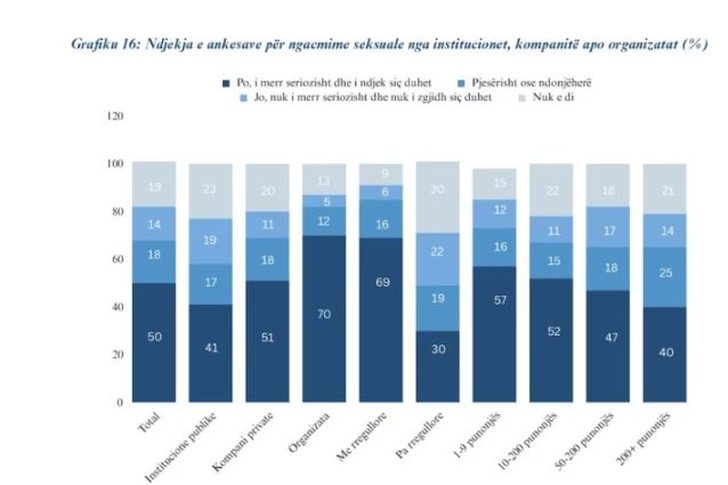
Denoncimet për ngacmimet seksuale në vendin e punës në Shq...

The occasional passage of some centers with high pressure ...
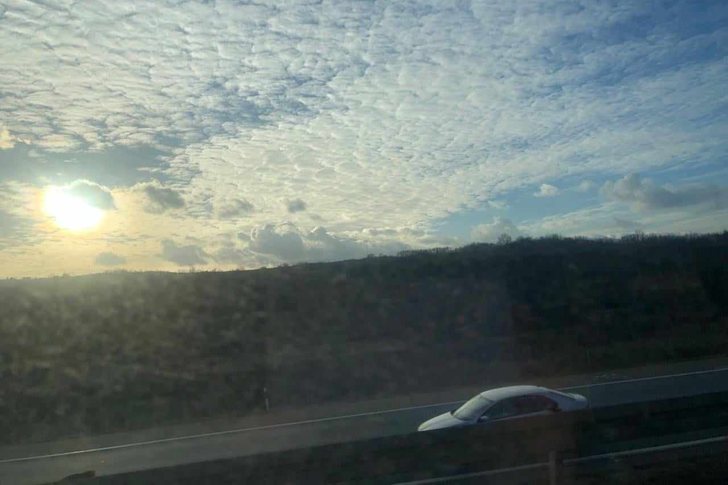
Even this Sunday, the weather is predicted to be unstable,...
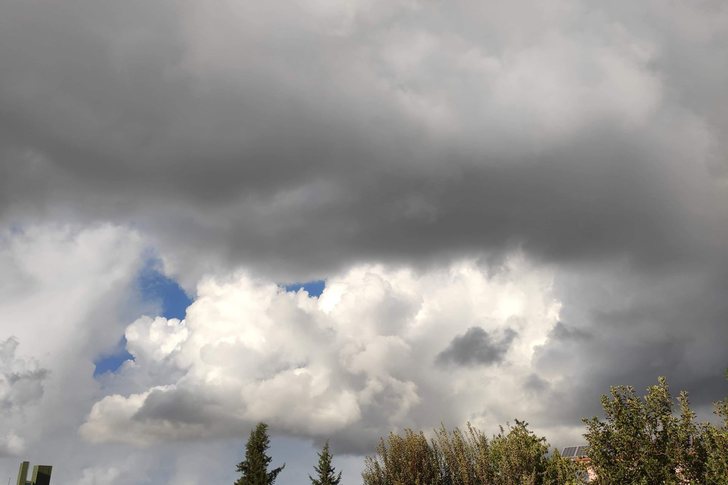
Një mbërthim nga fronti okluz prej orëve të mesnatës b...
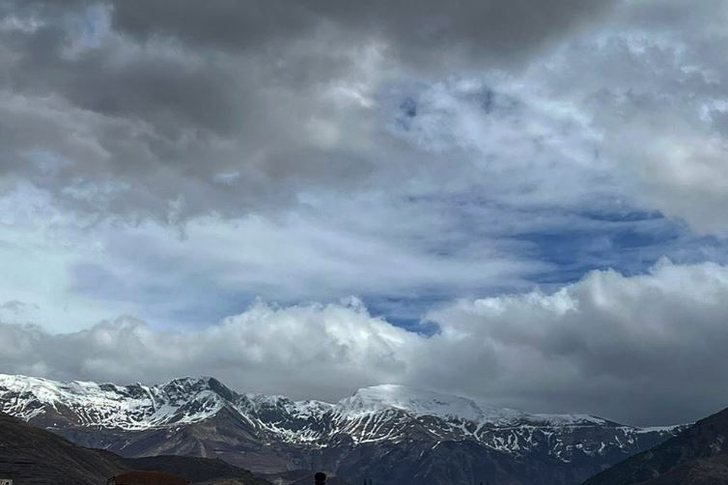
On Friday, our country will have unstable atmospheric ...

The demographic crisis, which has involved the Balkan Regi...
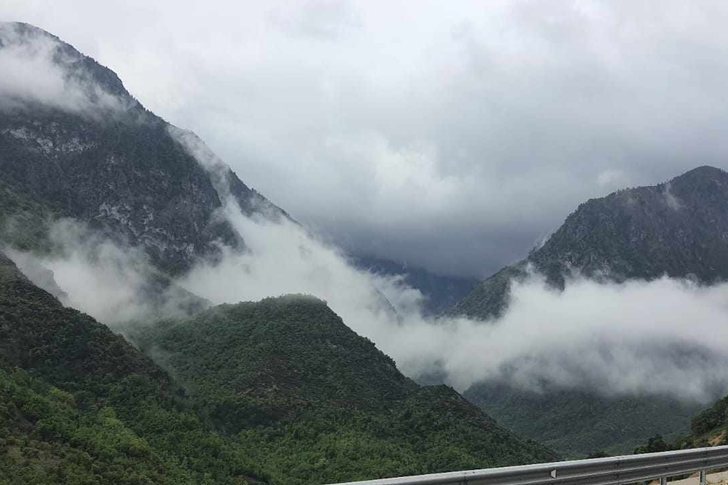
Orët e paradites do të paraqiten nën ndikimin e vranësirav...
On Wednesday, our country will continue to be affected by ...
Ditën e martë vendi ynë do të vijojë të ndikohet nga k...
Our country will be affected by relatively stable atmosphe...
For the week ahead, our country will be affected by re...
Ditën e Diel reshjet do të ulin intensitetin, por do t...
Moist air masses detached from several deep pressure cente...
This Friday, our country will be affected by unstable atmo...

Këtë të enjte, vendi ynë do të ndikohet nga kushte atmosfe...
Bazri and Fitore Kallundra, Kosovar Albanians and owners o...
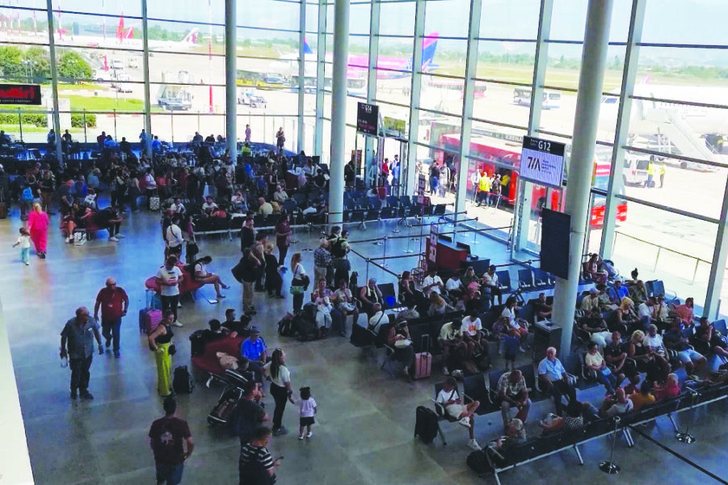
In several debates in various television studios or in int...

This Wednesday, our country is affected by relatively stab...
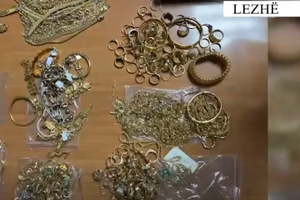
A 39-year-old citizen has been arrested in Lezha, after se...

CNA has launched another investigation that could lead to ...

Irfan Hysenbelliu is a businessman that we call "Irfan the...

In March 2026, CNA launched another investigation centered...

The Special Board of Appeal (KPA) decided this Monday ...

The KPA vetting decided this Thursday to dismiss the p...

Suela Salavaçi, a prosecutor in the Prosecutor's Offic...

The Special Board of Appeal reinstated the prosecutor ...

Following the successive operations carried out by the ope...
The Police Supervision Agency has seized the service weapo...
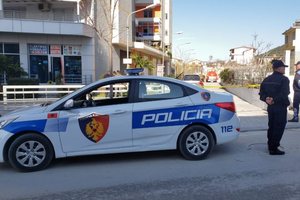
A serious incident occurred in Lushnje, where citizen IY, ...
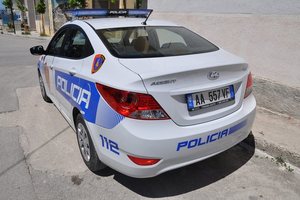
As a result of the investigative and procedural actions ca...

As the year 2026 is in its second half, the world is exper...

Today, our country will be under the influence of stable a...

By noon, cloudiness is expected to prevail in almost all o...
Children without parental care, for whom alternative famil...
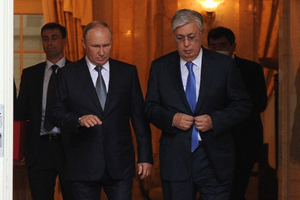
Kazakh President Kassym-Jomart Tokayev shared some critici...
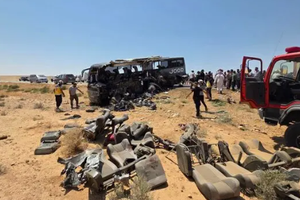
Thirty-five people were killed and 30 others were injured ...

US President Donald Trump has announced that he will seek ...
Almost half of people living in France, Germany, Italy and...
Two windows, a century of history and the metaphysics of p...
In my research at the Central State Archives, specifically...

At a time when industrial products are increasingly taking...

Trust among people is not just a three-syllable word. It c...

This Saturday, one US dollar is bought for 81.7 lek and so...

War, weather and supply disruptions could send gas prices ...
The number of active enterprises in Albania continued to g...
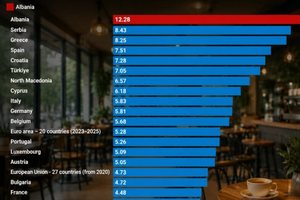
In Albania, the bar-cafe has long become an almost unique ...